
A comparative essay
The Giggle and the Joke
Maharishi Mahesh Yogi and Bhagwan Shree Rajneesh
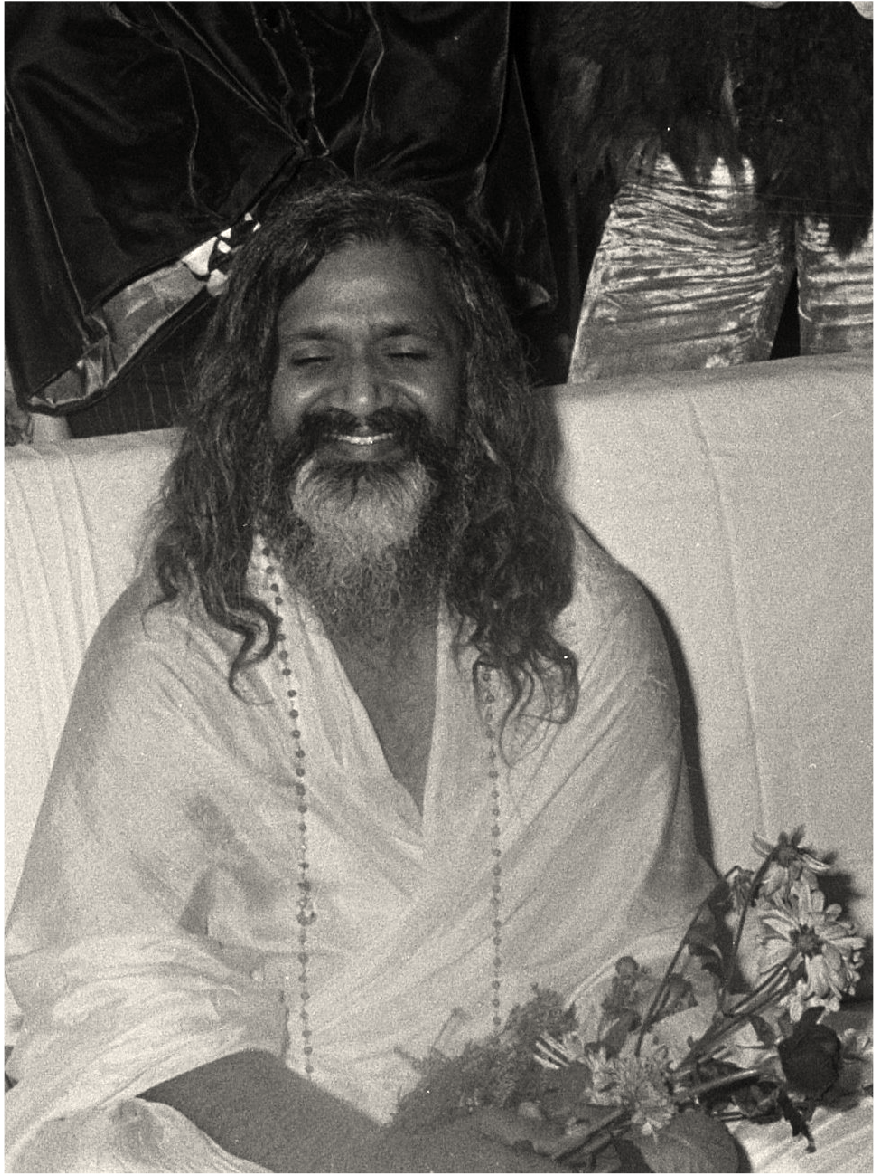
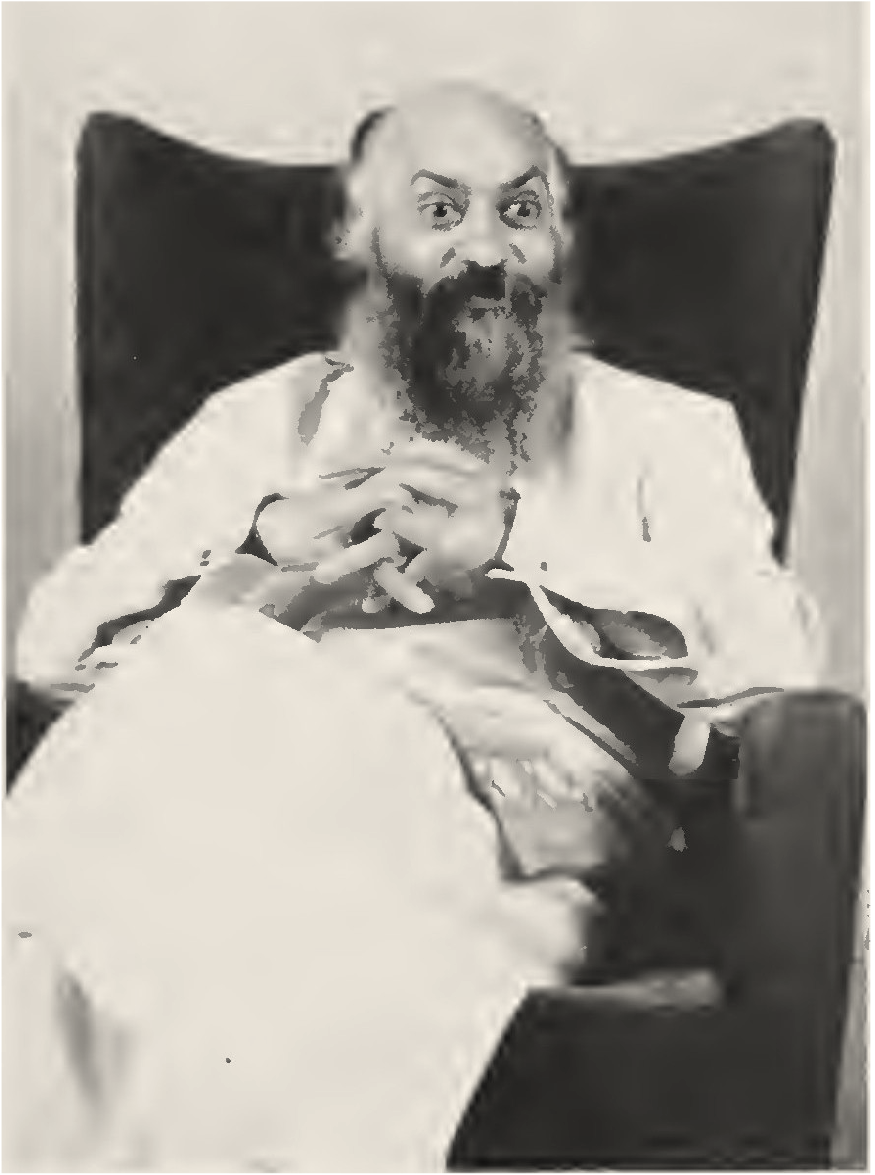
Version 3 · Illustrated edition
I
Introduction: two men, one market
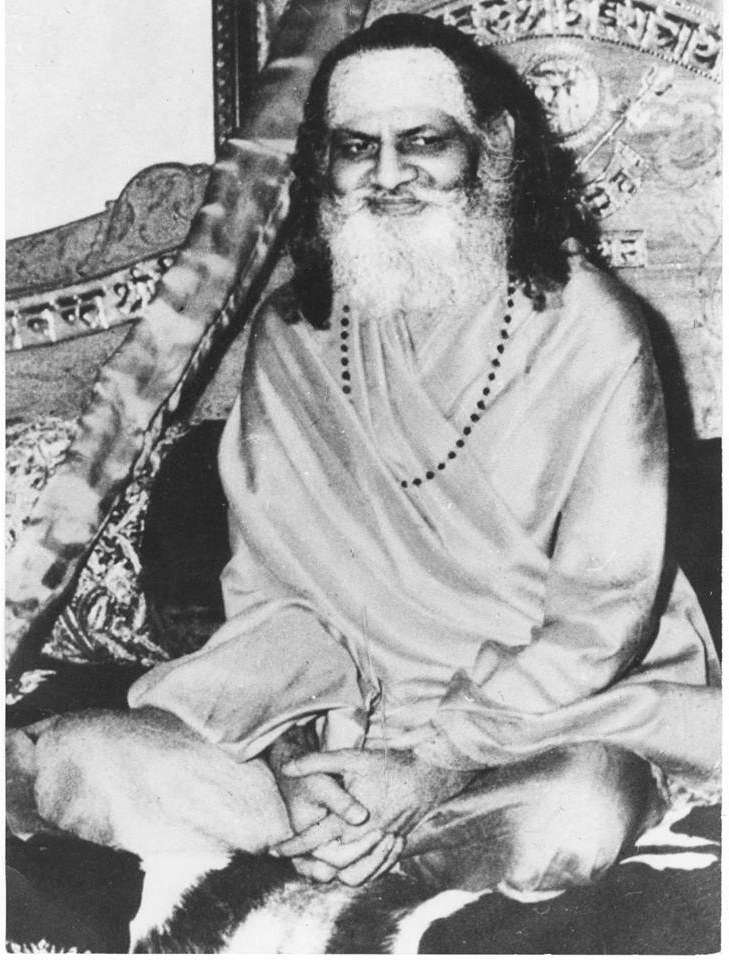
Maharishi Mahesh Yogi and Bhagwan Shree Rajneesh worked the same postwar market: Westerners who had lost faith in church, party and analyst, and were ready to try a teacher from India. Both arrived as small, soft-spoken men who seemed untroubled by anything. Both turned meditation into something that could be repeated, taught and paid for. Both drew famous or credentialed followers who served as proof that the method worked. Both said they held no authority, and both held more than any follower could check. Both handed the daily running of their movements to devoted intermediaries. Both spent their last years in seclusion while large organizations carried their names forward.
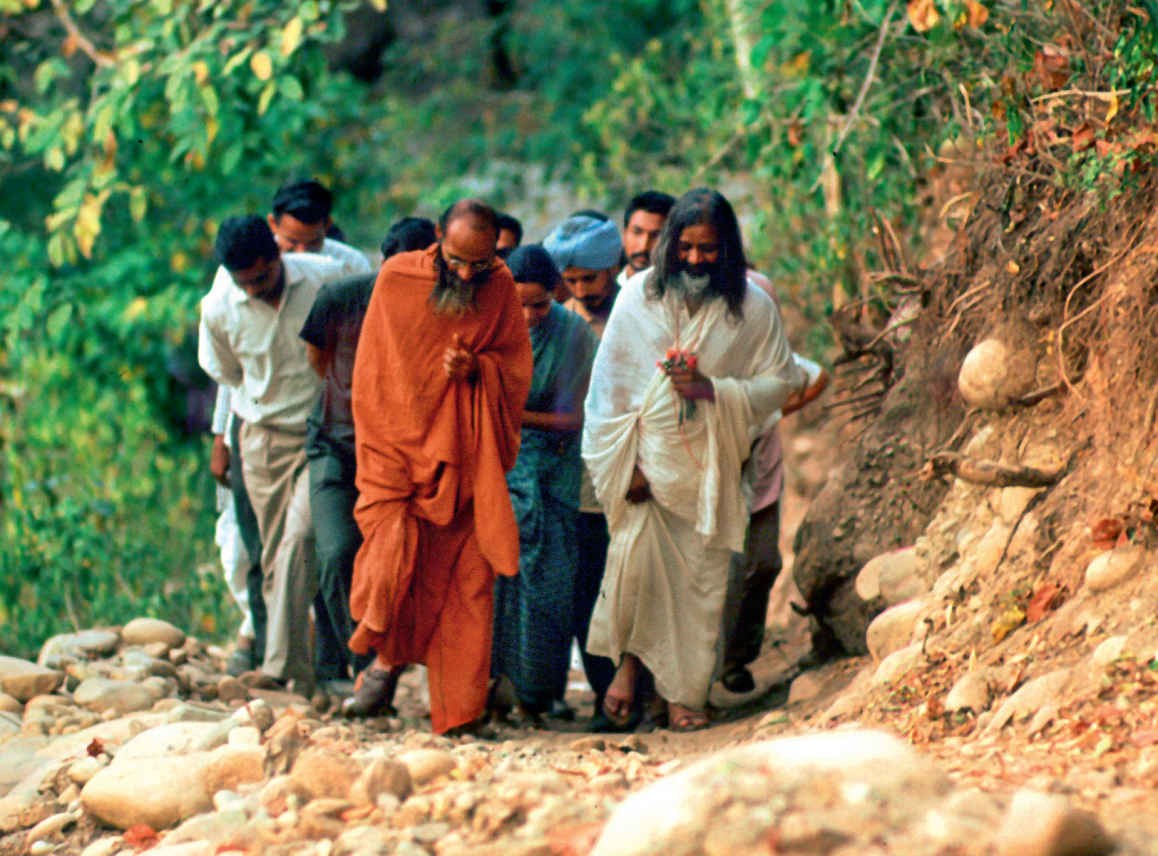
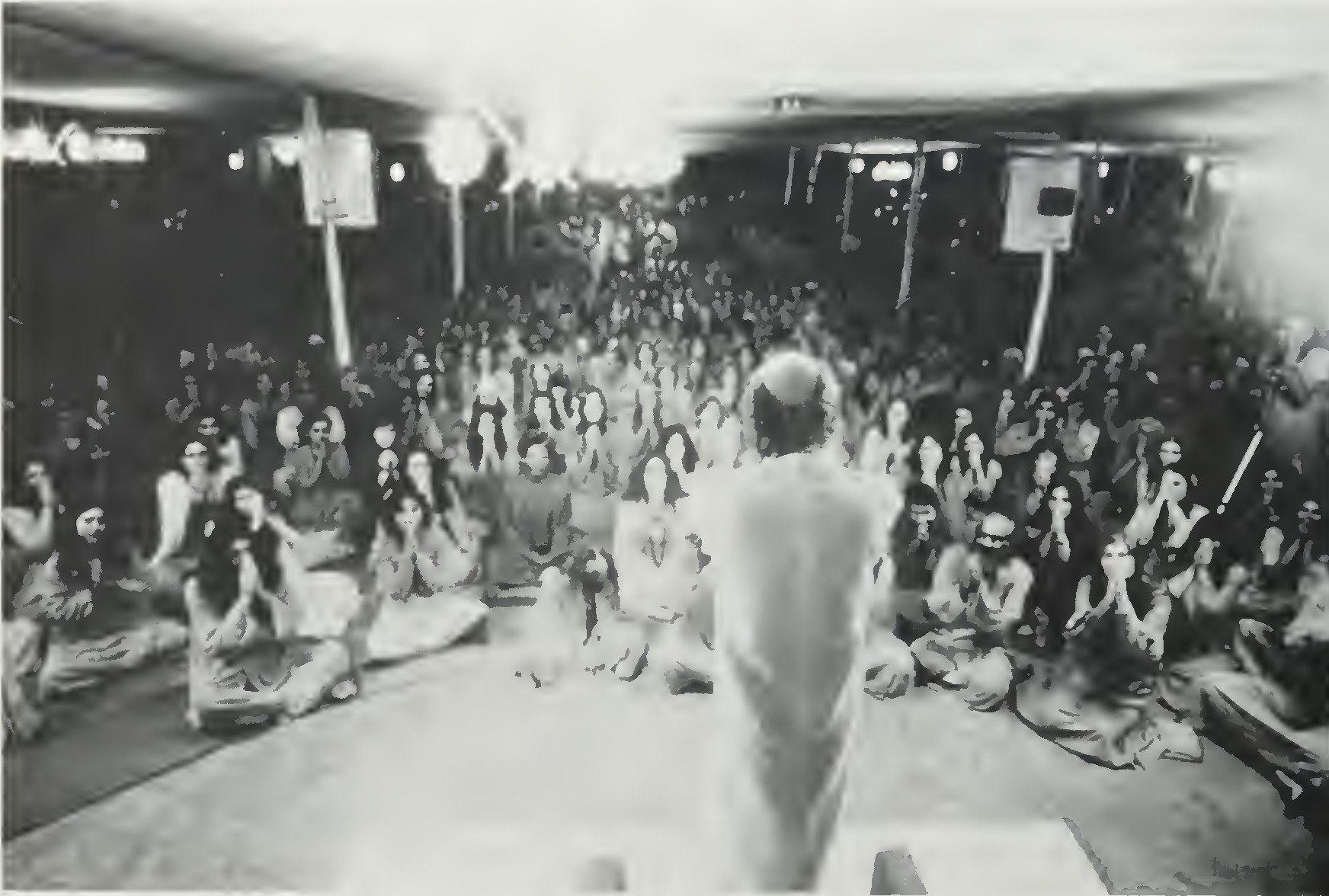
A familiar contrast sorts them. Maharishi assimilated: he offered a technique that fit inside a job, a marriage and a country club. Rajneesh ruptured: he offered sannyas as a way out of one's name, family and former life. That contrast explains a great deal. It is strongest at two levels, what each man offered the ordinary follower and how each performed in public. It is weaker at the level of how authority actually worked. There the two men looked more alike than either would have admitted. Each disowned his own power and then used it without appeal, relied on loyal intermediaries, and controlled who could reach him.
The newer evidence on Maharishi, from his one biographer and from three people who lived close to him, adds a difference the familiar contrast misses. The two men came to authority by opposite roads. Maharishi spent more than a decade as a disciple whose rule was obedience. Rajneesh had no guru and said that after his grandfather died, aloneness became his nature. That difference in apprenticeship runs through the rest of this essay: in how each man thought, how he treated those closest to him, and what he believed he was protecting.
The comparison is also uneven in a way that matters morally. The worst documented harms in the TM movement were misrepresentation, of religion and of science, and, on the testimony of a woman who says she was his lover, the concealment of the founder's broken celibacy. The worst documented harms at Rajneeshpuram were crimes: a mass poisoning, wiretapping and plots against officials, committed by the inner circle Rajneesh had placed in charge. How far Rajneesh himself was responsible is contested. But the two movements do not belong on the same scale of harm, and no amount of matching up their personalities should hide that.
II
Two apprenticeships: obedience and aloneness
The early lives can be told side by side, though the evidence is uneven. For Maharishi there is one outside biography, Paul Mason's, of which only the first three chapters are available here, and Mason often reconstructs with "would have" and "it is said." For Rajneesh there is Gordon's account, built on interviews in India and on Rajneesh's own later retellings.
Even the basic facts of Maharishi's birth are unsettled. Mason names him Mahesh Prasad Varma and gives 12 January 1917, the date supplied by his uncle Raj Varma, while noting that 18 October 1911, 12 January 1918 and 18 October 1918 have also been suggested (Mason, The Maharishi, PP-C01-¶030, p. 10). Susan Shumsky, drawing on published sources, names him Mahesh Chandra Srivastava, born 12 January 1918 (Shumsky, Maharishi & Me, MM-C13-¶008). His caste is also reported two ways. Mason places his family in the kshetriya, or warrior, caste (PP-C01-¶030, p. 10). Shumsky says the family name marked them as kayastha, a caste of scribes and record keepers (MM-C13-¶008). Both agree on the consequence: he was not a brahmin, so he could never hold his guru's seat (Mason, PP-C02-¶030, pp. 23–24; Shumsky, MM-C13-¶029).
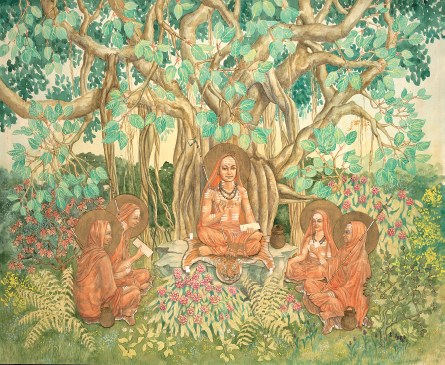
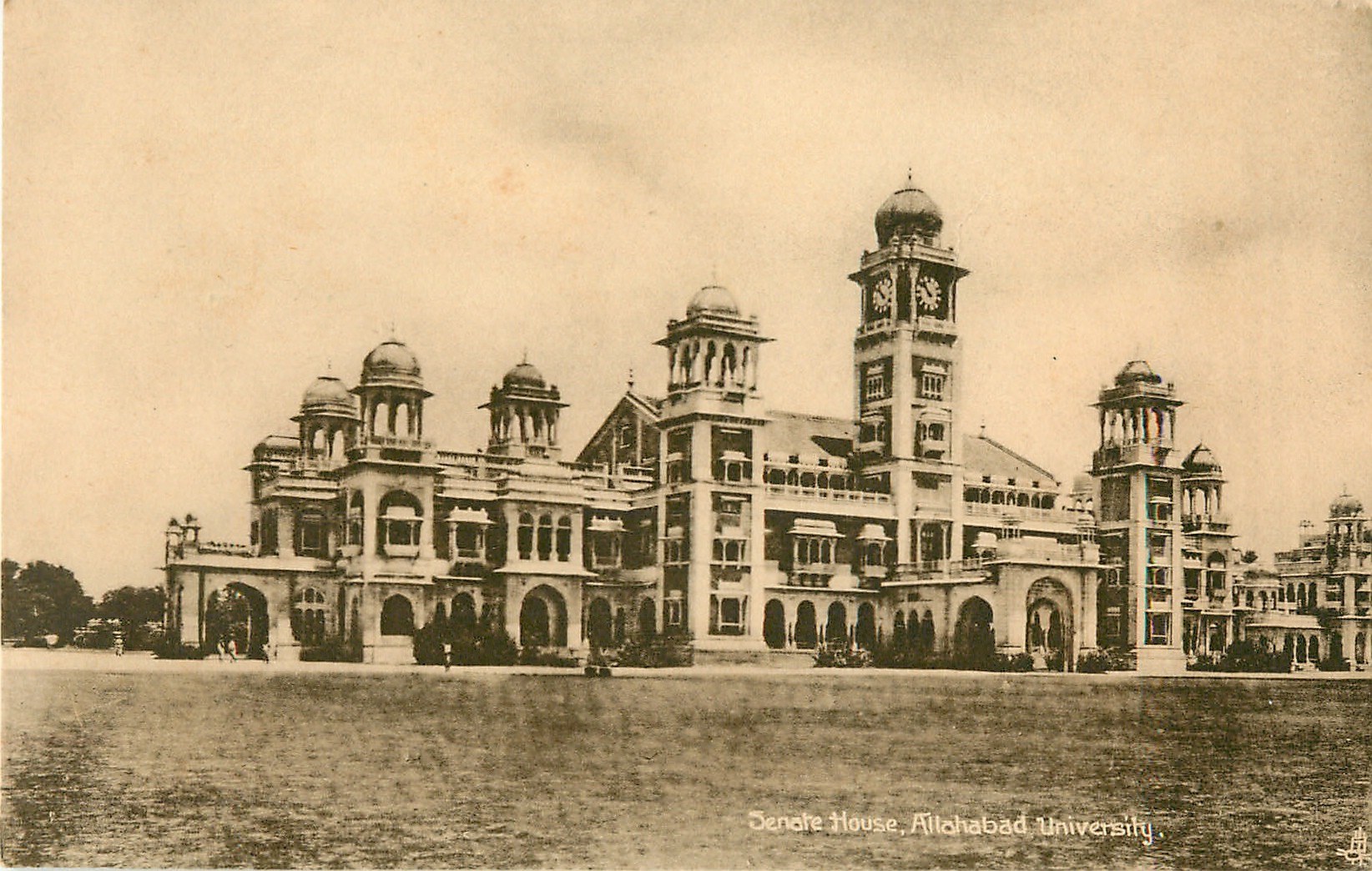
He studied physics and mathematics at Allahabad University and later said he was "completely dissatisfied" with what he learned there (Mason, PP-C01-¶033, p. 12). At twenty-three, in Jabalpur, he met Swami Brahmananda Saraswati, whom he called Guru Dev. The swami was installed as Shankaracharya of Jyotir Math on 1 April 1941 by Mason's account, or on 11 May 1941 according to the Allahabad High Court's 2017 judgment on the succession, and soon took Mahesh as a disciple (PP-C02-¶005, p. 16). The picture of those years is one of near-total attachment. His uncle said that at night the young man "lay down outside Guru Dev's door." Maharishi later said the whole purpose "was just to breathe in his breath" (PP-C02-¶006, ¶008, p. 17). Mason tells a story of the guru sending him on long errands with sealed messages, one of which turned out to say only that the messenger should be sent back. The lesson Mason quotes, from a movement source he cites to Elsa Dragemark, is that "nothing matters except obedience" (PP-C02-¶013–¶014, p. 19; source in Mason's notes, PH-NOTES-¶024). He became, Mason says, his master's private secretary (PP-C02-¶026, p. 22).
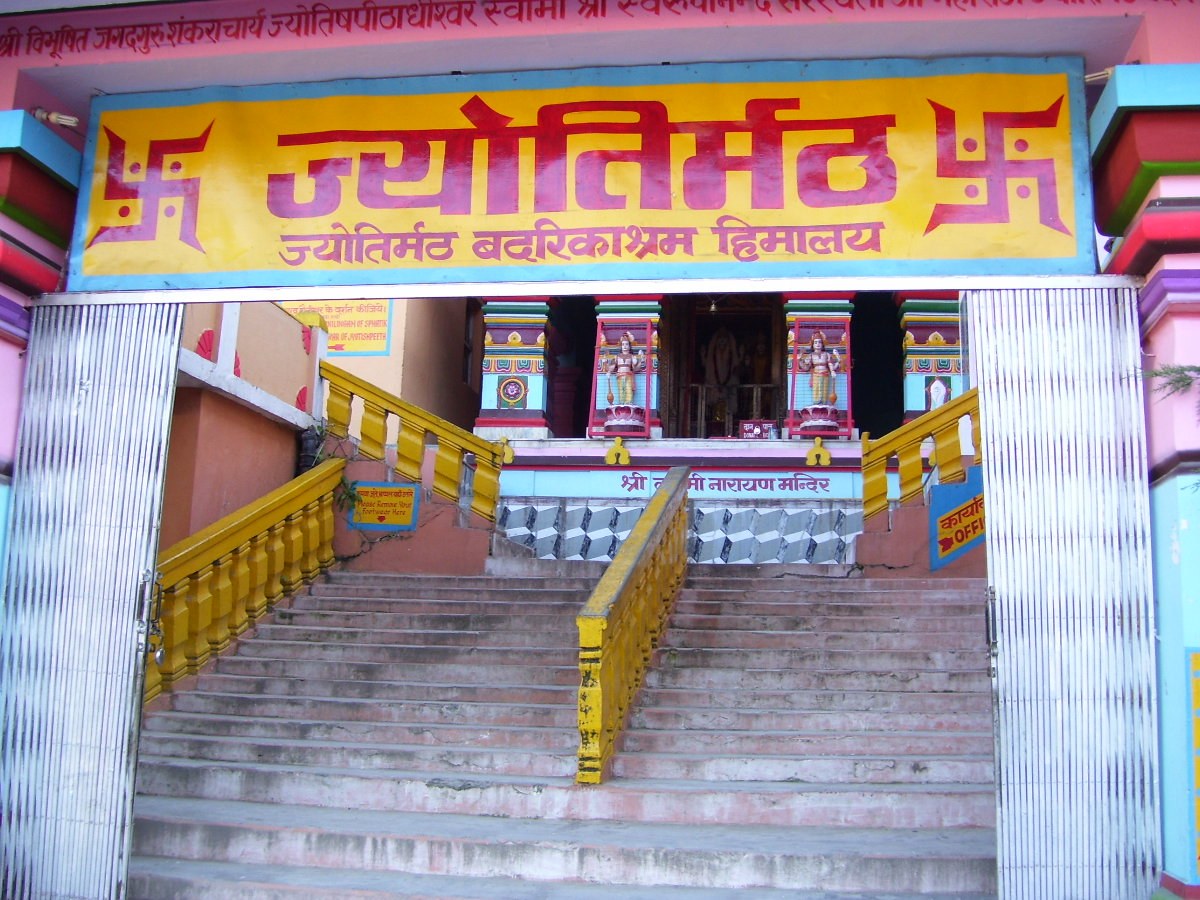
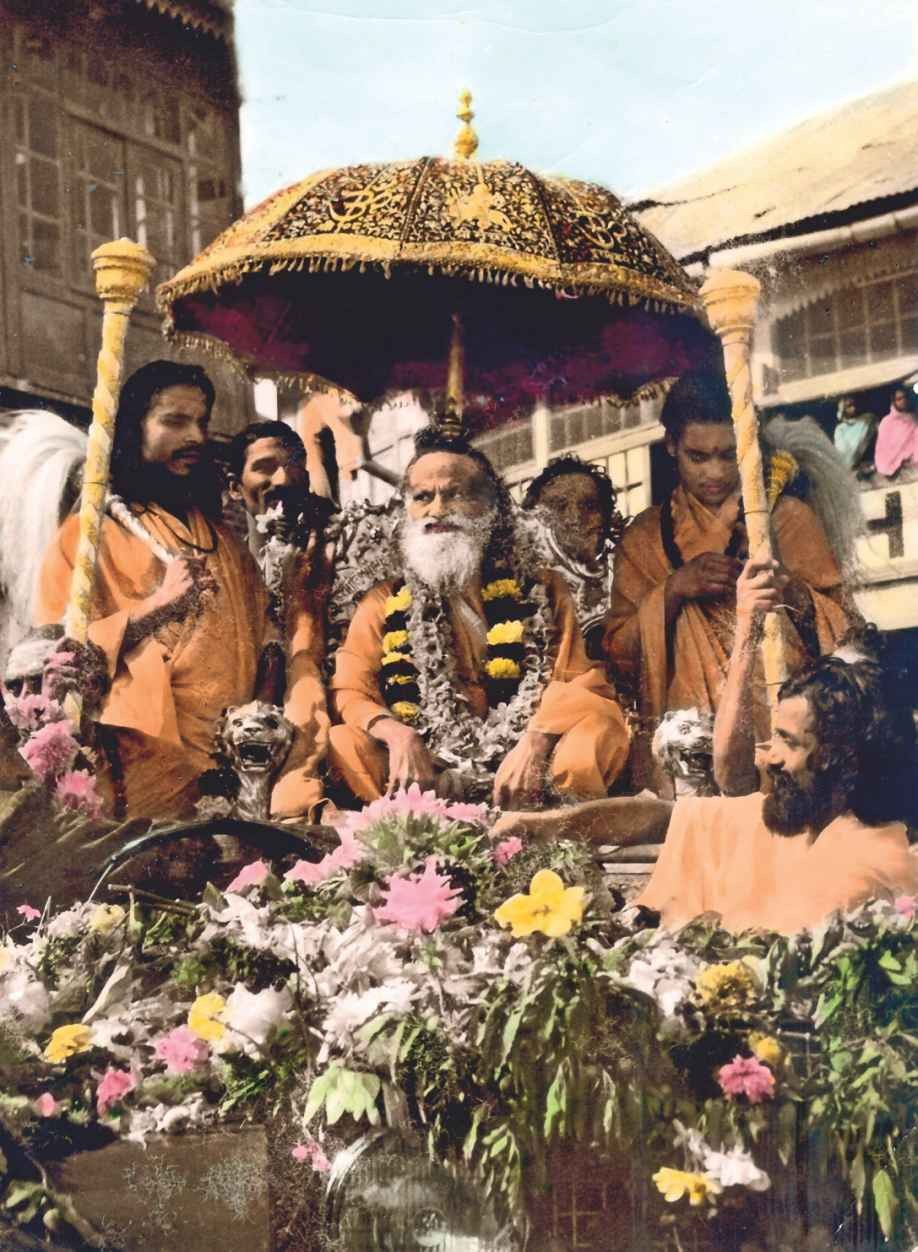
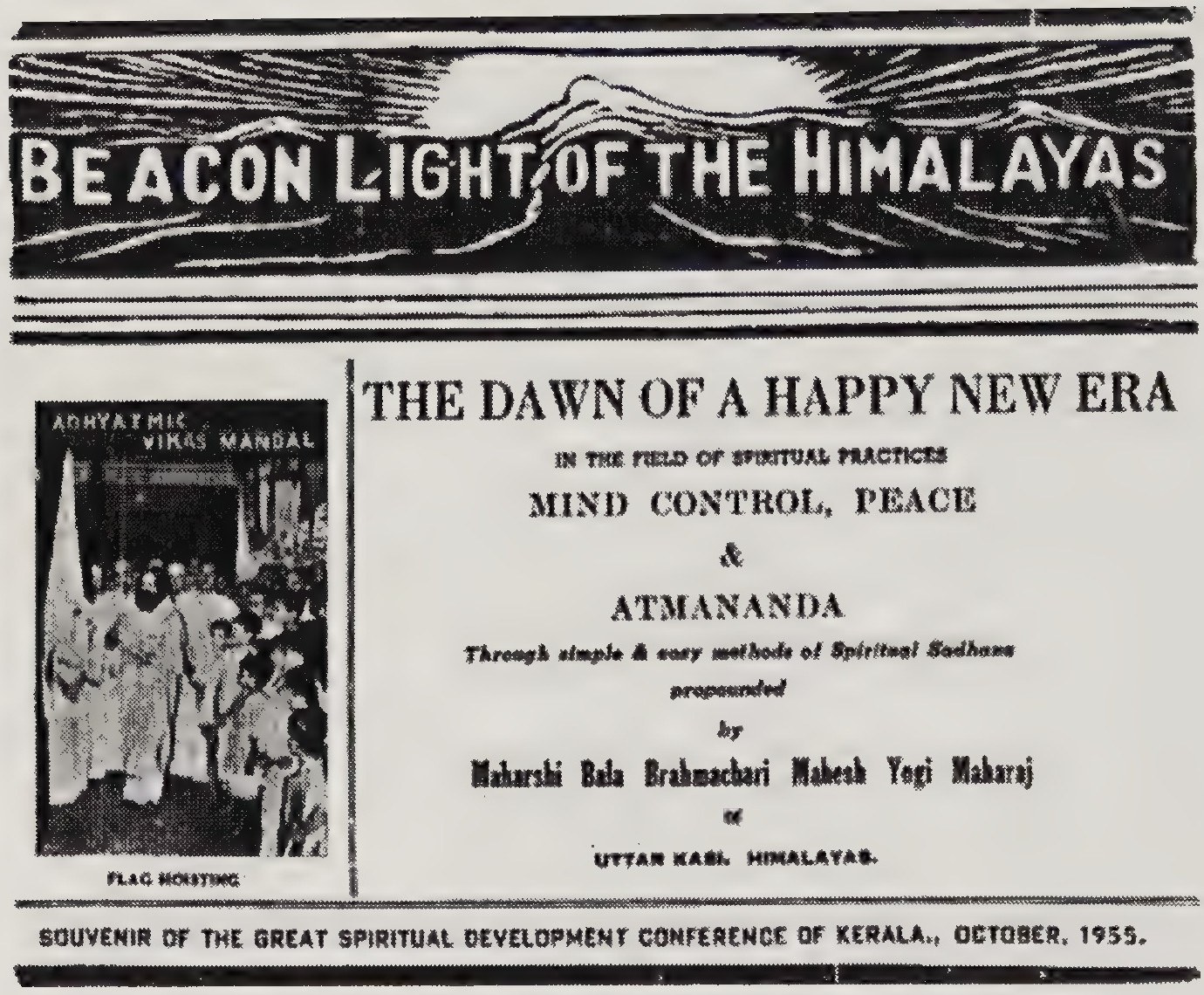
Guru Dev died on 20 May 1953. Another disciple, Swami Shantanand Saraswati, was installed as Shankaracharya on 12 June 1953 (PP-C02-¶029–¶030, pp. 23–24). Mahesh withdrew to a cave at Uttar Kashi. An old monk there told him not to leave: "This is holy ground. All the rest is just mud" (PP-C02-¶039, p. 25). He left anyway, travelled south, and in 1955 was lecturing in Kerala as Bal Brahmachari Mahesh Yogi. By 1 January 1958 he had announced the Spiritual Regeneration Movement, and by the end of that year he had taken it through Burma, Malaya, Singapore and Hong Kong to Hawaii (PP-C03-¶001–¶025, pp. 27–37).
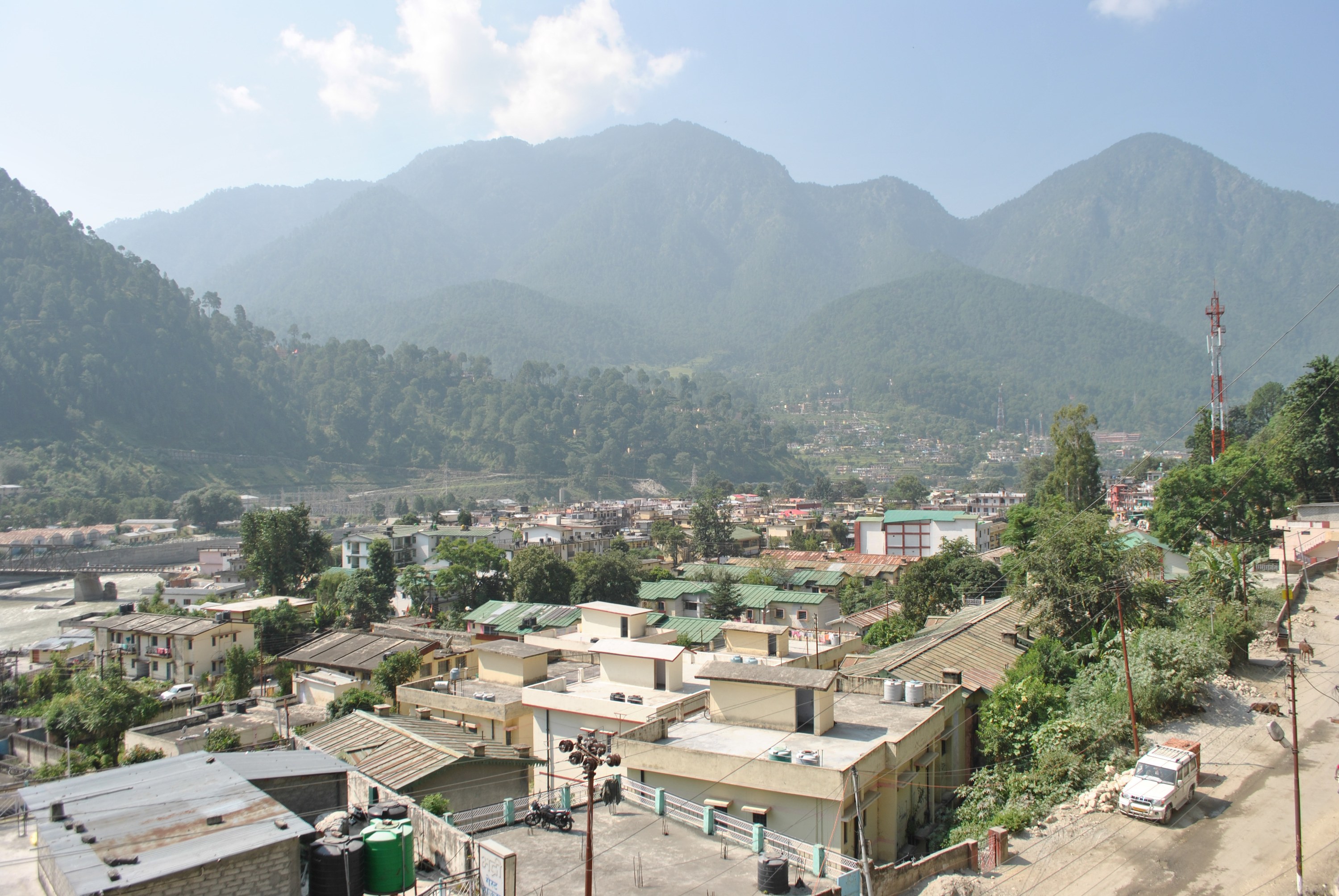
Rajneesh's road ran the other way. He was born Chandra Mohan Jain on 11 December 1931, in the village of Kuchwada, the eldest of eleven children of a Jain family (GG-C01-¶031–¶032, p. 21). His grandparents raised him in his first years and treated him "like a prince." When he was seven his grandfather died slowly of a stroke. "His death," Rajneesh said later, "to me became the death to all attachments" (GG-C01-¶036, ¶038–¶039, p. 22). Gordon reads this as a child's decision to keep others at a distance so as never to be hurt that way again. Villagers remembered a boy who challenged teachers and priests and played tricks, some of them cruel (GG-C01-¶037, ¶042, pp. 22–23).
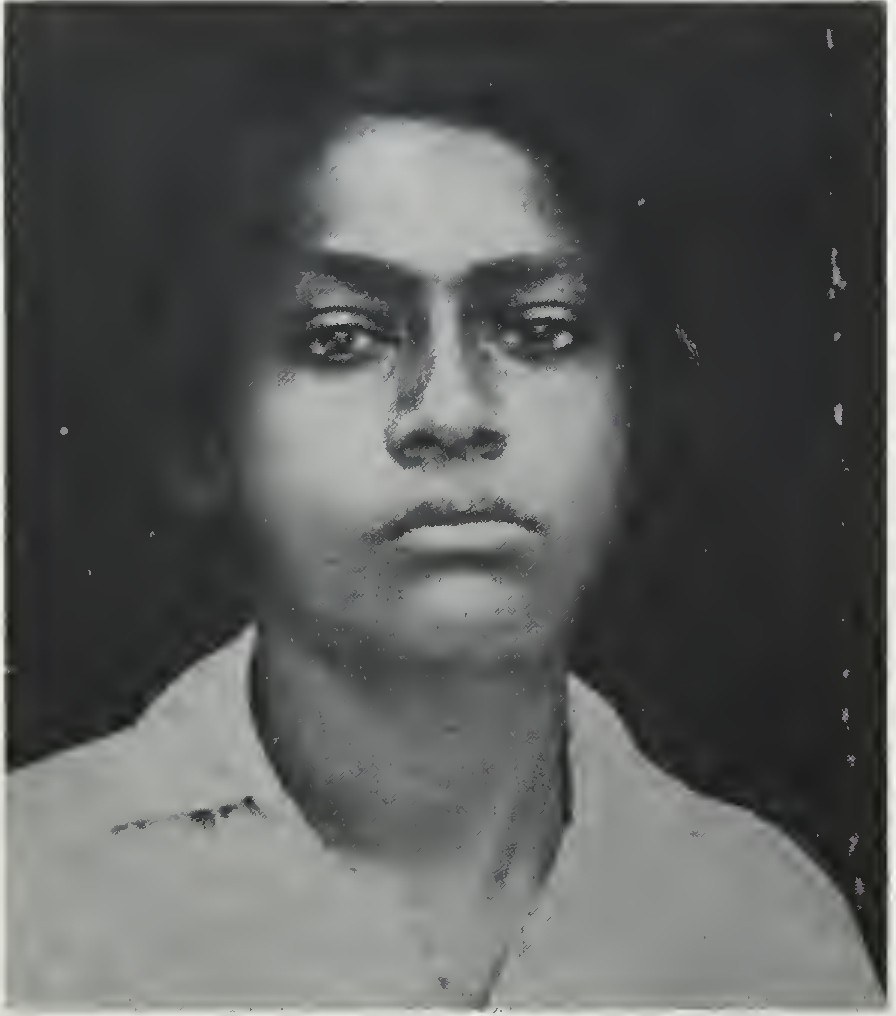
At college in Jabalpur he went through a crisis that Gordon says most Western doctors would have read as an incipient psychotic episode: headaches, loss of appetite, long runs, days on the floor. A traditional physician called it divine intoxication. Rajneesh said that on 21 March 1953, at twenty-one, he became enlightened (GG-C01-¶046–¶051, p. 24). He took a B.A. and an M.A. in philosophy, taught at Raipur and then at the University of Jabalpur, and from 1960 travelled India attacking its institutions, from orthodox religion to Gandhi (GG-C01-¶059–¶068, pp. 25–26). "With or without reason," he said later, "I was creating controversies" (GG-C01-¶069, p. 26). Indian scientists who heard him noted that every other teacher certified himself through a guru and a lineage. "Rajneesh said that he had no guru" (GG-C01-¶072, p. 27).
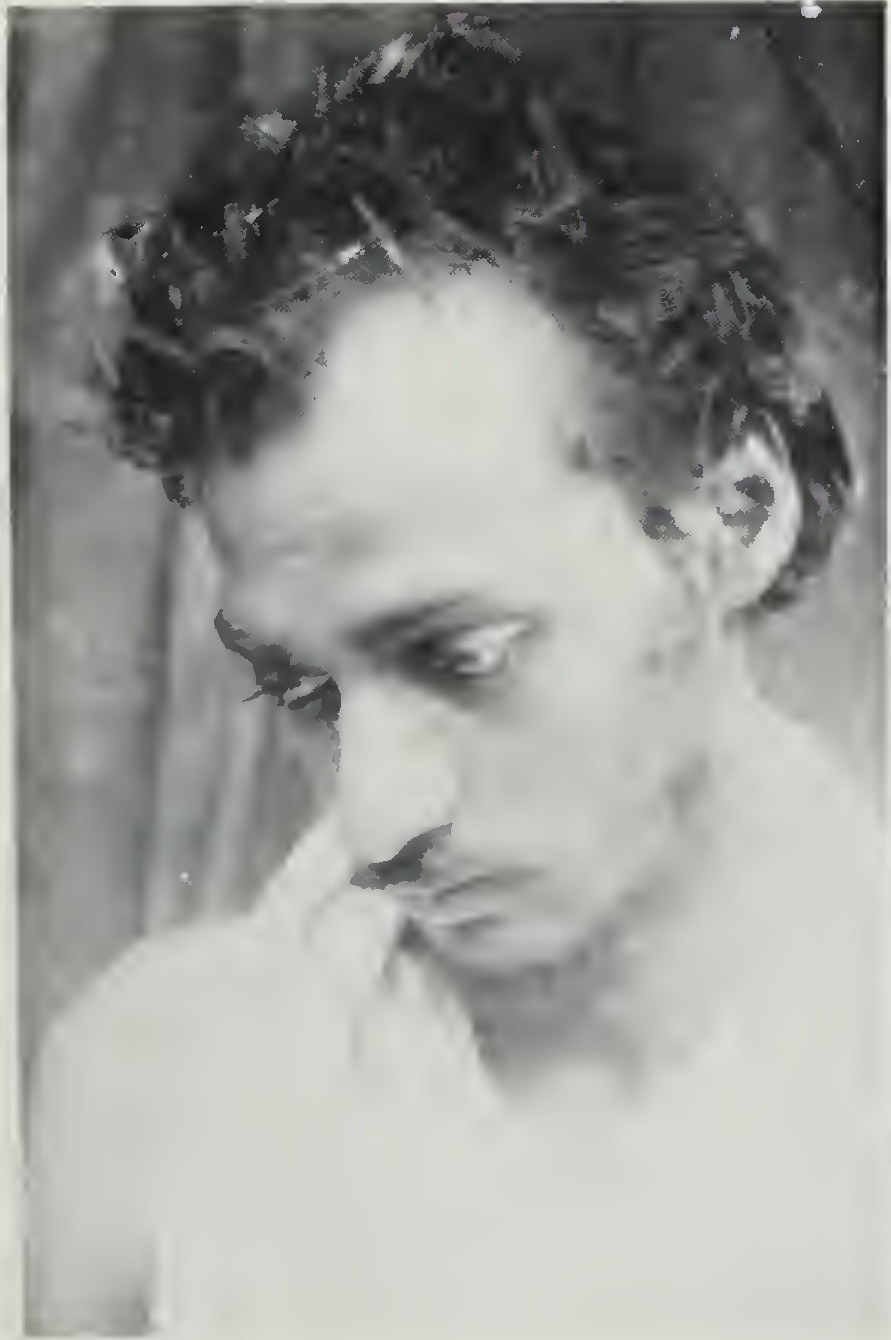
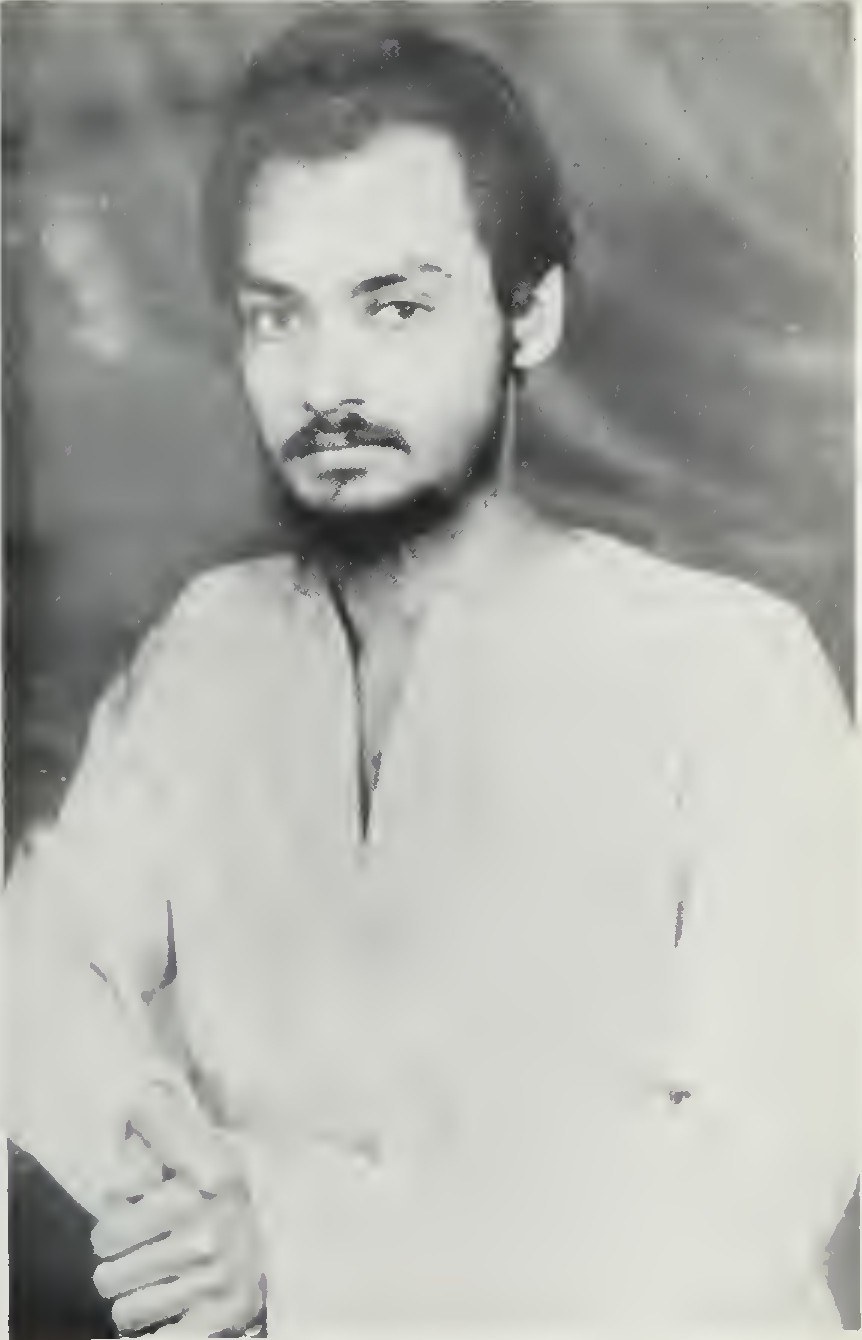
The year 1953 is a hinge for both men. In March Rajneesh declared himself enlightened on his own authority. In May Mahesh lost the master on whom his whole identity rested. One began public life as a man who had been told what to do for about twelve years and now had to choose for himself. The other began it as a man who had never accepted anyone's direction. Neither origin explains everything that followed. But the habits each formed show up again and again: Maharishi's insistence on fidelity to a teaching received from above, and Rajneesh's insistence that nothing outside himself could bind him.
III
Public manner: the giggle and the joke
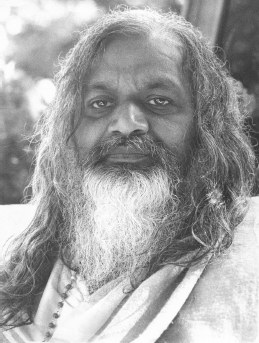
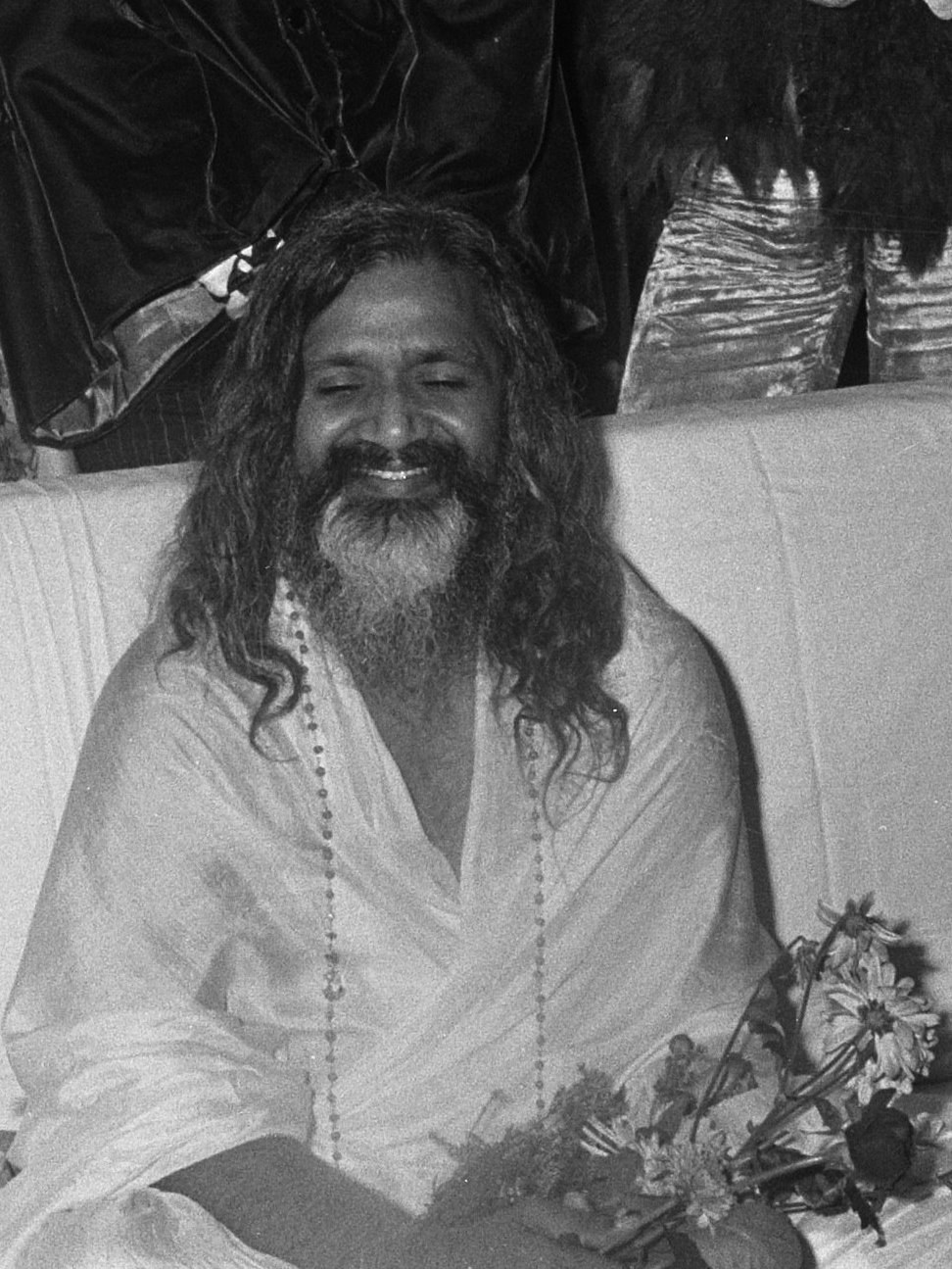
The 1968 press reports agree on Maharishi's public manner. Lewis Lapham, reporting from Rishikesh for the Saturday Evening Post, heard a voice "both high and musical, like the piping of a flute," and a laugh with "a quality of maniacal innocence" (Lapham, Saturday Evening Post, May 1968). That January, at a New York press conference, he deflected every personal question. Asked his age, he answered, "As you look at me." When a reporter pointed out that Jesus had no public-relations men, he replied, "That is why he took so many hundreds of years to be known" (Richard Goldstein, Village Voice, January 1968). The press made the laugh a label, "the giggling guru." Shumsky, who spent years near him, adds her own verdict: he was "the happiest person I ever encountered" (Shumsky, MM-C14-¶010).
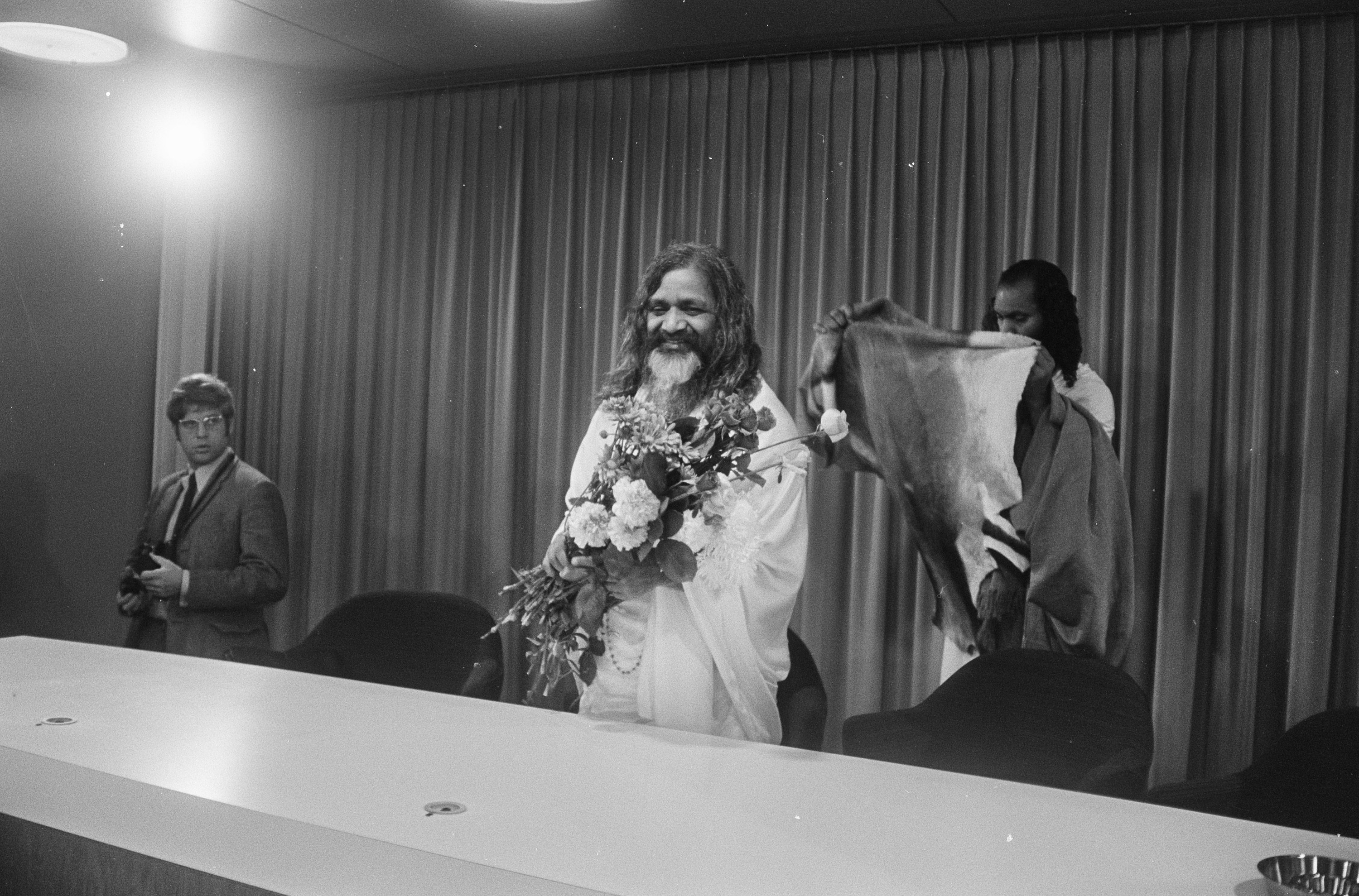
Rajneesh's public register was also soft, but it worked differently. Gordon heard him in Poona in 1979: "He caresses us with his voice, bathes us in sibilants. His pauses are dark and full of promise." Then "a new voice, sly and confidential," would rise to tell a dirty joke. He "invites and seduces us but never badgers or harangues" (GG-C01-¶027–¶028, p. 21). FitzGerald, hearing him in Oregon in 1985, called him "a brilliant lecturer" whose timing was "perfect," "a world-class hypnotist" able to put a hall "into an alpha-wave state at ten in the morning." On television, though, the performance turned to "buffoonery," with "funny faces—anything to entertain or to shock" (CH-C04-¶304–¶305, pp. 357– 358).
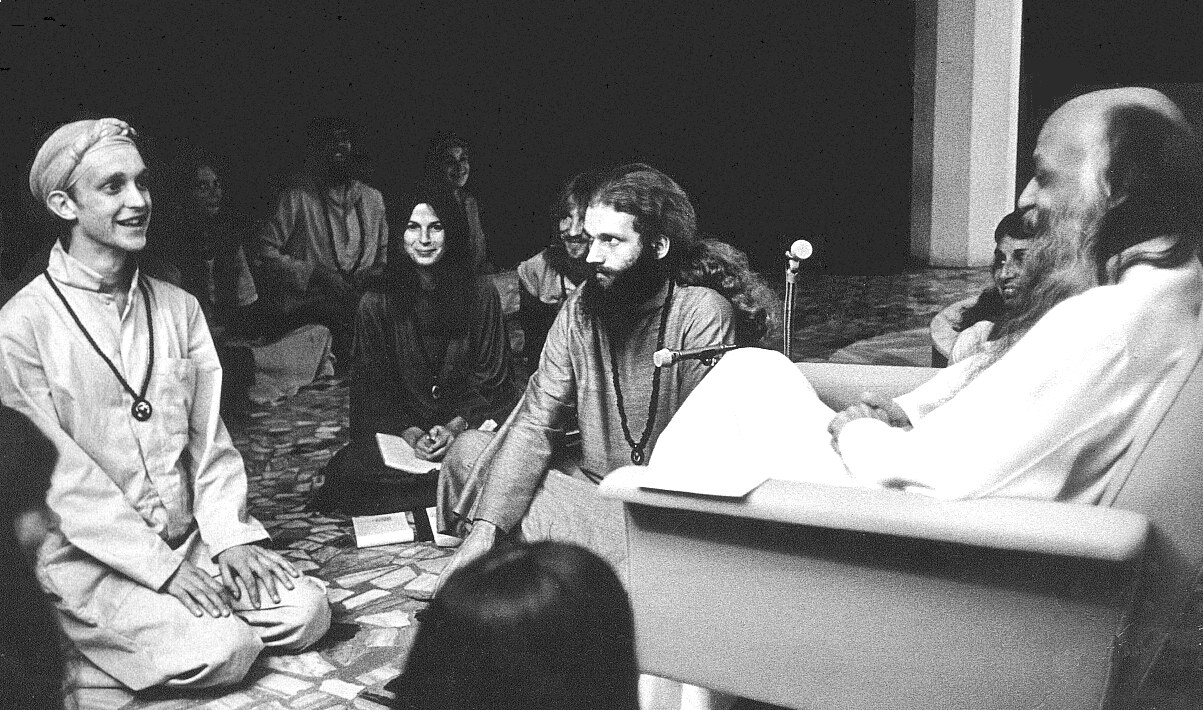
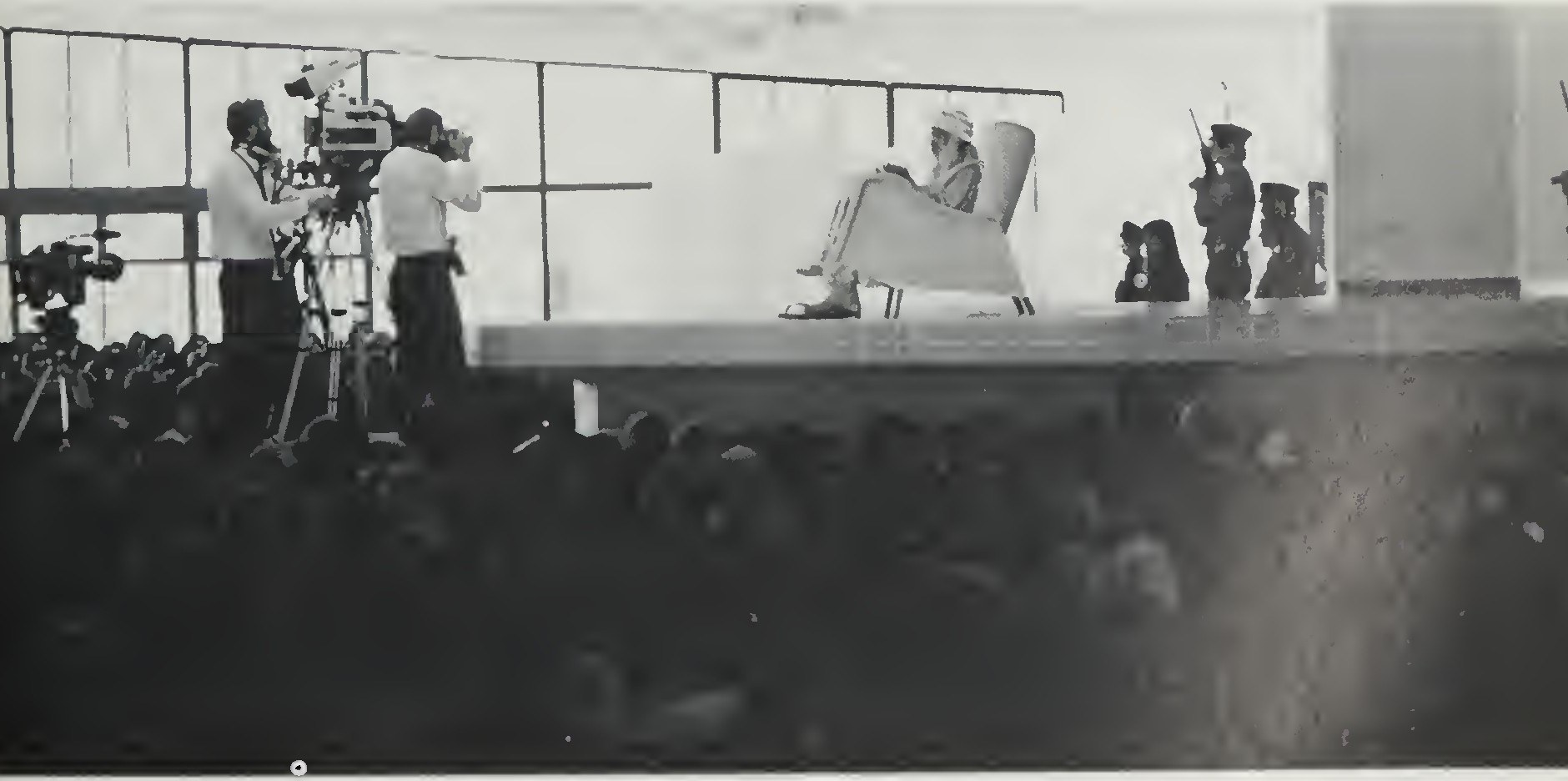
So the resemblance is real. Both men projected stillness, both used laughter, and neither showed effort. Composure was itself the message. But the laughter did different work. Maharishi's giggle defused: it turned a hostile question into a harmless moment and left the questioner nowhere to go. Rajneesh's humor attacked. FitzGerald lists "his anti-Catholic jokes, his anti-Semitic jokes, his anti-Hindu jokes, and his dirty jokes," which made listeners "feel that they belonged to an elite of truly freethinkers" (CH-C04-¶268, p. 341). One man laughed to lower the temperature; the other joked to raise it.
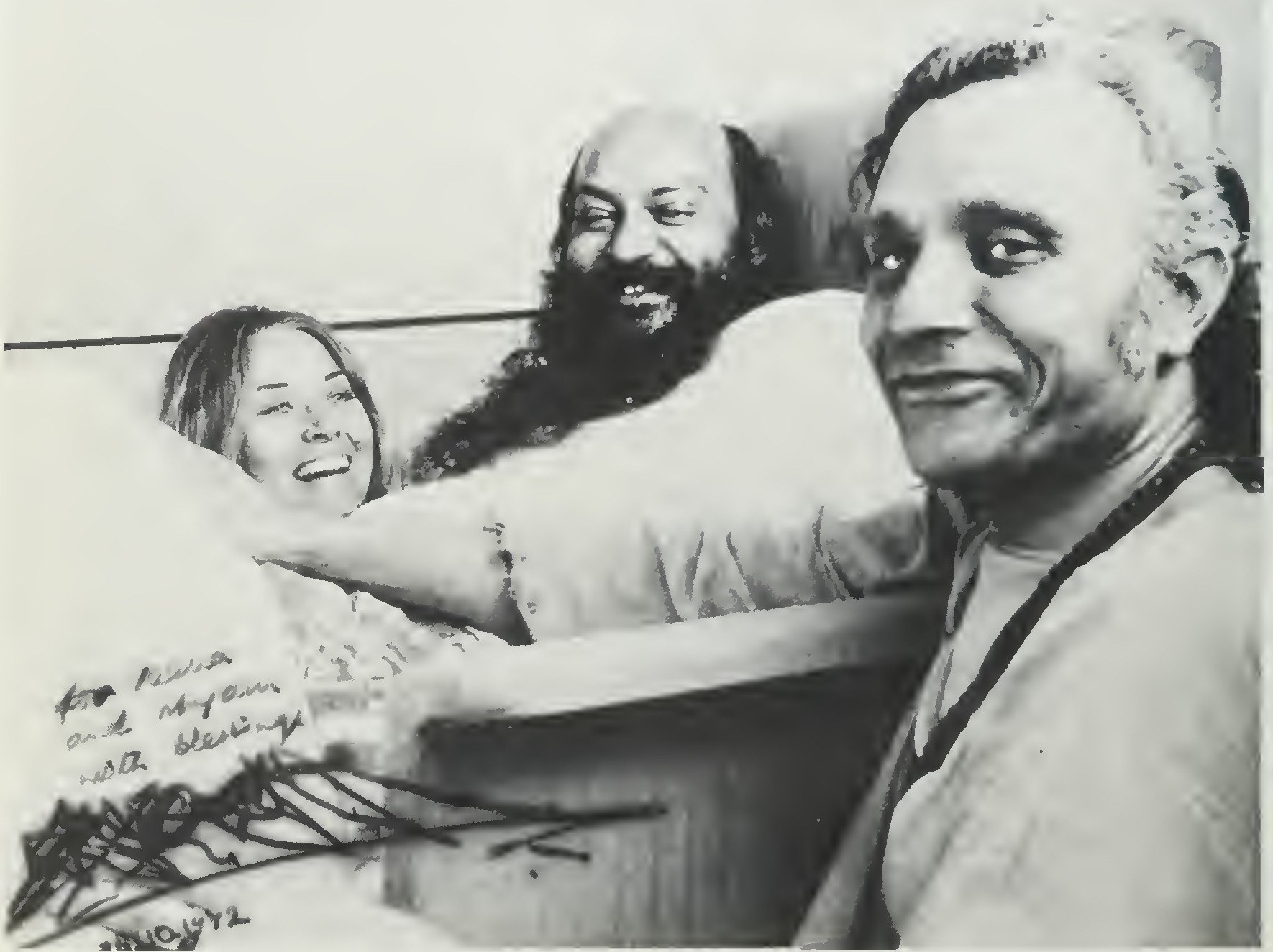
Anger is where the two public faces part most clearly, and where the audience matters. Rajneesh's early career in India was built on "incendiary words" before large crowds (RP-C01-¶020, p. 6). Indian physicians and scientists found his "public confrontations with Hindu priests and Jain monks and Muslim mullahs ugly and dangerous" (GG-C01-¶071, p. 27). In the autumn of 1985 Gordon heard him speak "sometimes . . . with anger, more often with condescension" about Sheela in morning discourses, and in Gordon's own interview Rajneesh denounced his old friend Shyam Singha "sounding angry, exasperated, and petulant," in a tirade that "builds to a crescendo" (GG-C10-¶029; GG-C11-¶046–¶047, p. 197).
Maharishi kept anger away from outsiders but not from his own people. Shumsky describes a night at Interlaken, in the winter of 1973–74, when she made an announcement about an extra course fee, on an order she says he had sent through his attendant. Before several hundred of his teachers he cut her off: "Stop this announcement now." He told the hall to disregard it and said, "These people who hang around me, they are not in tune with me" (Shumsky, MM-C11-¶071–¶079). Two senior staff told her afterward that he had once spent forty-five minutes on a conference call shouting "TM is a science. TM is not a cult" (MM-C12-¶050). That second account is secondhand. Deepak Chopra, writing after Maharishi's death, said the older man "could get angry and dismissive" (Chopra, Beliefnet, Feb. 6, 2008). John Lennon remembered a look on the day he left Rishikesh that he read as "I'll kill you, you bastard" (Lennon, in Jann Wenner, Lennon Remembers, p. 28, as quoted in Shumsky, MM-C18-¶052). That is one angry man's reading of a face.

The defensible claim is narrower than "neither man raised his voice." On the platform built for the public, both performed calm. Rajneesh let anger into public view. Maharishi, so far as these sources show, kept it inside the movement, where he could use it, before an audience of insiders, as a tool of correction.
IV
How each mind worked
Both men borrowed modern knowledge and fitted it to Indian categories. The way each did it says a good deal about how he thought. Mason gives two of Maharishi's lectures from the Cochin conference of October 1955, preserved in a souvenir booklet. In the second, Maharishi laid out a ladder of creation from Agni and Vayu up through Akash, Aham, Mahat and Prakriti to the Brahma-Tatwa, the ultimate reality. Then he placed physics on it: "Electrons and protons of the modern science, seen through the Indian system of analysis of the universe, are manifestations of Agni-Tatwa and Vayu-Tatwa combined." His conclusion was that "the present day science has reached up to Vayu-Tatwa" (Mason, PP-C03-¶006, p. 29). This is a precise act of interpretation. Science is neither rejected nor allowed to revise anything. It is assigned a rung, low on a ladder whose top it has not reached. The tradition stays whole; the modern world is welcomed as a late arrival.
The other lecture shows the same habit applied to people. The syllable om, he said, "is the Mantra for the Sanyasi," given at the moment of renunciation, and it destroys desire. If a householder repeats it, the effect "starts with monetary loss and then goes on to destroy objects of affection, one by one." So the householder should not renounce at all: "It is not at all necessary for the householder to go for direct practice of 'Tyaga' or 'Vairagya' [Renunciation] for realisation. That practice is unnatural for him" (PP-C03-¶007, pp. 29–30). The reasoning runs from a fixed order of stations in life to the right practice for each. A sound's effect depends on who says it. Mason, stepping out of his narrative, adds his own comment on the message that one need not become a monk: "There must therefore be a catch!" (PP-C03-¶007, p. 31).
Aryeh Siegel, a former TM teacher writing as a critic, argues that Maharishi spoke one way to Hindu audiences and another to Westerners (Siegel, Transcendental Deception, TD-C02-¶084, p. 46). Mason's account partly supports him. The 1955 talks invoked Shiva and the blessings of Guru Dev, and the booklet, as Siegel quotes it, says "we select only the suitable mantras of personal gods" (TD-C02-¶083, p. 45). By 1958, speaking in Malaya to Indians, Sikhs and Buddhists, Maharishi described his system as "a golden link to connect and harmonize materialism and spirituality" (Mason, PP-C03-¶016–¶017, p. 35). The framing moved with the audience. But the core claims did not move: bliss in this life, no renunciation for householders, and a technique that worked whatever one believed. And even in 1955, before a wholly Hindu audience, he was already reaching for physics.
His personal manner was mostly directive. To Lapham in 1968 he said, "I keep saying, 'Do this, do that.' How they do it is their headache" (Lapham, Saturday Evening Post, May 18, 1968). Asked whether his technique worked, he said, "Maybe, it works" (Goldstein, Village Voice, 1968). Shumsky's years on his staff in the 1970s show orders given and withdrawn without explanation, and one rule stated flatly: "Never, never speak about money while I'm in the room" (Shumsky, MM-C12-¶023). But the record also shows him asking. Judith Bourque, then twenty-two, says that one night in 1970 he asked her whether he should become Prime Minister of India or remain a spiritual leader (Bourque, Robes of Silk, RS-S28-¶004, p. 96). Shumsky says he had her choose the firm that would audit the movement's accounts (MM-C11-¶020–¶024). These are private consultations, not public argument, and both come from memoir. They do suggest a man who sought views in private while never submitting his teaching to debate.
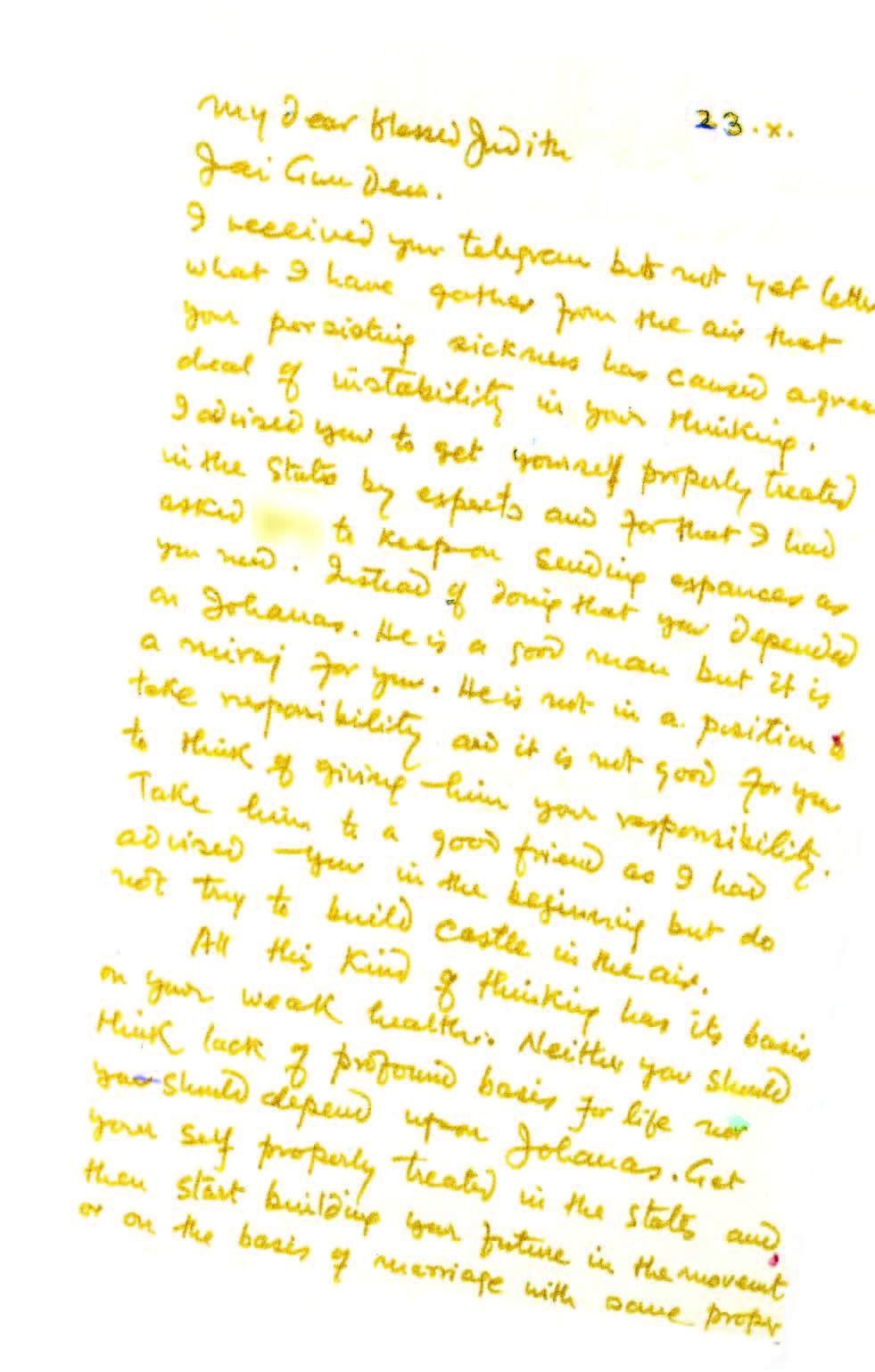
Two habits run through all the decades. The first is that he explained distress and doubt as states of the body. When Bourque wrote to him about leaving, his reply in October 1971 put her thinking down to "your persisting sickness" and told her to get treated (RS-S34-¶019–¶020, pp. 144–145). When Prudence Farrow broke down at Rishikesh in 1968, he said her nervous system had been damaged by drugs (Shumsky, MM-C17-¶031). The movement's word for distress during meditation was "unstressing" (MM-C23-¶062). This habit served his authority, since an objection could be treated as a symptom. But it also looks like sincere belief. A man who had placed electrons on a Vedic ladder in 1955 really did think of mind as a physical system to be purified, and his later "science" was in part a conviction, not only a costume.
The second habit is a double message about dependence. "Don't look to anyone," he told Shumsky, handing her a flower (MM-C14-¶077). Years later, when she said he too had depended on Guru Dev, he snapped, "Don't compare yourself to me." Then he softened: "You are too much dependent upon me as a person. I won't always be here" (MM-C15-¶131–¶135). Shumsky warns that some quoted statements in her book are edited or composited, so no single line can carry much weight. But the pattern repeats across her account. The disciple who had once slept outside his own master's door asked for obedience, and also told his followers not to lean on him. He seems to have treated his own discipleship as unique.
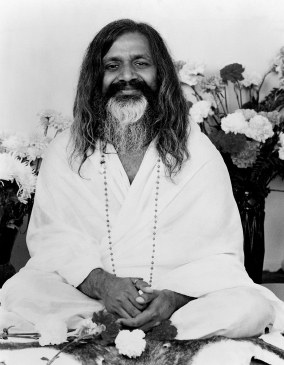
Rajneesh's reasoning reaches us mainly through Gordon's paraphrase, since this essay has no primary texts of his talks. Gordon summarizes his reading of Tantra: not a religion but "a scientific, psychological method" whose tool was awareness. The energy that Wilhelm Reich "had called 'orgone energy,'" Tantra "called Shakti" (GG-PRO-¶046, p. 9). Like Maharishi, he mapped a Western idea onto an Indian one. But the direction differs. Maharishi placed physics beneath the tradition. Rajneesh used Reich and Tantra to vouch for each other, and then for his own method. From the same source came an argument against celibacy itself: religions that suppressed sexuality "would produce frustrated, hypocritical, and sadistic people who would condemn in others what they denied in themselves" (GG-PRO-¶047, p. 9).
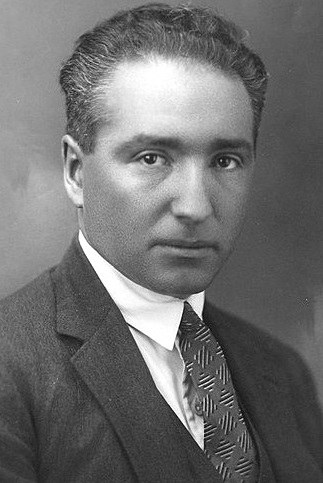
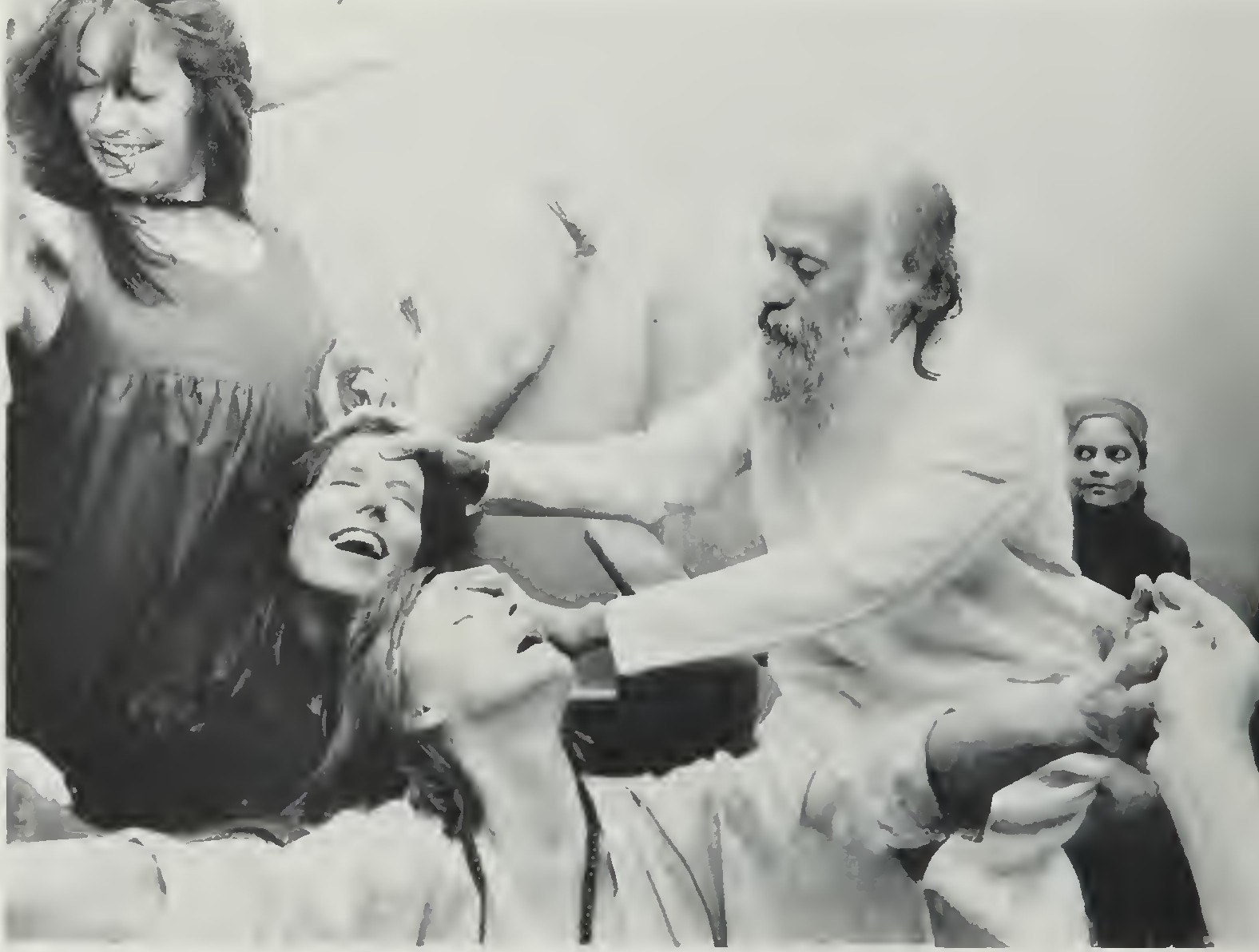
Gordon admired much of this and still closed the books "angrily." He objected to "inaccuracies in the quotations, quotations not attributed to their sources, interpretations that seemed tortured," and "contradictions that appeared to be unexamined rather than paradoxical." Rajneesh answered such objections in advance: "I am not a scholar.... I live [Tilopa's words] again. I give them a new idea, a new shape, a new being" (GG-PRO-¶049–¶050, p. 10). Contradiction was doctrine. "Confusion is my method," he said (GG-C02-¶130–¶132, p. 59), and, in his last English discourse before leaving India, "I am a man who is consistently inconsistent" (CR-C02-¶002, p. 38). Carter names the movement's governing rule as "Contradictions do not matter" (CR-C01-¶011, p. 4).
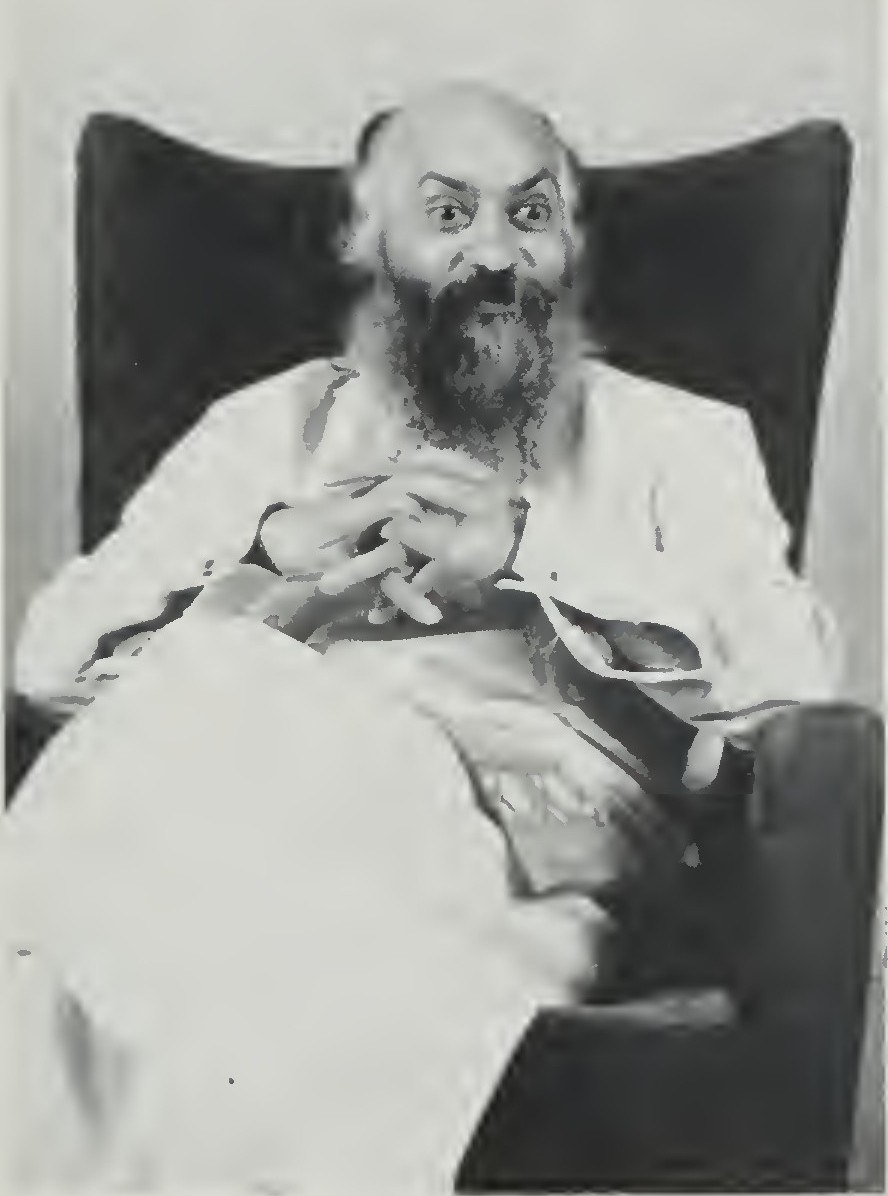
Set side by side, these are two kinds of interpreter. Maharishi read as a custodian. He received a complete system from his master and fitted everything new into it, and he held his followers to "purity of the teaching" (Shumsky, MM-C23-¶056). Rajneesh read as an author. He took texts as material for his own voice and felt free to change them, and himself, from one day to the next. Both habits protected the speaker. In Maharishi's closed system an objection was a misunderstanding or a symptom. In Rajneesh's moving one, any statement could be withdrawn tomorrow. Neither habit measures depth of mind. The consequences differed. Maharishi's consistency produced an institution that could repeat his formula after him. Rajneesh's inconsistency produced, in Carter's analysis, communities without shared norms, which fell back on "personal confrontation, banishment from the group, and arbitrary charismatic authority" (CR-FM-¶002). That is the setting in which Sheela flourished.
V
The threshold: a technique and an identity
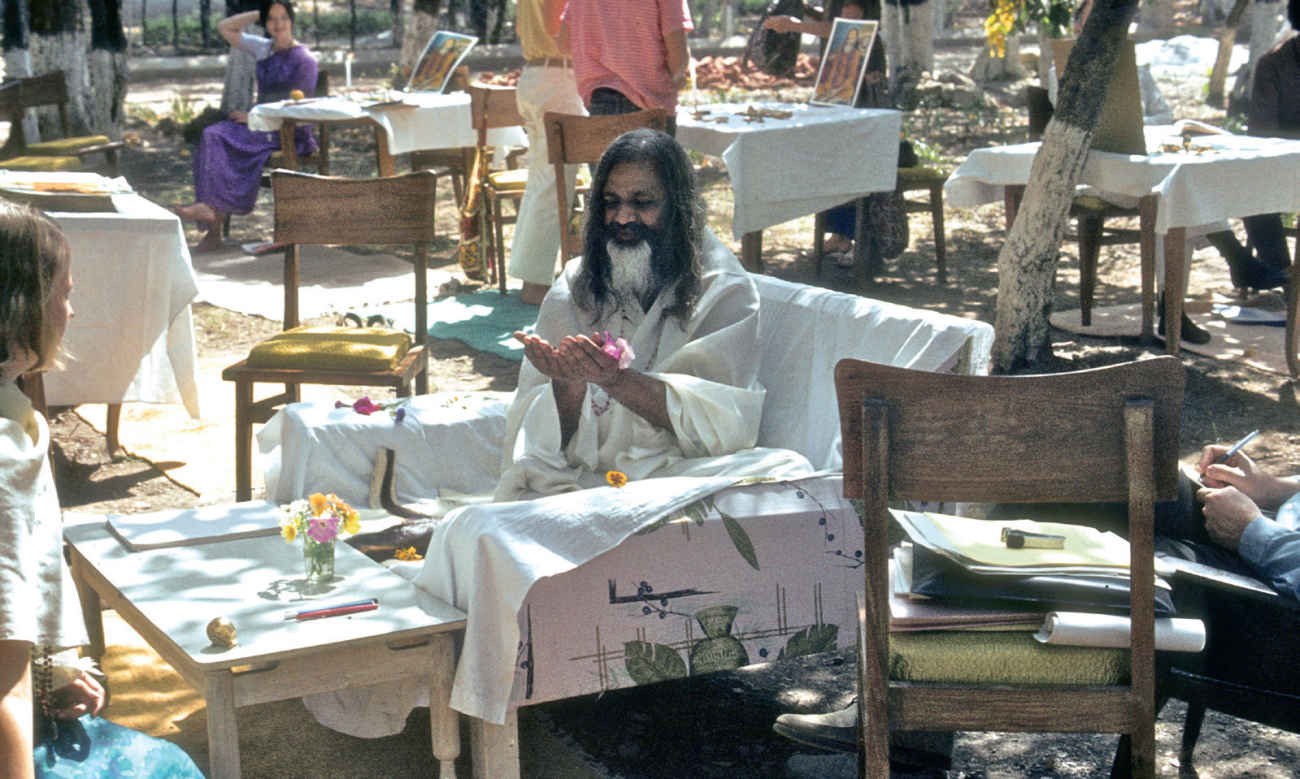
The familiar contrast is strongest at the point of entry. What did a newcomer have to do, and what did it cost? Maharishi offered a technique. Judith Bourque describes her own initiation in Cambridge, Massachusetts, in the summer of 1968. She brought flowers, fruit and a white handkerchief as asked. Her teacher performed a short ceremony in a language she did not understand, before the picture of an old man sitting cross-legged, and then gave her a mantra and showed her how to use it (Bourque, RS-S17-¶005–¶006). Aryeh Siegel, who later taught TM himself, says the ceremony was a Hindu puja that teachers memorized word for word in Sanskrit, and that it ended with a bow to a photograph of Maharishi's guru (Siegel, TD-INT-¶009). A movement booklet, The Holy Tradition, as Siegel reproduces it, already foresaw the objection: someone, "seeing us making offerings before a picture, might argue that we are a sect." The answer given was that the offerings were simply "ways of bowing to GURU DEV" (TD-C02-¶018). What came after the ceremony was simple. Gordon, writing as Rajneesh's biographer, observed that the "vast majority of TMers continued to go about their lives as students and workers, pausing to meditate on their mantra for just twenty minutes, twice a day" (Gordon, GG-PRO-¶059, pp. 11–12).
This light threshold was doctrine, not only marketing. In 1955 Maharishi was already telling Indian audiences that a householder should not renounce, because renunciation was "unnatural for him" (Mason, PP-C03-¶007, pp. 29–30). And for many it delivered what it promised. Shumsky, whose book is largely critical, says of her first years of practice: "TM did work. It ended a good deal of pain." Twice a day, she writes, "we experienced something massively better than misery" (Shumsky, MM-C03-¶026).
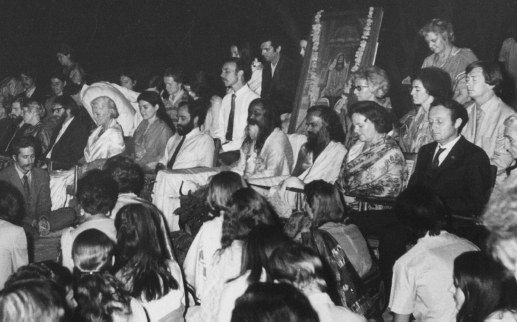
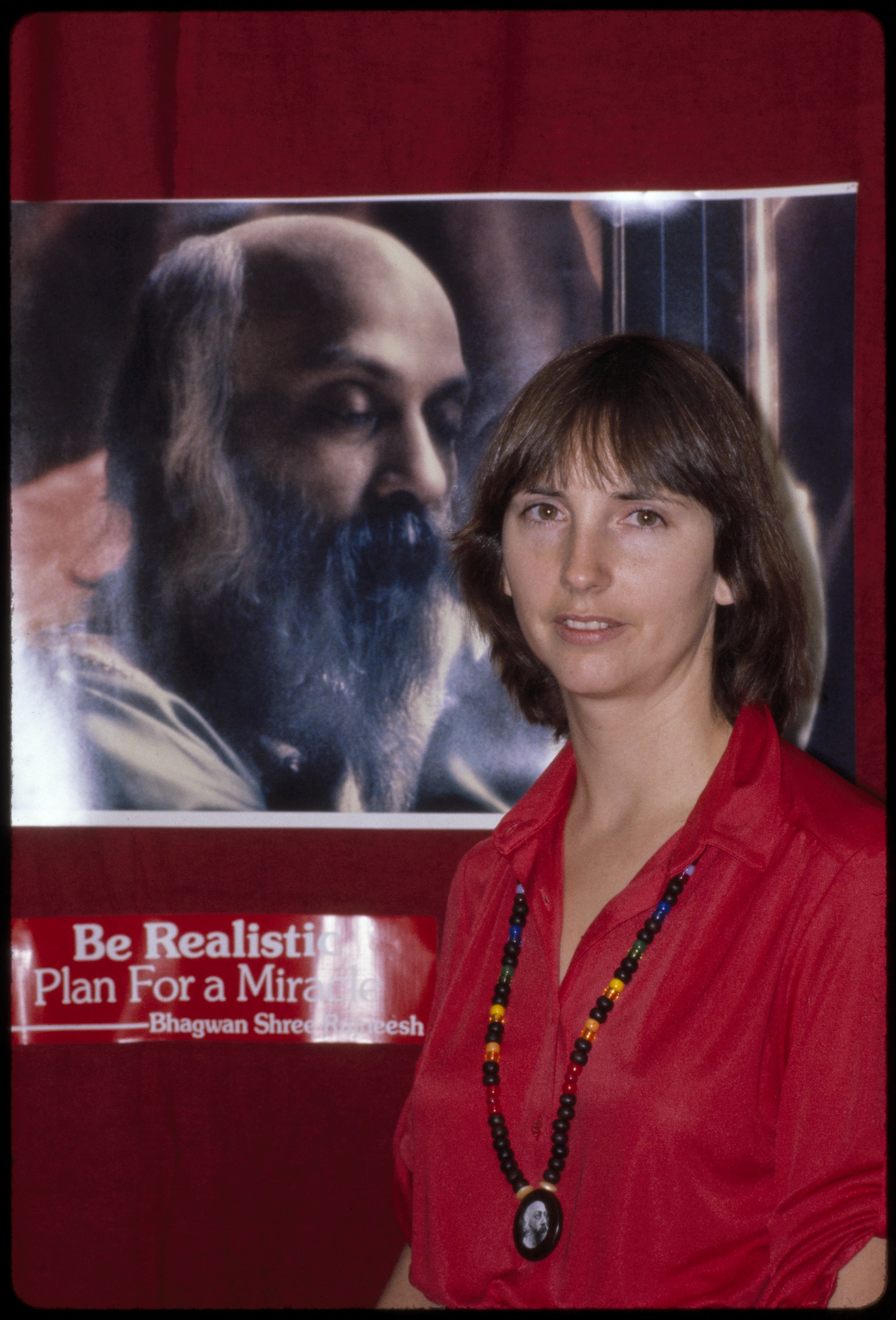
Rajneesh offered an identity. Taking sannyas meant a new Sanskrit name, clothes in sunrise colors, and a mala of 108 beads with his photograph in the pendant. New disciples, King writes, "shed their identities and became reborn at Rajneesh's feet" (King, RP-C01-¶026, p. 8). Carter calls the renaming a "born again" practice, joined to an instruction to shed one's "character," meaning one's prior beliefs and upbringing (Carter, CR-C02-¶039). Gordon's summary is exact: the clothes, the mala, the name and the new identity "bound the sannyasins to each other and to him" (GG-EPI-¶012, pp. 235–236). The cost could be severe. One woman who had left her children in the West in 1972, at Rajneesh's urging, later called him "the sadistic, controlling, sociopathic son of a bitch" (GG-C08-¶007). Satya Bharti, an American who handed her three children to their father so she could go to Poona, described rocking back and forth at the ashram, crying "I want my baby back." When she went to Rajneesh for help, she wrote, he told her, "They're not your responsibility anymore.... They're my responsibility now" (FitzGerald, CH-C04-¶128–¶132, pp. 295–296).
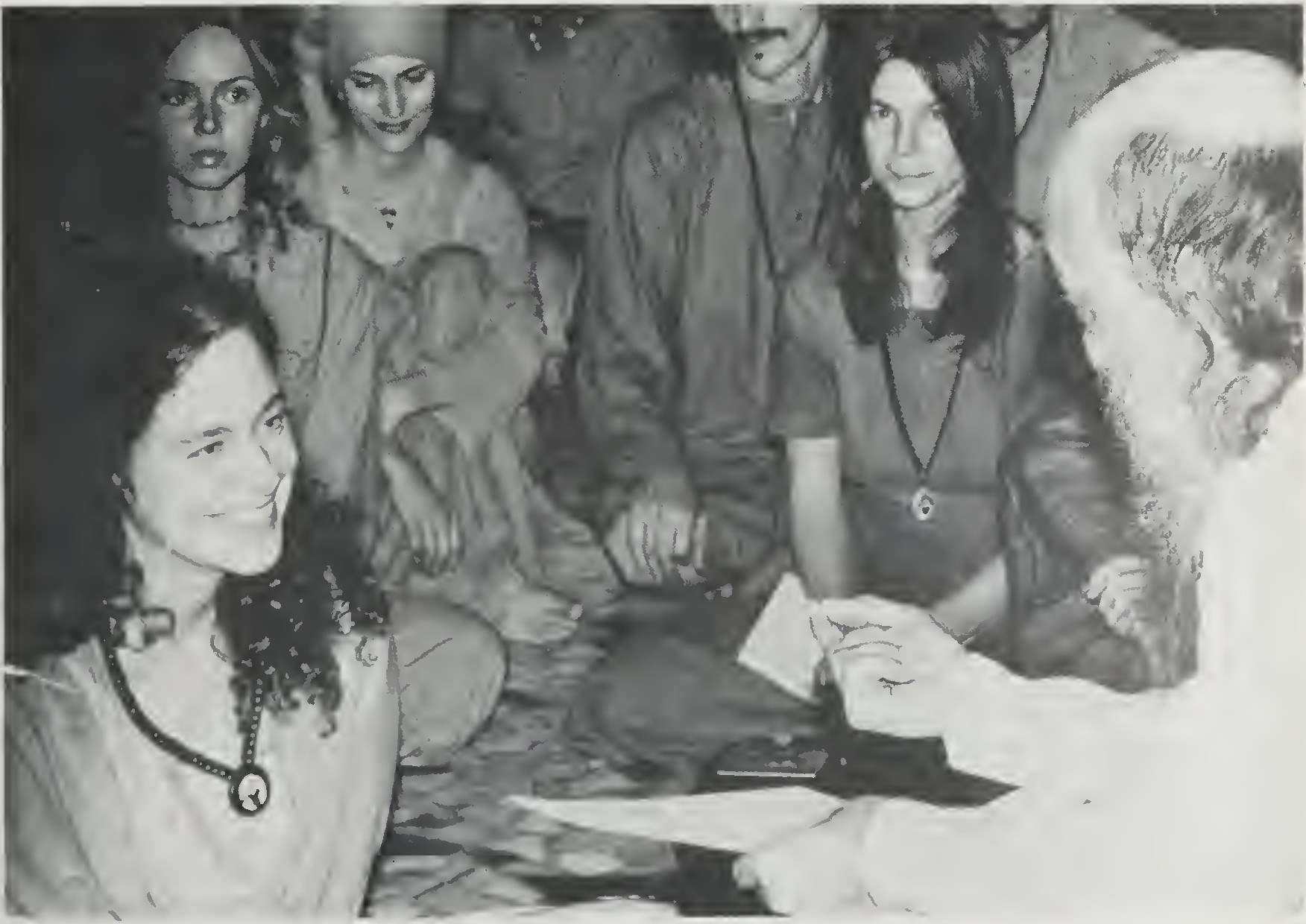
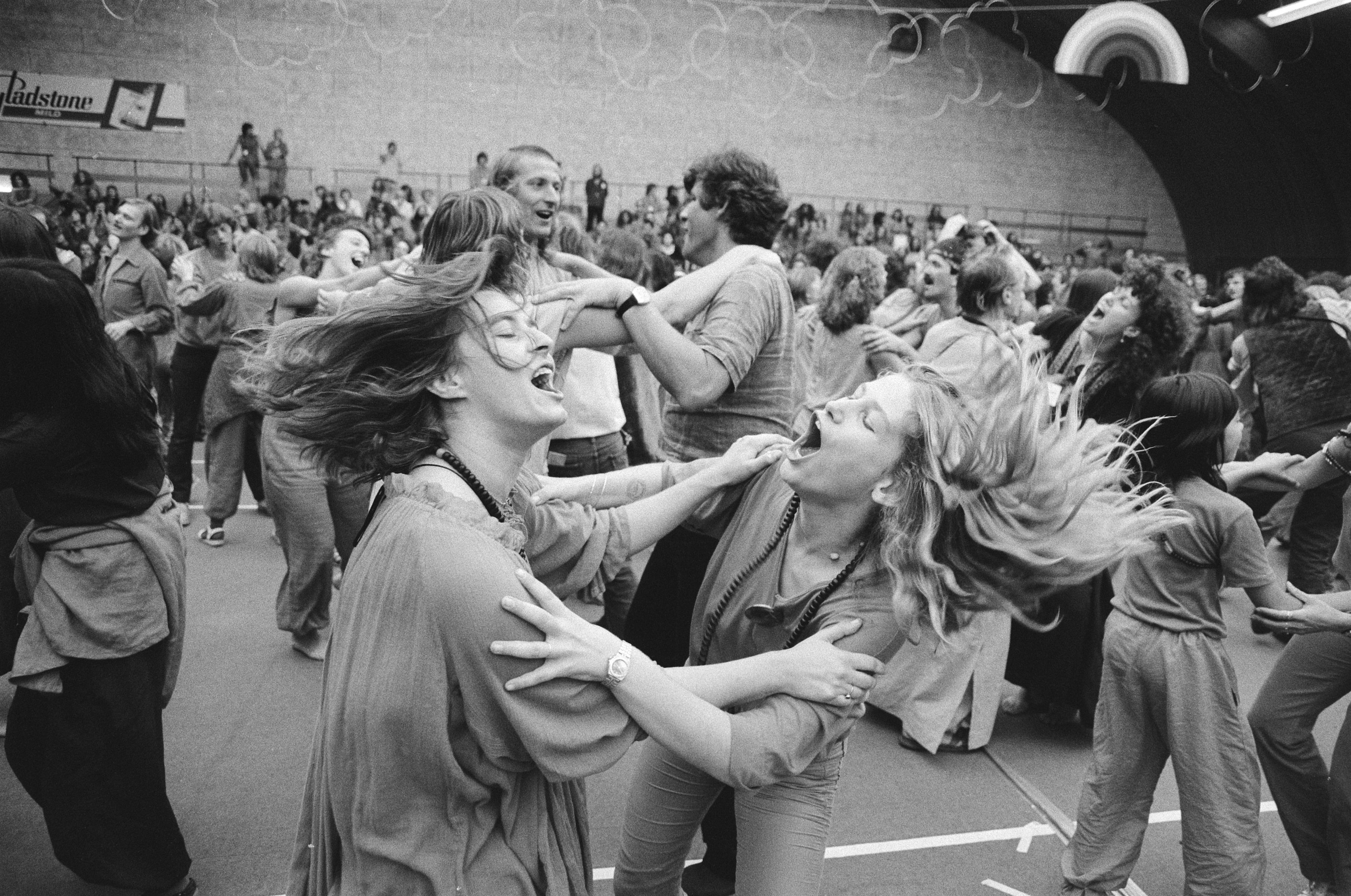
The contrast loses its neatness at both ends. Rajneesh's early offer was more accommodating than "rupture" suggests. He "required no vow of poverty or silence or chastity, no renunciation of personal goods or relationships," and his neo-sannyasins were to "pursue careers and remain productive members of society" (King, RP-C01-¶025, ¶028, pp. 8–9). On this one point he and Maharishi agreed: neither asked the householder to give up the world. Several thousand people took sannyas by mail, Gordon says, before they had ever seen the man (GG-C02-¶096). After Oregon, Carter found former residents who kept "dual identities," a sannyasin social life alongside a conventional working one (CR-C07-¶037, p. 253).
Maharishi's light entry, for its part, opened onto an inner ring that asked a great deal. Shumsky, who spent years in it, puts the two tiers in one sentence: "Maharishi said the path was easy. Yes, it was easy for those who stayed home, meditated twenty minutes twice a day, and never got involved with Maharishi" (MM-C14-¶057). In 1975 he began a six-month course in the siddhis, the supernormal powers of Patanjali's Yoga Sutras, and told his staff that everyone must take it. Those who could not afford it should "go home and raise money" (MM-C12-¶106–¶107). Siegel says that as a full-time teacher he was meditating four hours a day (TD-INT-¶002). Shumsky describes the group program at Fairfield, Iowa, in the 1980s as taking about five hours a day (MM-C20-¶055). Looking back, she quotes Maharishi's old promise that twenty minutes twice a day was all that mattered, and asks, "Whatever happened to that?" (MM-C23-¶055). A former TM teacher made the same complaint in court. She alleged that the movement's claim that TM "involves only 20 minutes twice a day" was "not true." Her suit was never tried. The trial court held it filed too late, and the District of Columbia Court of Appeals affirmed (Hendel v. World Plan Executive Council, 705 A.2d 656, D.C. 1997).
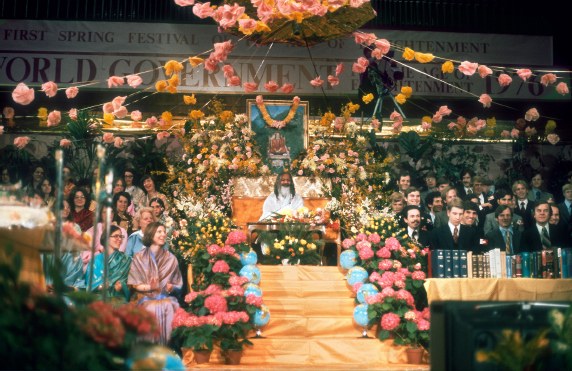
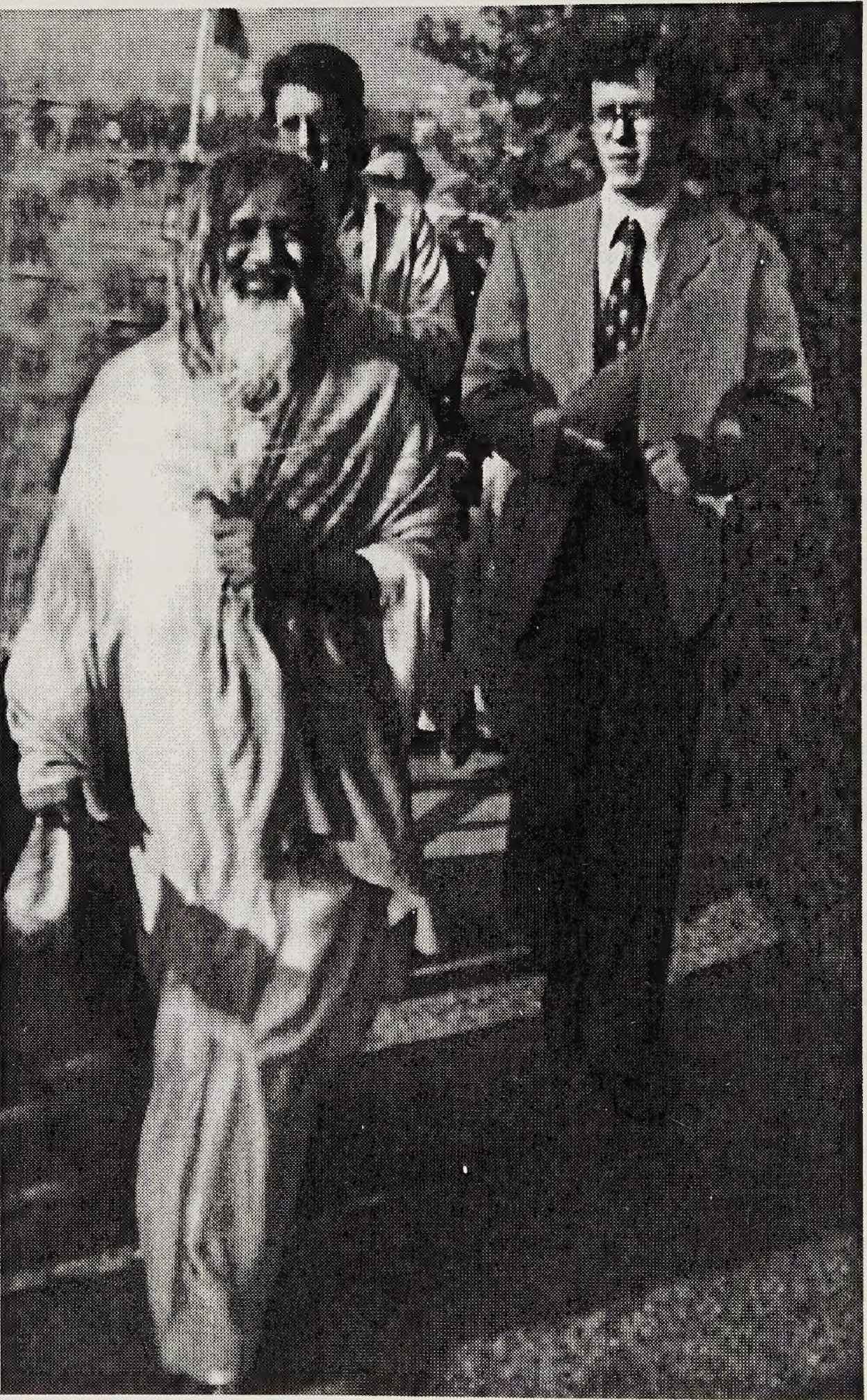
So the real difference is where each man placed the visible threshold. Maharishi kept the entry light and the inner rings mostly out of public sight. The public face of TM was a busy person who meditated before work. Rajneesh made the threshold itself dramatic. Orange clothes in a Bombay street, or red ones in an Oregon county seat, announced a break whether or not the wearer had made one. That was deliberate. Rajneesh, FitzGerald notes, "had talked about the provocation that people wearing red clothes and malas were to everyone else" (CH-C04-¶268, p. 341).
What this did to followers can be said only for the people these sources describe. An ordinary meditator in TM could stop meditating and tell no one. An ordinary sannyasin who left gave up a name and clothes that family, neighbors and employers had seen. But the inner rings of both movements made leaving hard, and the memoirs of Bourque and Shumsky show how hard. Both women describe years of trying to separate their own judgment from their teacher's. That struggle is not peculiar to Rajneesh's sannyasins. What differed is how many people were drawn into the inner ring, and how openly it was displayed.
VI
Fame and the powerful
Both men sought out the famous, and both used famous names as proof that the method worked. The difference lies in the kind of prestige each found most useful. Maharishi courted the powerful long before he met any rock star. Mason notes that from the 1955 conference onward he showed "a marked tendency to court the approval and sponsorship of the powerful and the rich," and made sure to sit beside people of high standing at public functions. In Singapore in 1958 the Chief Minister opened his meditation centre (Mason, PP-C03-¶022, p. 36). Yet when Indian businessmen offered to sponsor his first journey abroad, Mason says he turned them down, because "your connections will be business connections, and they are based on profit" (PP-C03-¶014–¶015, pp. 33–34). He wanted patrons, not partners.
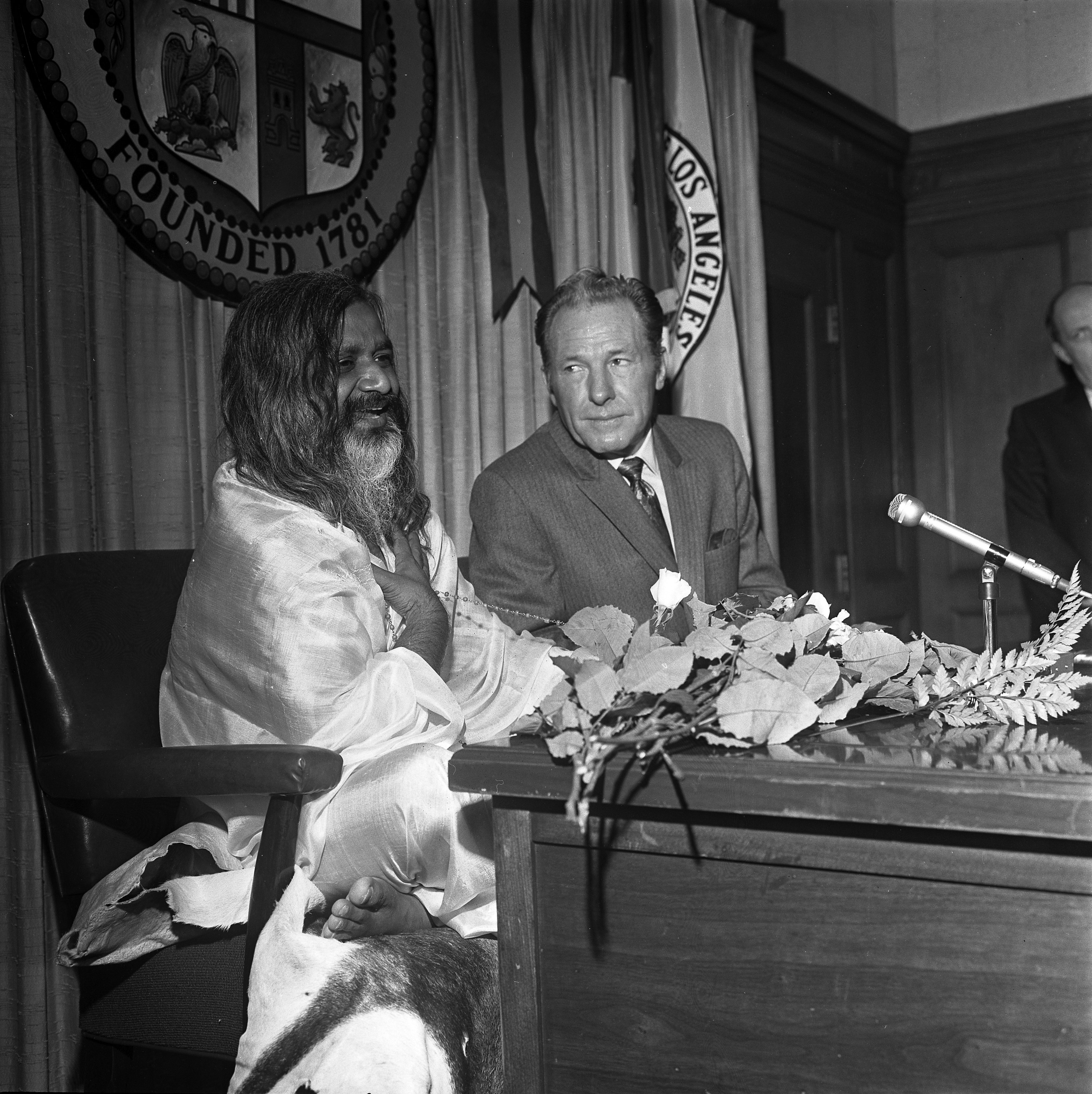
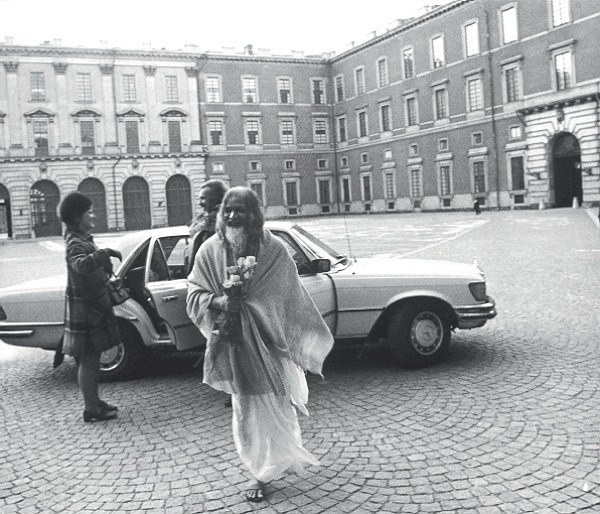
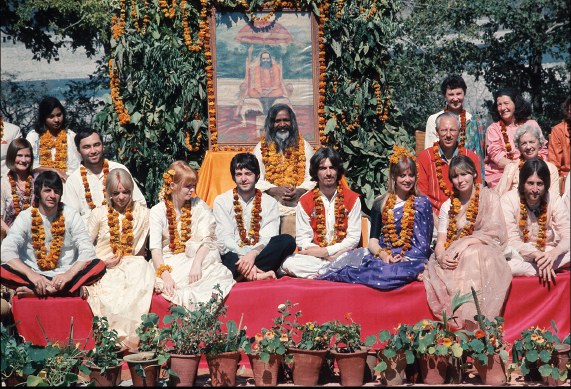
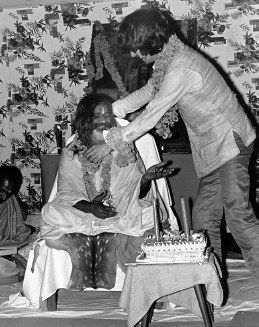
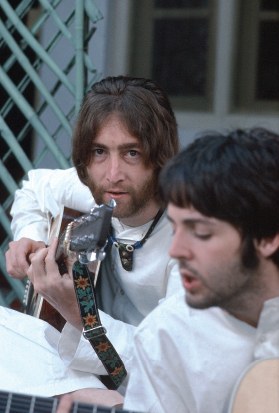
With the Beatles in 1967 and 1968, celebrity became the engine. Time called him "Soothsayer for Everyman," and the New York Times Magazine called him "Chief Guru of the Western World" (as quoted in Shumsky, MM-C04-¶035). Lapham heard him call the Beatles "the blessed leaders of the world's youth" (Lapham, Saturday Evening Post, May 18, 1968). Shumsky, drawing on published memoirs of the band and its staff rather than on her own observation, says that he kept promising ABC a television special with the Beatles although they refused it repeatedly, and that they were asked to give a tenth or more of their income to the movement (MM-C18-¶021). Lennon and Harrison left Rishikesh suddenly in April 1968 (MM-C18-¶043–¶051). Lennon told a television audience a month later, "We believe in meditation, but not the Maharishi and his scene," and McCartney said, "We made a mistake. We thought there was more to him than there was" (as quoted in Shumsky, MM-C04-¶047– ¶048). Lennon put him into a song as "Sexy Sadie" (MM-C18-¶068). Years later McCartney came round. When Maharishi died, the Associated Press reported that he had always "insisted he had done nothing wrong and years later McCartney agreed with him" (AP obituary, Feb. 6, 2008).
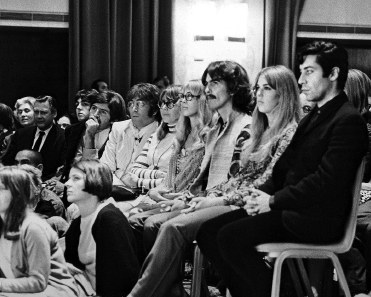
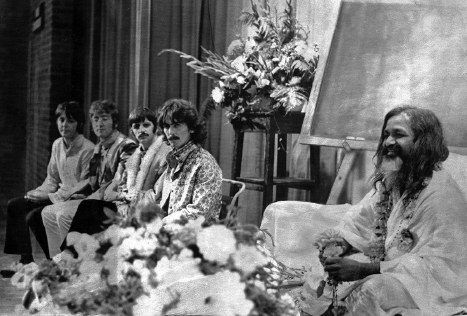
The next wave came through American television. Siegel and his family sat in the studio audience for both tapings of The Merv Griffin Show in 1975, the second with Clint Eastwood beside Maharishi on stage (Siegel, TD-C01-¶037). The movement credited those appearances with nearly 300,000 new initiates (TD-C01-¶038). That figure is the movement's own. By Siegel's account the surge faded within two years (TD-C01-¶039).
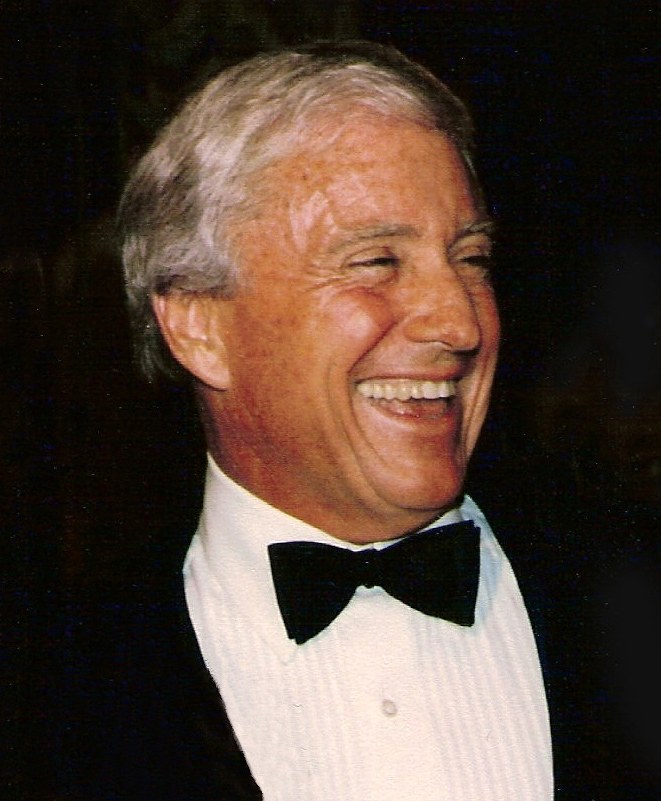
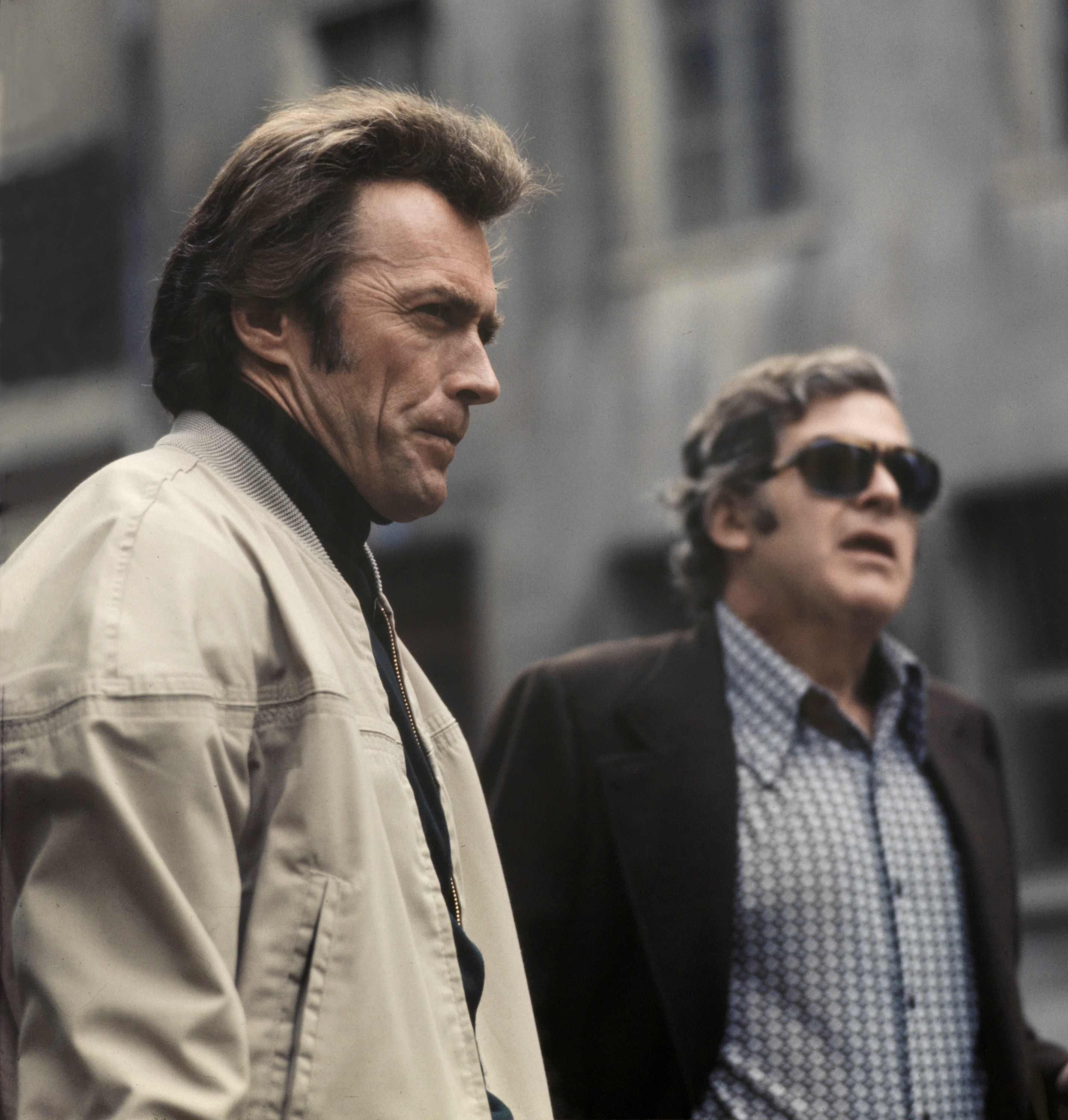
None of the sources here quotes Maharishi stating celebrity as a strategy. The fair claim is that he welcomed fame, used it, and expected it to pay. It also helps explain the Beatles' anger. They were treated as assets as well as students.
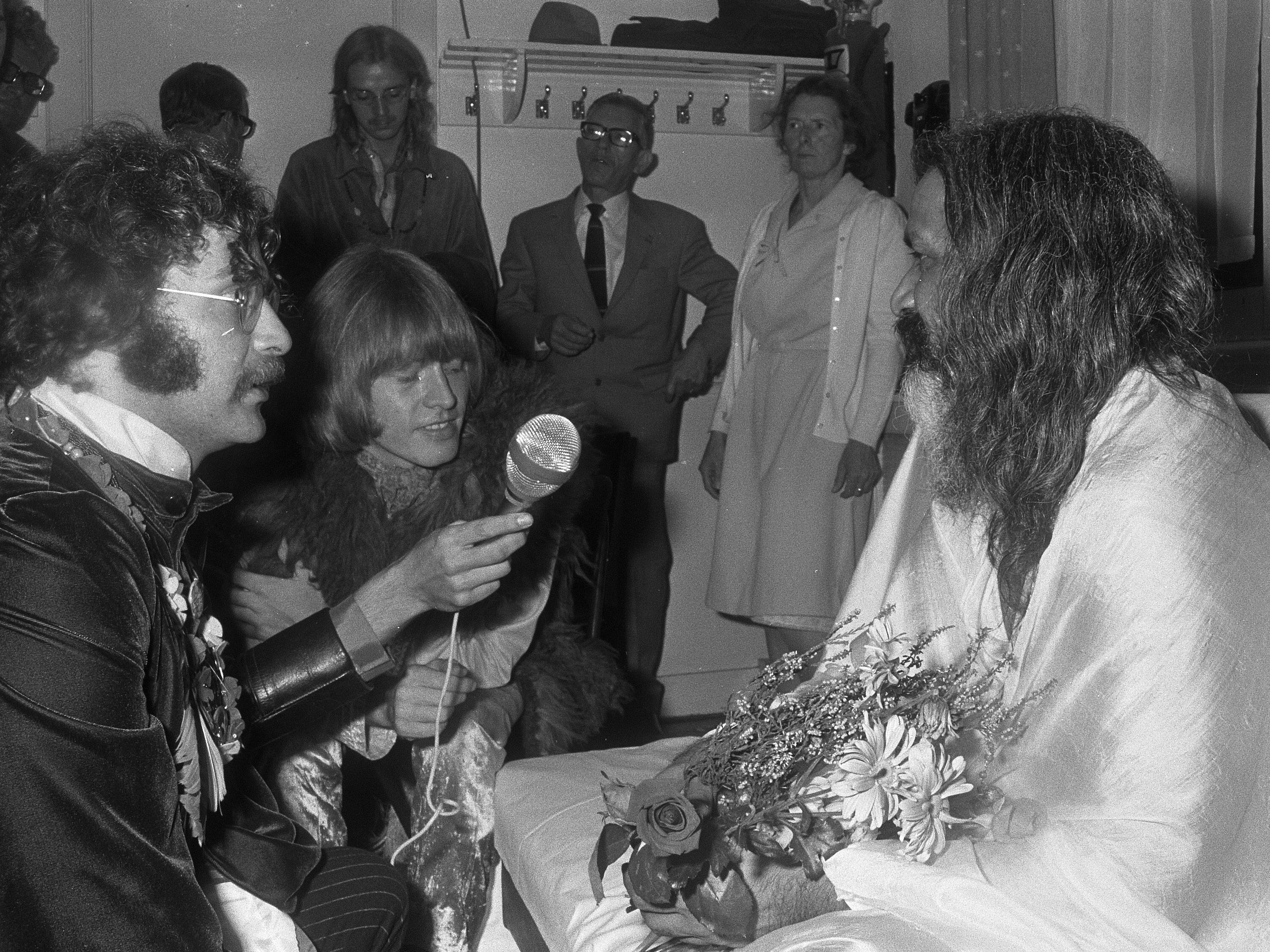
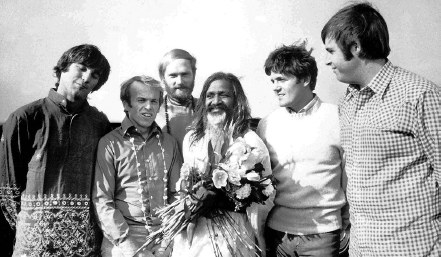
Rajneesh did some of the same things, which the familiar contrast misses. Carter, writing as a sociologist, records "a new effort to recruit the famous, especially from among the artistic and performing worlds," including the courting of an English actor (Carter, CR-C02-¶072). He also notes "special efforts" to recruit "artists and performers whose talents brought polish to promotional materials and whose productions brought publicity and acclaim" (CR-C03-¶120). Later there was a wealthy Hollywood group around Hasya, the former wife of the producer of The Godfather, whose ability to make large donations, King says, "put them high on Sheela's radar" (King, RP-C19-¶002, ¶004, pp. 133–134). So it is not true that only Maharishi chased celebrities.
But Rajneesh's decisive recruits were not entertainers. They were therapists from the human-potential movement. Programs at the Poona ashram ran under Leonard Zunin, "a UCLA-trained psychiatrist," with some two dozen therapists from Europe and the United States (Carter, CR-C01-¶078, pp. 24– 25). By the end of the 1970s the ashram had become, in King's words, "the largest growth center in the world" (RP-C02-¶030). The followers were credentialed too. A survey in Oregon found that 75 percent had attended college and 12 percent held doctorates (FitzGerald, CH-C04-¶048, p. 264).
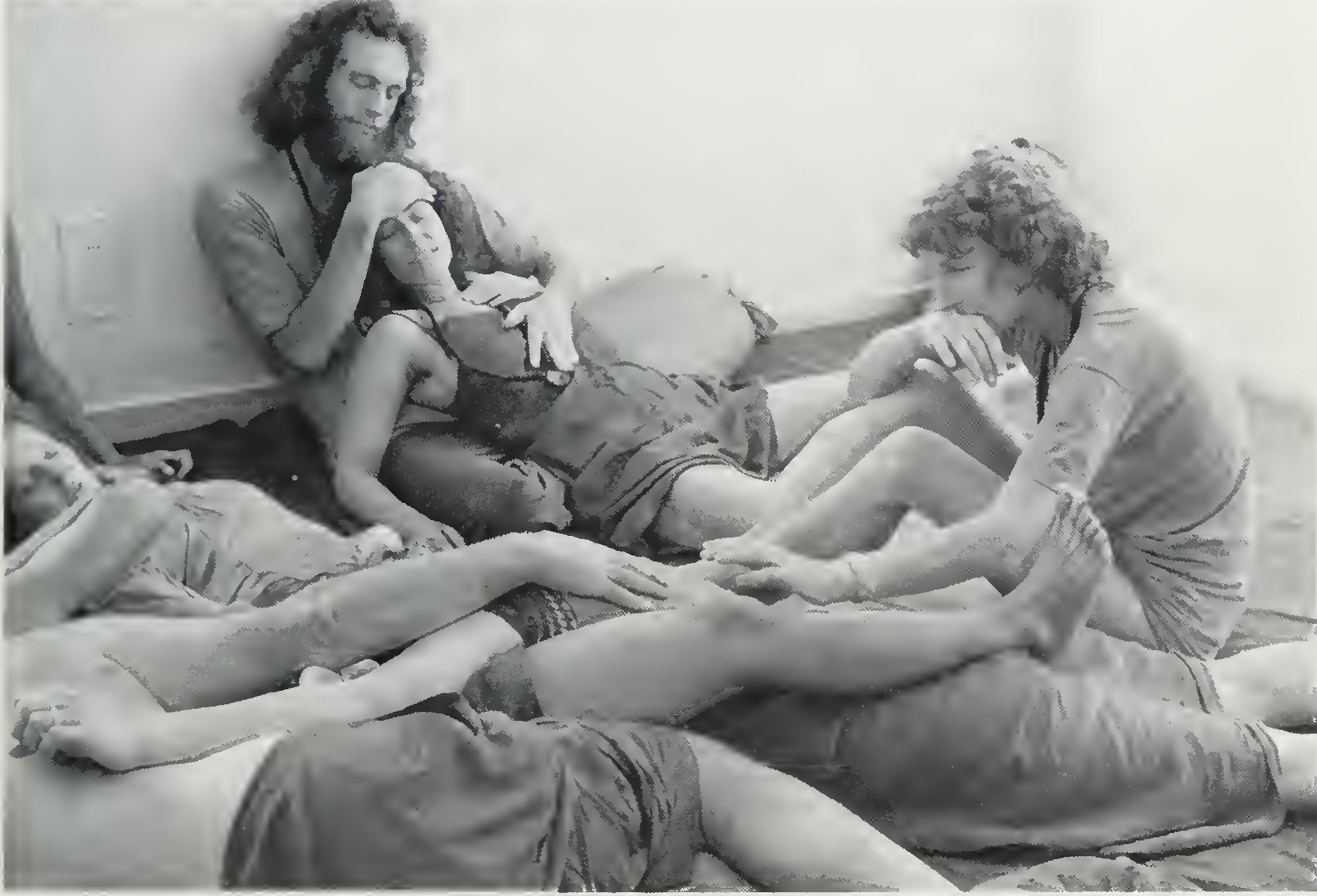
So both men turned prestige into legitimacy, but they borrowed different kinds. Maharishi borrowed the glamour of mass culture, and of statesmen, to make meditation look normal and respectable. Rajneesh borrowed the authority of the therapy professions to make surrender look like advanced psychology. The first lowered the threshold. The second raised the stakes.
The endings fit the pattern. The Beatles left Maharishi publicly and with a song, and one of them later made peace. Rajneesh's therapists were dismissed by communiqué. During his travels in 1986 he announced that therapy "basically has nothing to do with spirituality," that "the therapists were going deeper into their egos," and that his best-known group leader, Teertha, "has taken it for granted, without anybody saying it to him, that he is going to be my successor." He said they had all been "failures in the West" before they came to him (Gordon, GG-C12-¶122, p. 222). Maharishi, so far as these sources show, never turned on his famous followers in public. Rajneesh did.
VII
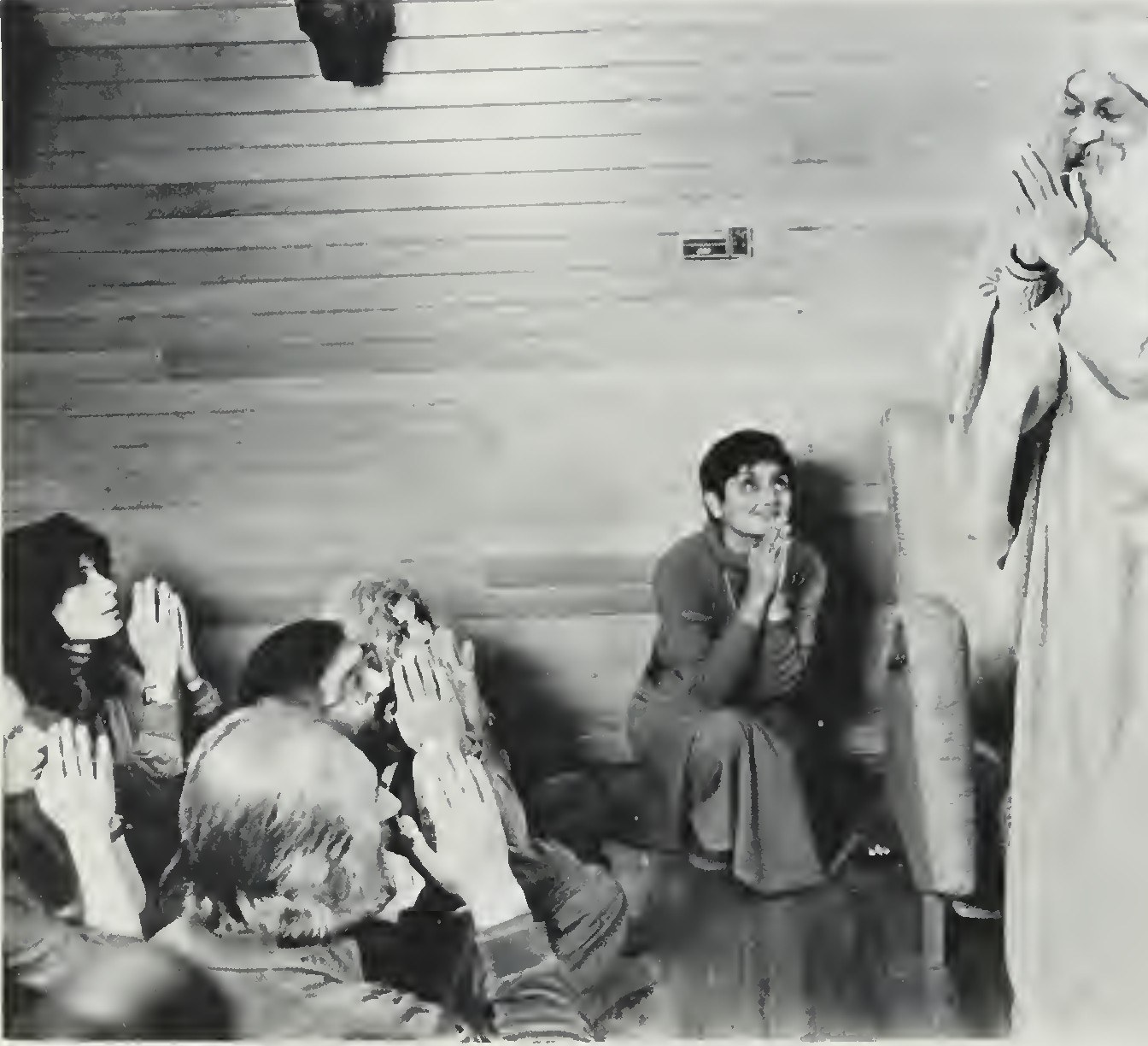
Authority disowned and authority exercised
Both men built great personal authority on a formal denial of it. This is where they resemble each other most. Maharishi's denial took the form of lineage. The souvenir booklet of his first conference in 1955 opens with his own signed message, inviting the suffering to share "a treasure in the Dust of His Lotus Feet," meaning Guru Dev's (Mason, PP-C03-¶009–¶011, p. 31). In 1959, at his first American press conference, he said his life "truly began 19 years ago at the feet of my Master" (PP-C01-¶006, p. 4). To Lapham in 1968 he said, "I consider myself only a loudspeaker" (Lapham, Saturday Evening Post, May 18, 1968).

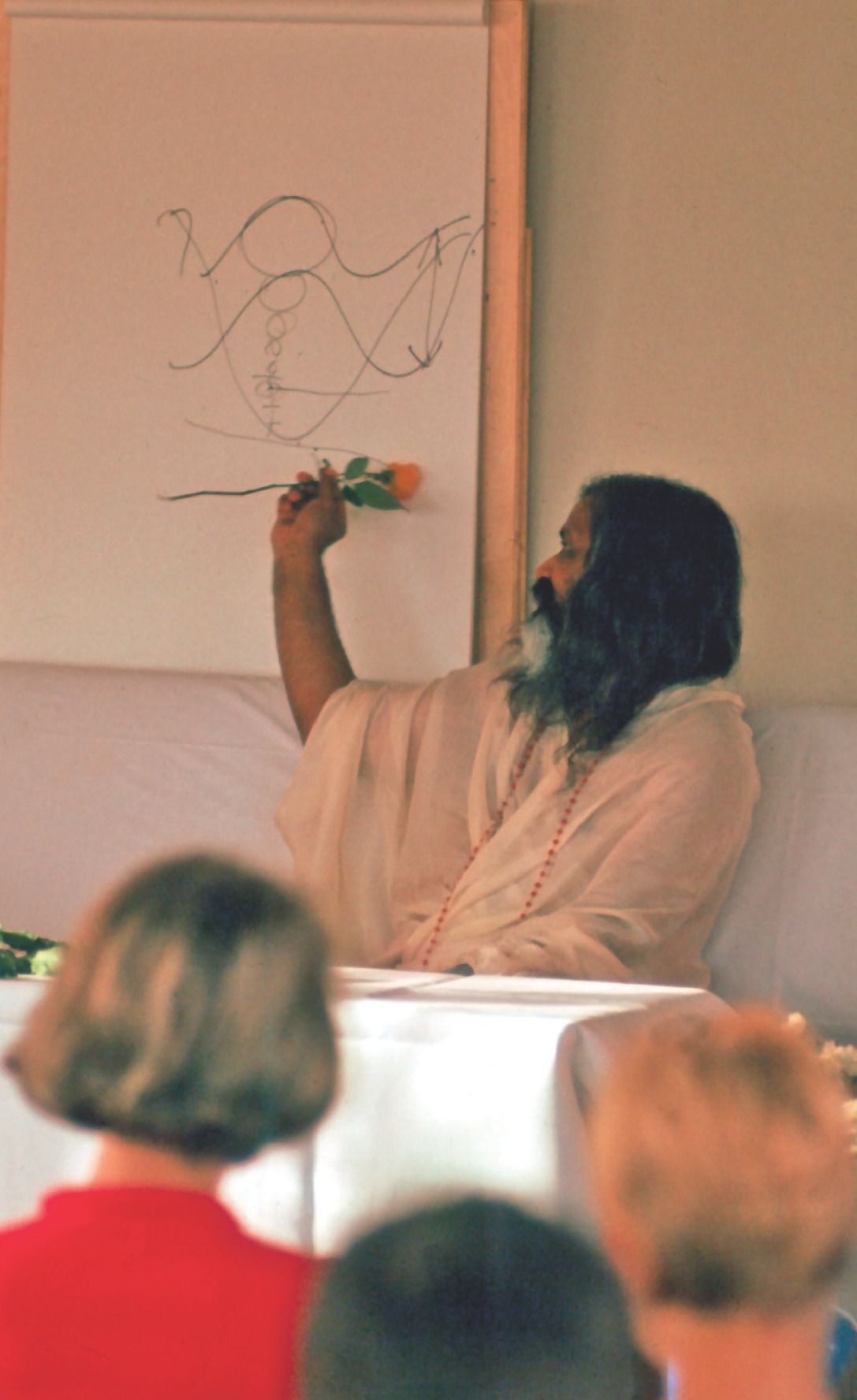
The modesty had a hard fact behind it. Not being a brahmin, he could never succeed his master as Shankaracharya (Mason, PP-C02-¶030, pp. 23–24). Teaching in Guru Dev's name was sincere devotion. It was also the only kind of standing open to him. Siegel goes further. He argues that the titles "Maharishi" and "Yogi" were self-awarded, and that a former clerk-secretary had no right to them (Siegel, TD-C03-¶006–¶009, pp. 51–52). Mason's account lets us test that. The 1955 booklet already styled him "Maharshi" ("Great Sage") on its title page, while his own signed message there reads simply "Bal Brahmachari Mahesh" (PP-C03-¶005, ¶009, pp. 28, 31). So the grand title appears at the very first public event, but the books do not show who first gave it to him. Siegel's charge is an inference, not a documented fact.
Rajneesh's denial took the form of anti-organization. "First, there is no organization around me. . . . Whatsoever you see as organization is not organization, it is simply functional; it is just like the post office." Carter notes that he carried the image further: his managers, like a postman or a postmaster, had "no authority" (Carter, CR-C03-¶020, p. 79). He said he wanted no followers, only people who chose to be with him because they loved him (King, RP-C01-¶025, p. 8). Yet on arriving in America in 1981 he is reported to have announced, "I am the Messiah America has been waiting for," and near the end of the Oregon commune he called himself "the best showman in the whole history of man" (Carter, CR-C02-¶002, pp. 37–38).
Against these denials stand Rajneesh's own words in Poona, as Gordon gives them. "Nothing happens in this ashram without my knowing it." "This is not a democracy." "Whatsoever is happening here is happening with my knowledge" (Gordon, GG-C03-¶112, pp. 80–81). In 1978 he told disciples, "Your votes will never be taken. . . . Whatsoever I decide is absolute" (King, RP-C02-¶033, p. 19). His pledge was blunt: "Surrender to me and I will transform you" (RP-C02-¶032, p. 19). In 1971 he began calling himself Bhagwan, a word used in India for an incarnation of God, and that alienated many of his more sophisticated Indian disciples (GG-C02-¶001, p. 38).
Maharishi's exercise of authority was less theatrical but just as final. When a federal court in New Jersey examined the teaching of TM in public schools, it found that no one could teach the course unless he or she "performed the puja to the personal satisfaction of Maharishi Mahesh Yogi or one of his aides." The Third Circuit quoted that finding when it affirmed the ruling that the course was religious teaching (Malnak v. Yogi, 440 F. Supp. 1284, D.N.J. 1977; aff'd, 592 F.2d 197, 3d Cir. 1979). Deepak Chopra, who knew him well, wrote after his death that he "was quick to assert his authority" (Chopra, "The Three Maharishis," Beliefnet, Feb. 6, 2008).
The insiders' memoirs show how it worked. Shumsky describes her own dressing-down before hundreds of teachers, and a senior colleague who told her afterward that it had been "a setup." "We've seen it countless times," the colleague said. "What these disciples don't know is they are next" (Shumsky, MM-C12-¶045). That is one colleague's reading, reported years later. But Shumsky also saw something that complicates the picture. At Interlaken, at the end of an advanced course for men, she watched a puja performed not to Guru Dev but to Maharishi himself, and hundreds of men prostrated before him. Soon afterward his helicopter landed hard, and she says he took it as an omen "that people bowing to him was a mistake" (MM-C12-¶046–¶048). On her account, then, he accepted worship and then drew back from it. If her account is right, that fits a man whose own picture of a teacher was a disciple bowing to someone else.
In both cases the disavowal made the authority hard to question. If Maharishi was only passing on his master's teaching, a doubter had to argue with a whole tradition. If Rajneesh was only a post office, there was no postmaster to hold responsible. But the two denials were not equally sincere. Maharishi's lineage was real and documented. He had served Guru Dev for about twelve years, and the record shows him crediting his master from his first lecture onward. Rajneesh's disavowals came and went with circumstance.
Rajneesh also claimed a kind of succession, though not one anyone could check. He spoke of a previous life seven hundred years earlier, ended by an assassination he said he had "contrived" (GG-C02-¶030, p. 42). He placed himself in a line of "Enlightened Masters" that included Buddha and Christ (CR-C02-¶002). In his last years, Gordon writes, he claimed confirmation "across two and a half millennia by the ancient Master, Buddha" (GG-EPI-¶024, p. 237). He could also disown what he had built. A press release for Rajneeshism called it "the only religion, the first religion in the history of the world" (King, RP-C13-¶031, p. 95). In September 1985 he said that "Rajneeshism" had been entirely Sheela's invention, that he had never claimed to be a religious leader, and that he was only a friend to his sannyasins. His followers burned the booklet and Sheela's robes and danced around the fire (FitzGerald, CH-C04-¶321, pp. 363–364).
So the real difference is this. Maharishi claimed a lineage he could document but could not inherit, and he presented himself as its servant. Rajneesh claimed lineages no one could verify, and took them up or put them down as each moment required.
VIII
Delegation, and what Rajneesh knew
Both men ruled through intermediaries, and both arrangements went bad, though not equally. Rajneesh described his own design openly. In Poona, Gordon writes, Laxmi was "the instrument through which Rajneesh directs day-to-day life," and Rajneesh praised her because "Laxmi has no idea of what is right and what is wrong. Whatsoever is said, she does" (Gordon, GG-C02-¶040, p. 44). He told disciples that "you can be free only if you have put too many women around you," so that their rivalries would leave him "absolutely alone." He predicted that in the new commune he would put so many women in charge "that even if I die it will take you years to discover" he was gone (FitzGerald, CH-C04-¶215–¶216, pp. 318–322). FitzGerald concludes that he had created "a traditional Oriental despotism" and had hidden his responsibility for it "in plain sight" (CH-C04-¶213, ¶217, pp. 318–322).
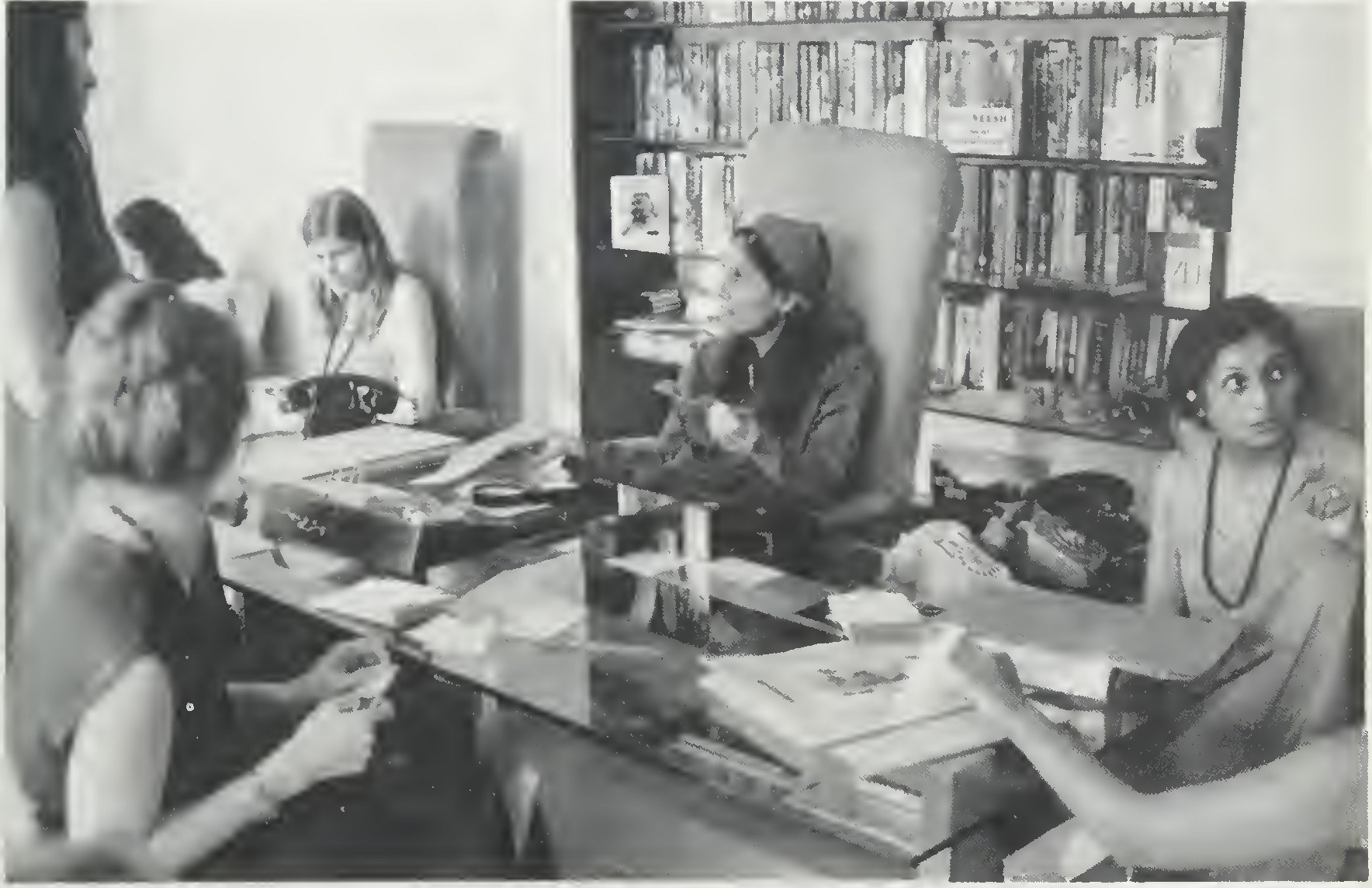
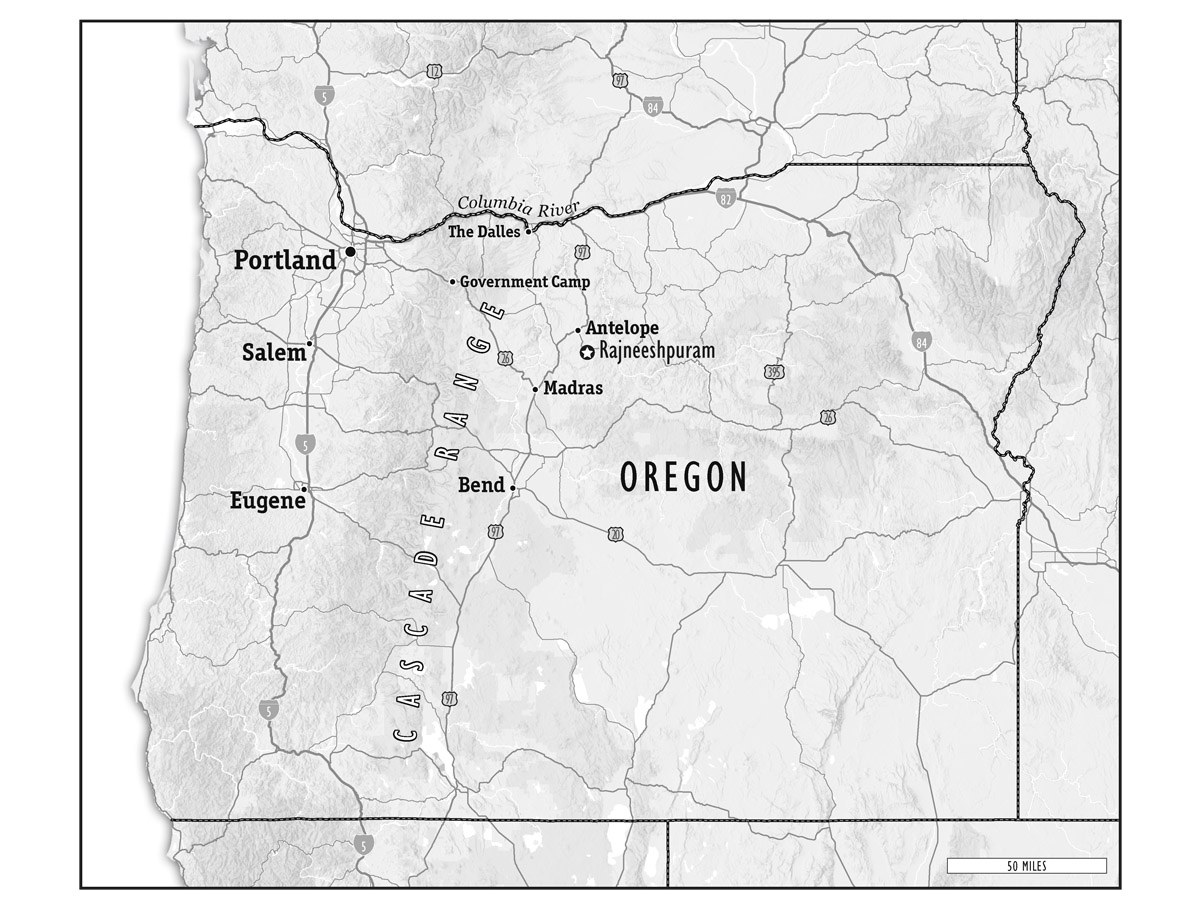
In Oregon, during more than three years of public silence, the despotism ran through one channel. Rajneesh met Sheela daily, and in the fall of 1983 it was announced, by Sheela, that he would speak only with her (Gordon, GG-C06-¶058, pp. 128–129; FitzGerald, CH-C04-¶213). Her regime treated doubters as traitors. At one mass meeting she expelled twenty people who had talked among themselves about their worries (GG-C06-¶092–¶093, p. 134). Her inner circle went on to wiretap the commune, poison the salad bars of The Dalles with salmonella in 1984, try to kill Rajneesh's own physician, and attack county officials. In July 1986 Sheela pleaded guilty to federal charges of wiretapping, immigration fraud and "tampering with consumer products," the euphemism for the poisoning, and to the attempted murder of the physician, Devaraj, and assaults on two Wasco County commissioners (GG-C12-¶015).


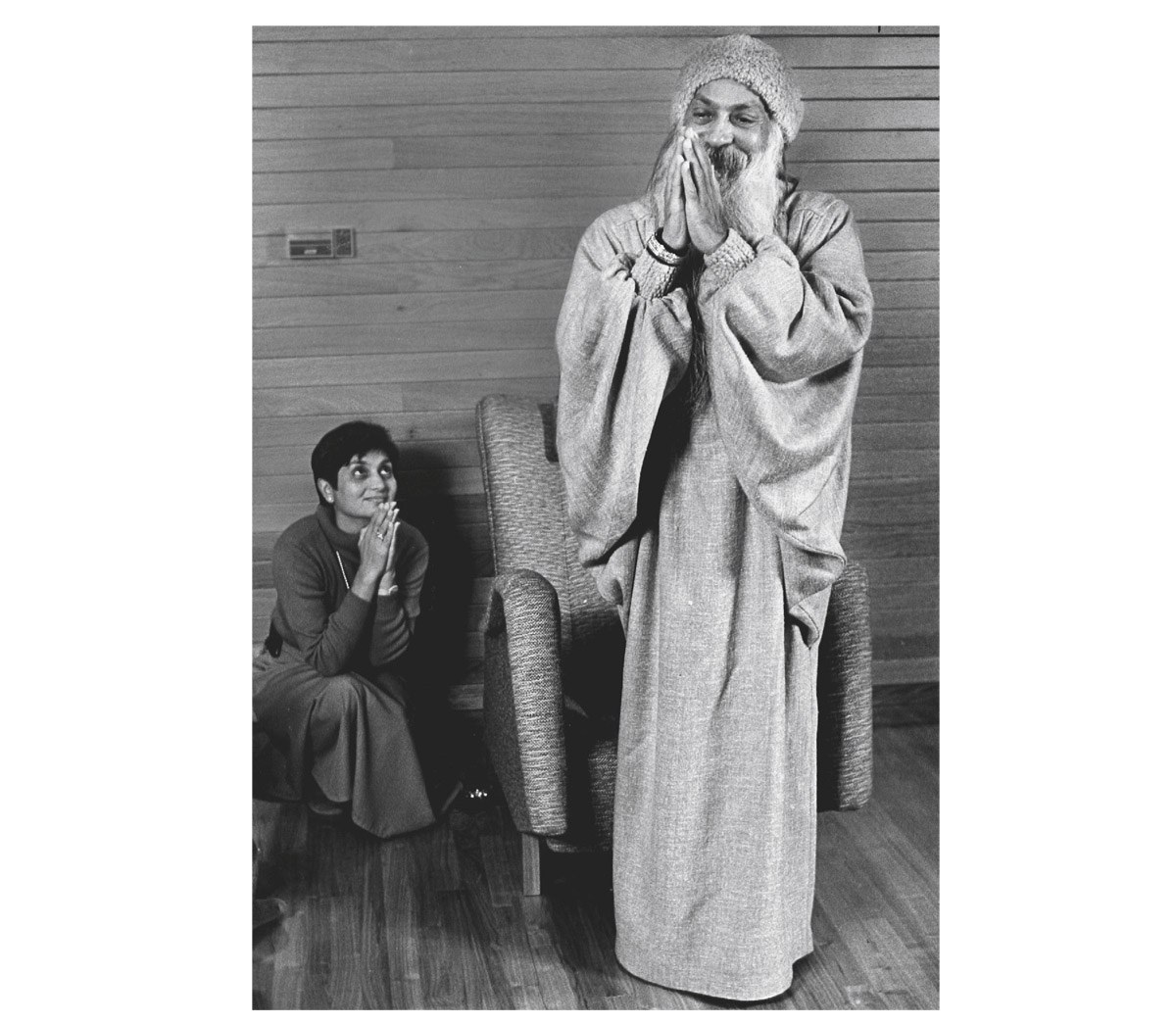
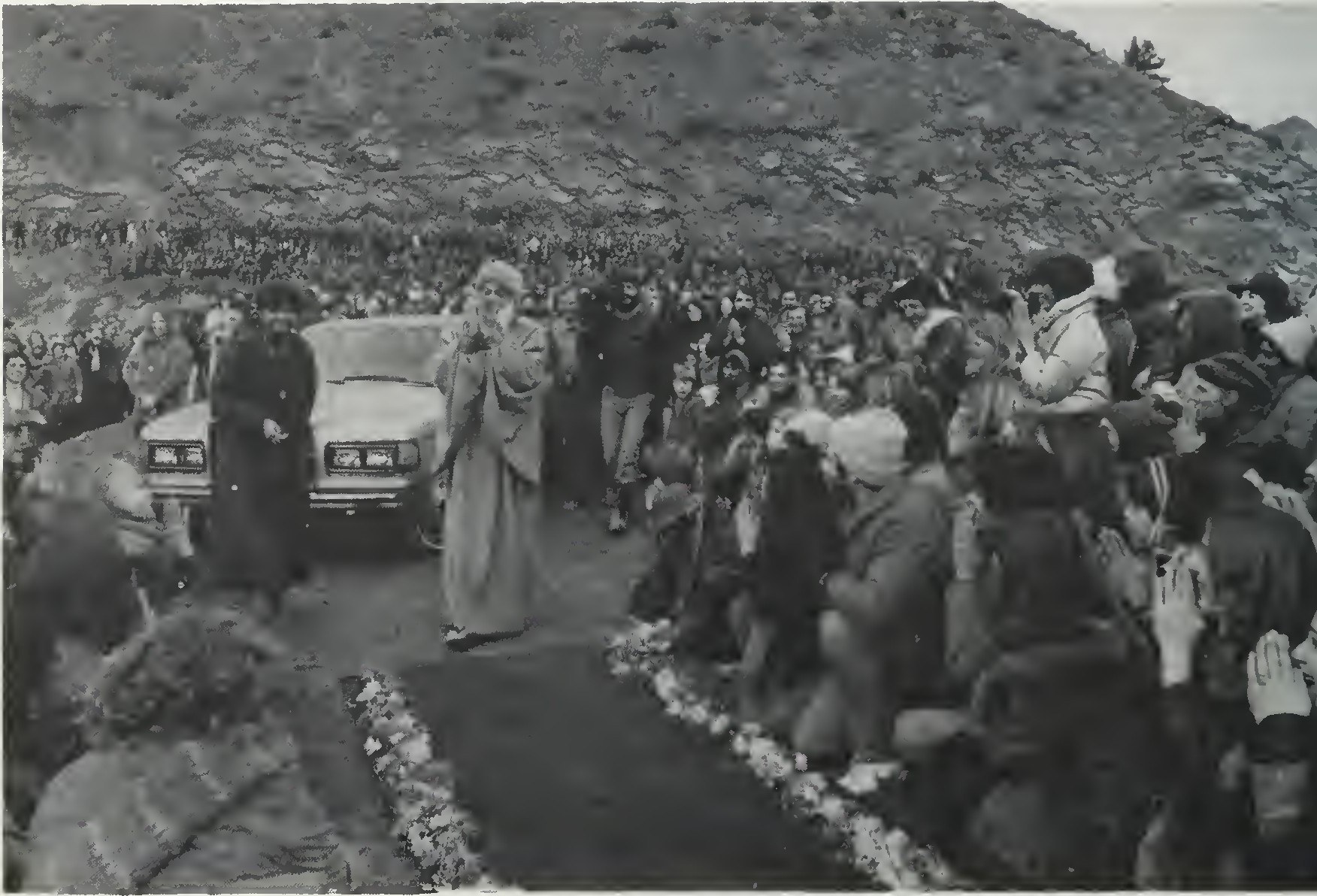
What Rajneesh knew and directed is the question that matters most for his character. The evidence falls into three tiers, and they should be kept apart.
The first tier is what the sources document. He was not a passive spectator. He urged Sheela and other spokespeople to be "assertive," ended the contract of a lobbyist who advised accommodation, and backed Sheela when older disciples challenged her (GG-C06-¶061, p. 129). Leaked minutes of the coordinators' meetings, later authenticated by two sannyasins who had been present, record that he was "very pleased she is so feisty" after one of Sheela's television appearances, and that "we should not compromise" (CH-C04-¶264–¶270, pp. 340–341). He told the commune's lawyer that the attorney general was right: there was no separation of church and state at Rajneeshpuram. But he did not want anything changed (King, RP-C27-¶036). In September 1985, in a filmed interview with Gordon, he said, "I could not give the commune in the hands of innocent people," and "She served her purpose perfectly well." He added, "I did not stop her. I let her do till I saw the commune is established" (GG-C11-¶023, ¶025, p. 195). He explained his distance in one sentence: "My silence was more important than the whole experiment" (GG-C11-¶044, p. 197).
The second tier is what former insiders alleged. Krishna Deva, who became a government witness, "had no doubt" that Rajneesh approved the poisoning, though King notes that other disciples rejected this (RP-C23-¶007). Members of Sheela's circle described a bugged conversation in which, as they heard it, Rajneesh praised Hitler and said that removing people who stood in the way of his vision was acceptable. Sheela took it as authorization (RP-C31-¶037–¶040, pp. 233–234). Another member recalled a tape in which he said that if ten thousand had to die to protect the master, "so be it" (RP-C30-¶023). Ava, a member of Sheela's squad, later spoke of a tape "which showed that he was involved . . . in things he said he wasn't" (CH-C04-¶356, pp. 380–381). And according to her partner at the time, Rajneesh sent word through Hasya that he wanted her to tell investigators he had known nothing (RP-C38-¶024, pp. 277–278). These accounts come from people with legal reasons to share or shift blame, and the tapes have never been made public in the form described.
The third tier is the judgment of the strongest outside witness. Gordon spent months trying to sort out what Rajneesh knew. He concluded that Rajneesh "was certainly responsible for the ranch's arrogant attitude, the consolidation and sclerosis of power, the paranoia," and that he knew about the Share-A-Home program and the attacks on Oregonians (GG-EPI-¶044, p. 240). None of this, Gordon wrote, proved that Rajneesh ordered the poisonings. "But I was sure he had created the climate in which such acts could take place and thought he might even have ordered them" (GG-EPI-¶051, p. 242). That is a careful verdict. It is far from innocence, and it stops short of proven command.
Maharishi's intermediaries produced nothing remotely like this. But the habit of insulation was similar, and the newer books show it from inside. At Interlaken in the winter of 1973–74, an order to announce an extra course fee reached Shumsky, she says, through his attendant. When she made the announcement, Maharishi stopped her before the hall and told the teachers, "These people who hang around me, they are not in tune with me" (Shumsky, MM-C11-¶071–¶079). It is a small thing beside Oregon. But on her account the move is the same: an unpopular decision travels down through a subordinate, and the leader disowns it in public. In 1991, Chopra says, when Maharishi fell gravely ill in London, the Indian organization "centered around Maharishi's nephews" insisted that "no one in the movement should find out that Maharishi was grievously ill" (Chopra, "The Maharishi Years," Beliefnet, Feb. 13, 2008). In his last years, the Associated Press reported, he kept to two rooms at Vlodrop in the Netherlands, "speaking only by video to aides around the world," even to his closest advisers in the same building (AP obituary, Feb. 6, 2008). Disagreement could cost a long-serving lieutenant his place. Shumsky heard that Jerry Jarvis, president of the Students International Meditation Society in the 1960s, fell out with Maharishi in part because he opposed rising course fees (MM-C02-¶059; MM-C20-¶011). That is hearsay in her account.
So the resemblance is real. Both men placed themselves behind devoted subordinates, received information through filters, and kept the power to decide without the duty to explain. The difference is in what the subordinates were told to do. Rajneesh's screen was a single volatile secretary, given wide latitude in a hostile setting and urged toward confrontation. Maharishi's was a broad bureaucracy of family members, scientists and administrators, urged toward expansion and respectability. One set was told to fight. The other was told to build. Bourque, who left his circle in the early 1970s but still teaches meditation much as he taught her, worried about the result. "No one has really been trained to think or act on their own," she wrote after his death (Bourque, RS-S43-¶009, pp. 203–204).
IX
Science and therapy
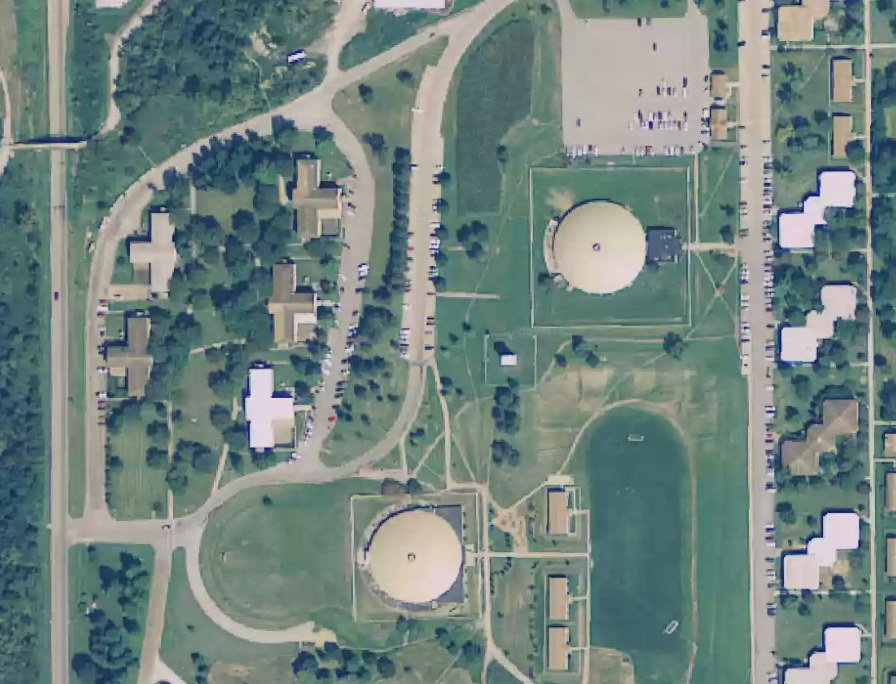
Both men dressed the mystical in modern clothes, but they chose different clothes. Maharishi chose the laboratory. Rajneesh chose the therapy room. Maharishi's choice was not a late marketing decision. As Mason's record of the 1955 lectures shows, he was already placing electrons on a Vedic ladder before any Westerner had heard of him (Mason, PP-C03-¶006, p. 29). In the West the claim became a research program. A young physiologist, Robert Keith Wallace, published a paper in Science in 1970 reporting distinct physiological changes during TM, and later became president of Maharishi International University (Wallace, "Physiological Effects of Transcendental Meditation," Science 167, 1970; Shumsky, MM-C04-¶056). Shumsky, who worked on the movement's publications, describes the movement's own scientists compiling studies "validating TM's efficacy" into a 128-page book she was assigned to design (MM-C12-¶103). From there came the "Science of Creative Intelligence" and the "Maharishi Effect," the claim that the square root of one percent of a population practicing the advanced program together would make a whole society more peaceful. To test it, about five thousand people crowded into Fairfield, Iowa, in the winter of 1983–84 (MM-C23-¶029).
Independent review was cooler. A 2007 report for the U.S. Agency for Healthcare Research and Quality, covering 813 studies of meditation of all kinds, found research "characterized by poor methodological quality" and concluded that "no firm conclusions on the effects of meditation practices in health care can be drawn based on the available evidence" (Ospina, Bond et al., Meditation Practices for Health: State of the Research, 2007, as reported by the University of Alberta). A 2004 review of TM and blood pressure was titled, plainly, "Insufficient evidence to conclude whether or not transcendental meditation decreases blood pressure" (Canter and Ernst, Journal of Hypertension, 2004). Later work was somewhat kinder. A 2015 meta-analysis found reductions in blood pressure, while warning that weak study designs might bias the result (Bai et al., Journal of Human Hypertension, 2015). That is a fair summary of the outside verdict: a modest, possible benefit for a relaxation practice, and nothing like the claims made for it.
The courts weighed the claim that TM was science and not religion, and rejected it. In 1977 a federal judge in New Jersey held that teaching the Science of Creative Intelligence in public schools was an establishment of religion, and in 1979 the Third Circuit affirmed. A concurring judge observed that "theology, too, may be regarded as a science" (Malnak v. Yogi, 592 F.2d 197, 3d Cir. 1979, Adams, J., concurring, n. 55).
The newer books show how sincere the scientific language was, and how far it reached. On Maharishi's side it was a conviction, not just a costume. He had mapped physics onto Vedic categories in 1955, and he kept doing it. In a press conference in December 2004 he said that "the Constitution of the Universe" in the transcendental field held "all the Devatas," naming Vishnu and Shiva (as quoted in Siegel, TD-C11-¶095). The science and the gods sat together in one system. But the language was also turned against science. In 2002, in his first television interview in many years, he told Larry King that "the whole drama of science is a big fraud, everywhere," and went straight on: "Hiroshima was created in the name of science" (Larry King Weekend, CNN, May 12, 2002). In context, his target was science as the maker of weapons, not science as such. On this evidence he wanted science's prestige without its rules of proof. One story suggests he knew the difference. Siegel reports that in 2001 the movement's largest donor proposed gathering ten thousand advanced meditators in India to create world peace, and that Maharishi told him, "If we created the group, then we don't know if it will create world peace or not. We would have to have the group and then see what effect it has" (Siegel, TD-C07-¶022–¶024, pp. 103–104). Siegel reads this as an admission that the formula was a money-making ploy. It can also be read as a moment of plain honesty about an untested idea. The account is secondhand either way.
Rajneesh chose therapy. His Poona ashram combined his own Dynamic Meditation with Reichian bodywork, Gestalt and encounter groups. He did not claim his methods had been proven in a laboratory. FitzGerald says he turned the ashram into "a kind of spiritual garage for anyone with a method," and "a laboratory for experimentation of all sorts." "His test of legitimacy was merely what worked—or what seemed to work" (FitzGerald, CH-C04-¶140, pp. 297–298).
The price of that pragmatism was paid in the groups. Richard Price of the Esalen Institute, where encounter groups had begun, took sannyas and visited Poona in 1978. He left disgusted. In a letter published in Time, he called the ashram's encounter groups "an abomination—authoritarian, intimidating, violent—used to enforce conformity rather than to facilitate growth." He asked Rajneesh "whether you are running a growth center or a concentration camp" (King, RP-C02-¶031, p. 18). King writes that Rajneesh encouraged the group leaders "to push physical boundaries, since he believed that violence could be a useful tool in achieving self-awareness," and that this led to "broken noses, broken limbs, and even sexual assault in the ashram's padded rooms" (RP-C02-¶030).
Rajneesh had grand scientific schemes too. In 1985 he described to Gordon a "World Academy of Sciences" on the ranch, where scientists who had learned to meditate and dance "cannot make destructive things." Listening, Gordon wondered whether he had "lost contact with reality" (Gordon, GG-C11-¶014–¶015, p. 194). The two men's complaint about science turns out to be the same: it made bombs. Their remedies differ in the expected way. Maharishi would bring science under the Veda. Rajneesh would bring scientists into his commune.
Each borrowed vocabulary answered a particular objection. Maharishi's science answered the charge that TM was religion. The courts rejected that answer. Rajneesh's therapy answered the charge that surrender was submission. In therapeutic language, giving up the ego became growth and confrontation became healing. Of the two claims, the scientific one was more testable, and on its strongest points it was tested and found wanting. The therapeutic one was harder to test, and in the groups it did more direct harm to bodies.
X
Money, ownership and display
It is often said that both men "died presiding over wealthy organizations while formally owning nothing." The first half holds. The second needs narrowing, and so does the idea that devotion simply "flowed upward as money."
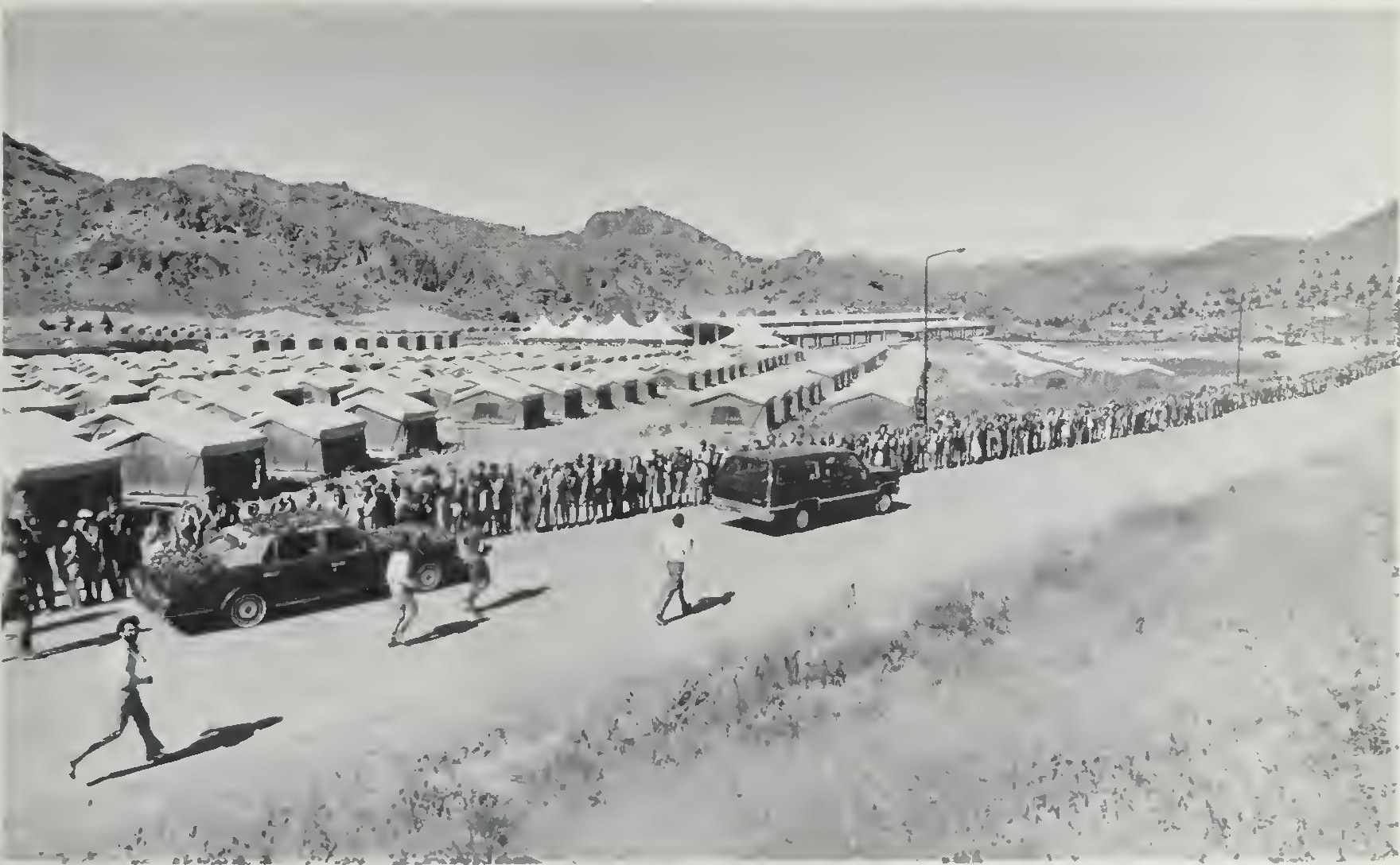
Rajneesh's display was deliberate. In front of his house in Oregon the Rolls-Royces multiplied "from 1 to 11 to 23, from 44 to 74. Eventually there would be 93" (Gordon, GG-C05-¶103, p. 114). FitzGerald confirms ninety-three when the cars were sold (CH-C04-¶344). By 1984, Carter reports, the commune was paying about $250,000 a month toward the trusts that held the cars and jewelry (CR-C03-¶044, p. 88). The cars belonged to a "Rajneesh Modern Car Trust," set up, Gordon says, when "Rajneesh's desire for Rolls-Royces exceeded the ordinary need for transportation that a religious leader might be supposed to have" (GG-C05-¶121, pp. 116–117). So the record shows control and use without personal title. It does not show that he owned nothing.
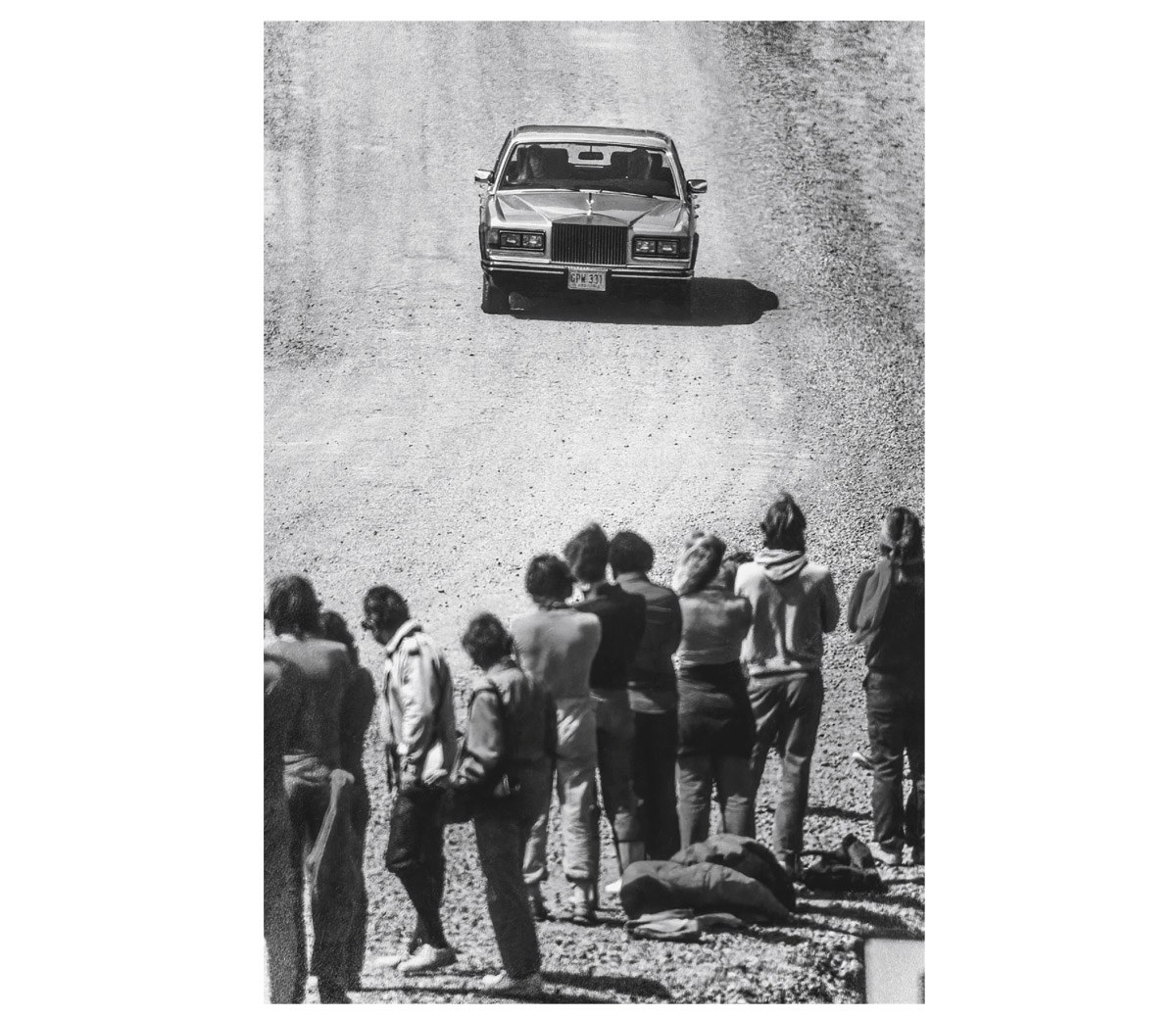
His appetite was personal. Krishna Deva later told federal investigators that Rajneesh had erupted at Sheela when she tried to stop Hasya passing him luxury catalogs. He said he was stuck alone in his house and needed "things like expensive watches to keep him happy," and that if Sheela did not care about his happiness he would replace her (King, RP-C19-¶014–¶016). When he flew east from the ranch in October 1985, his party carried about $58,500 in cash, a figure all three accounts agree on. They disagree about the jewelry. FitzGerald counts thirty-eight jewel-encrusted watches and bracelets, Gordon puts the jewelry at more than $400,000, and King at about $1 million (FitzGerald, CH-C04-¶324, p. 365; Gordon, GG-C11-¶054, p. 198; King, RP-C41-¶022). King adds a revolver.
Gordon offers several readings of the cars and admits that his own changed from visit to visit: a provocation aimed at America's puritans, a lampoon of the far greater wealth of the Pope and the television evangelists, a childhood collecting habit grown large, a lesson that abundance was open to anyone who trusted existence, or a play that signified nothing (GG-C05-¶105–¶115, pp. 114–115). Rajneesh supplied his own theory: wealth was "immensely spiritual," and he was "the rich man's guru" (GG-C05-¶106). A disciple reported him saying privately that he kept so many cars so that when people's mouths were open he could "shove in the truth" (GG-C05-¶108). Meanwhile the commune members worked long days for "a small allowance for incidentals" (GG-C05-¶117, p. 116).
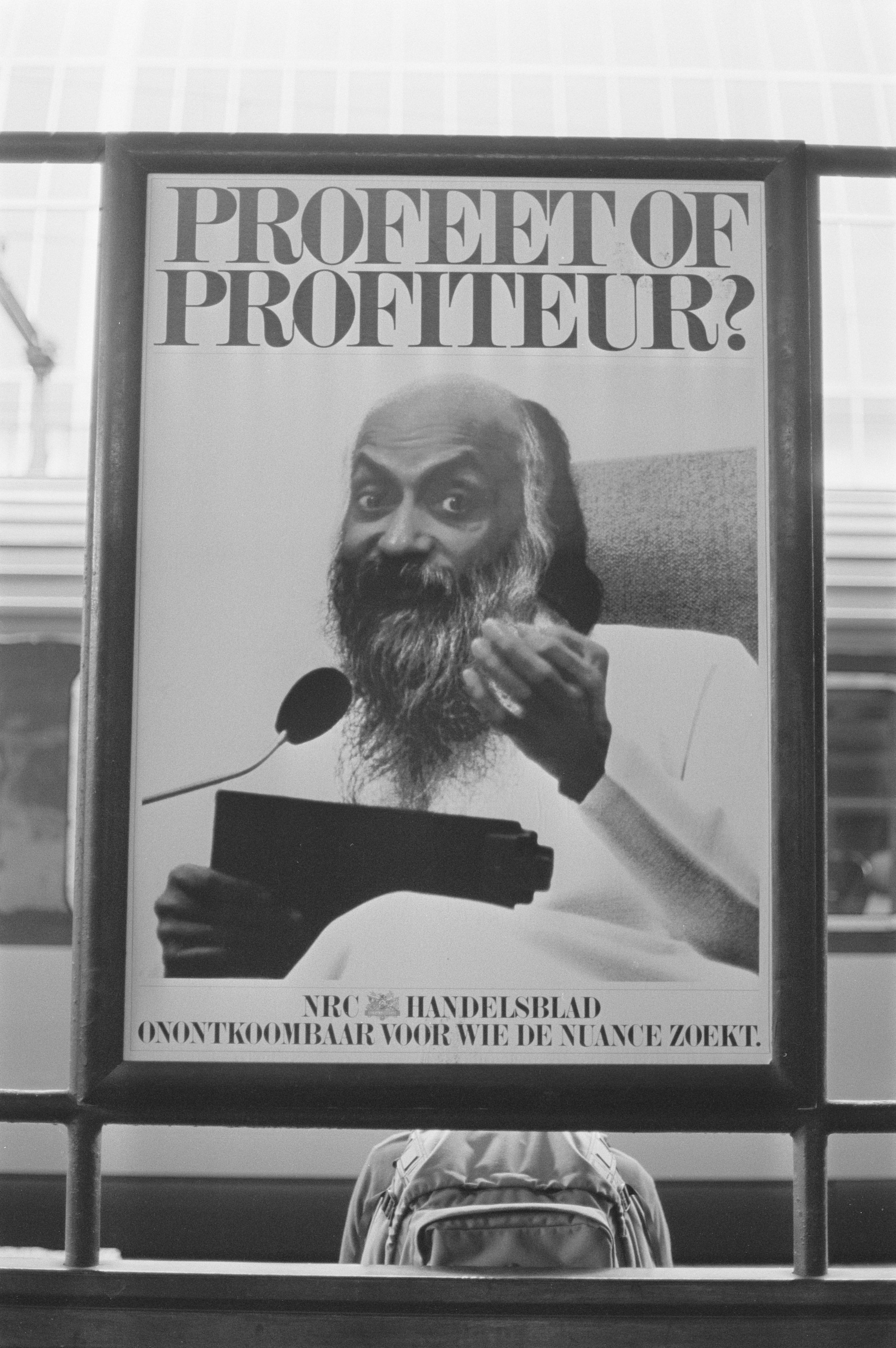
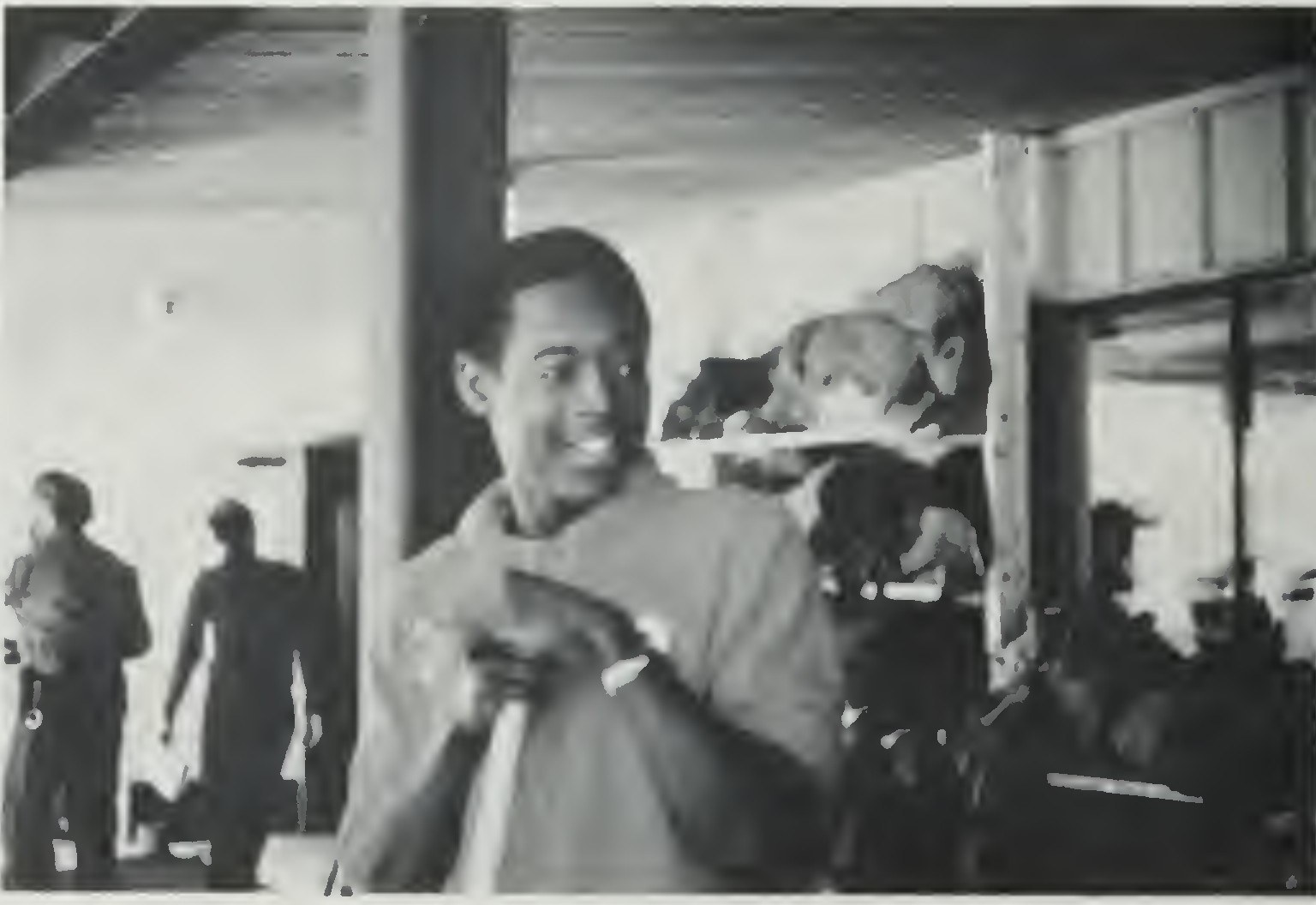
Maharishi's money was real but kept out of view, and it started from a teacher who refused money. Mason describes a sign at Guru Dev's monastery that warned visitors against offering donations, and quotes the old swami telling a crowd that rupees were "like dust and pebbles to me. Offer to me bagfuls of your vices" (Mason, PP-C02-¶013, pp. 18–19). When Maharishi reached Honolulu in 1958, a newspaper there reported, "He has no money; he asks for nothing" (PP-C03-¶026, p. 37).
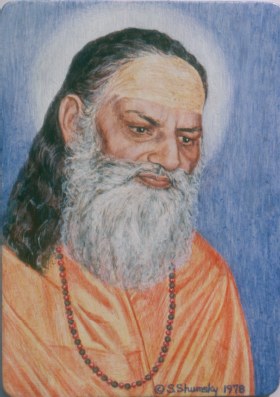
That did not last. Shumsky paid $35 for her initiation in 1967, money she had raised by panhandling in Berkeley (Shumsky, MM-C02-¶064). By her account the basic fee rose from $575 to $1,500 in 2001 (MM-C23-¶100). Advanced courses cost much more. Bourque, who still respects the technique, wishes he "had not set a precedent of making such exaggerated claims coupled with high fees" (Bourque, RS-S43-¶009, pp. 203–204). His staff lived poorly. Shumsky says the International Staff "subsisted on a pitiful stipend" of $25 a month (MM-C09-¶039). She says that in 1995 professors who had founded the university and lived for twenty years on stipends were let go "without fanfare or pension" (MM-C23-¶100). Maharishi himself, by her account, would not hear the subject raised in his presence: "Never, never speak about money while I'm in the room" (MM-C12-¶023). Yet he also had the books audited. Shumsky says he asked her to choose the auditing firm, and she chose Price Waterhouse (MM-C11-¶020–¶024).
His own way of living was modest beside Rajneesh's. He was driven in a Mercedes and flew by helicopter (MM-C08-¶032; MM-C12-¶048). In his last years, the Associated Press reported, he kept to "two rooms of the wooden pavilion he built" at Vlodrop (AP obituary, Feb. 6, 2008). His appetite was for scale, not things. "I lack only $1 billion to make the world a better world," he told Larry King in 2002, describing an endowment for 40,000 Vedic pandits (Larry King Weekend, CNN, May 12, 2002). No reliable figure for the movement's total wealth was found in these sources, and no document here shows property in his own name.


So the contrast is one of the cleanest in the evidence, and it does reflect character. Rajneesh's acquisitiveness was personal, sensuous and theatrical. He wanted the objects themselves, he wanted them seen, and he wanted the outrage they caused. Maharishi's was institutional and abstract. He wanted endowments, buildings and pandits, and he wanted them to look like the natural result of a technique. What the two shared was a structure in which the man and the money were formally separate, while the man decided how the money was used. What the followers gave differed. Rajneesh's commune members gave their labor and lived on allowances while the trusts bought cars. Maharishi's staff gave years on a stipend. His paying public bought a course at a rising price and mostly went home.
XI
Sexuality and moral authority
The familiar contrast sets Maharishi's celibacy against Rajneesh's sexual liberation. That describes their teachings. It describes their conduct less well, and the newer books change the Maharishi side most.
Rajneesh's teaching was public from 1968, when he told fifteen thousand people in Bombay that sex was divine and that only by dropping shame could one rise to a higher state. The press called him "the sex guru" (King, RP-C01-¶021, p. 7). His private conduct is known through the testimony of former disciples. An Italian woman, Deeksha, told King of "tantric" sessions in his Bombay apartment from 1971. He touched her breasts and genitals, told her to masturbate while he watched, and went further each time. "She never liked it," King writes. She froze, and told herself he was a master using ancient techniques for her benefit (RP-C06-¶025–¶032, pp. 50–51). Other women described what they called "ultimate darshans" of the same kind (RP-C06-¶033). Around 1973 he ended these sessions. Deeksha suspected pressure from the businessmen who funded him. He told her she was never to speak of them, "since it could be twisted and used to take him down" (RP-C06-¶035, pp. 51–52). In Poona a therapist whom Gordon calls Radha described evenings in which Rajneesh handled her genitals while she knelt naked before him. She experienced it as being "charged," and felt "one of the chosen ones" (Gordon, GG-C03-¶107–¶109, pp. 79–80).
Maharishi's public position was lifelong celibacy. His title Bal Brahmachari meant celibate from youth, and Shumsky says the movement's official position remained that he was "a life celibate" (Shumsky, MM-C23-¶070). He urged celibacy on his young staff. Shumsky hid a crush because "Maharishi advised us to be celibate" (MM-C08-¶079). Bourque quotes another woman who says that in 1973 he asked her, secretly, to encourage the young men around him to become celibate, because "he wanted to be surrounded by purity" (Bourque, RS-S41-¶017, p. 192).
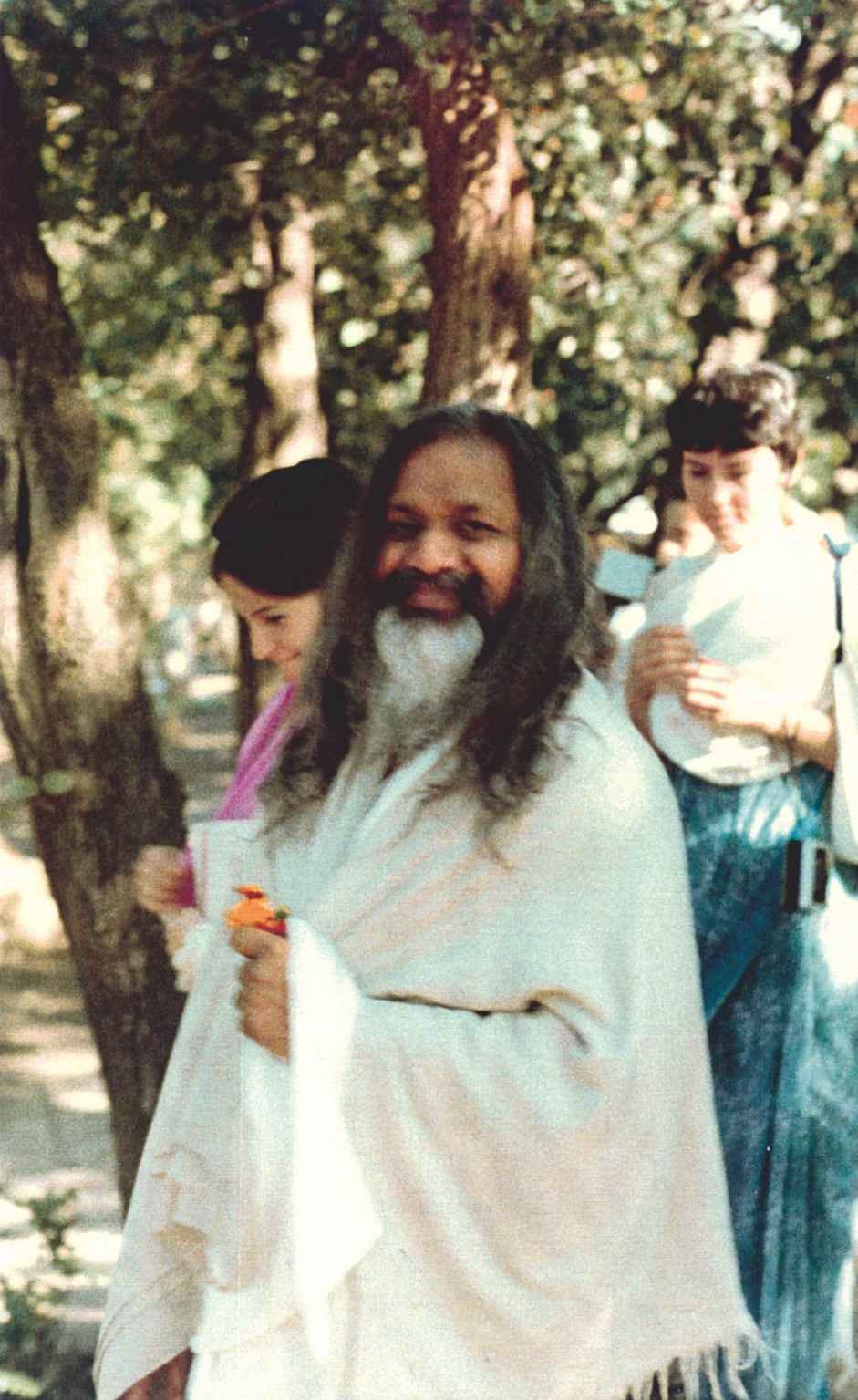
Against that position now stands direct testimony. Bourque says that in 1970, at Rishikesh, when she was twenty-two, she and Maharishi became lovers, and that the relationship lasted through the two years she spent at his side. She calls it "a love affair kept secret," presents it as consensual, and says that afterward she felt "bound to secrecy" (RS-PRE-¶002; RS-S29-¶002; RS-S36-¶002; RS-S38-¶014). She says that after their first night he sat on his bed looking despondent and "complained about his own behavior" (RS-S41-¶010, p. 190). Her reading of that moment, that he believed in karma and expected to pay for what he saw as wrong, is her interpretation. A second witness supports part of her account. Robert McCutchan, then one of Maharishi's personal attendants, writes that Maharishi sent him and a friend to fetch Bourque from her room late at night "five or six times," and that they later watched her come down the path to his house after everyone had gone to bed. McCutchan did not see what happened inside. He says his "true believer" mind would not let him draw the obvious conclusion until later, when he saw the same pattern with another young woman in Mallorca and heard from a mutual friend that she too had been Maharishi's lover. "It finally became obvious," he writes, "that Maharishi was urging us to be celibate at the same time as he was breaking his own vows" (McCutchan, in Bourque, RS-AFT-¶009–¶015, pp. 220–223).
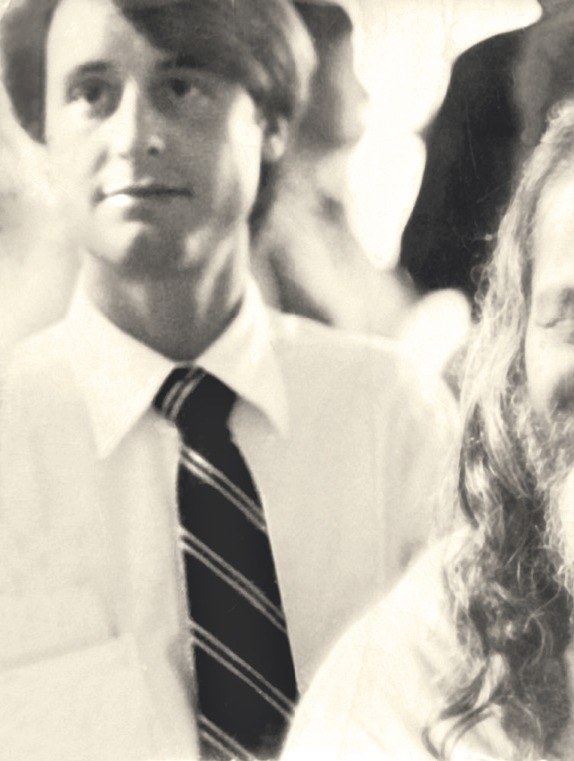
Shumsky adds testimony of a different kind. Her own first impression of him was that she "sensed zero sexual energy around him" (MM-PRO-¶012). But she says that years later "several women personally confessed to me they had sexual intercourse with him, or were bidden to," and that she found each account credible (MM-C23-¶069). She also says that women who made such claims were branded "psychotic" within the movement (MM-C23-¶070). Her book warns that some names and details are altered, so her accounts cannot be matched to particular people.
The 1968 Rishikesh rumor belongs to a lower tier. Shumsky's chapter on it relies on published Beatles memoirs and a 2010 statement by Alexis Mardas, not on her own observation. On that account, an American course member, Rosalyn Bonas, said Maharishi had made a pass at her, and Mardas pressed the story on Lennon and Harrison (MM-C18-¶034–¶038). Cynthia Lennon thought Mardas had put Bonas up to it, and said he accused Maharishi "without a single shred of evidence or justification" (MM-C18-¶040). It remains unresolved. No sexual allegation against either man was tested in court.
So both men are credibly accused of private sexual conduct that their followers were not told about, and both are reported to have demanded or relied on secrecy. It is tempting to say that Rajneesh's conduct simply fit his teaching. That is only half right. His public teaching was openness about sex. His private practice, on Deeksha's account, was kept secret, and as she understood it he ended it when it threatened his support. That is concealment, even if it is not hypocrisy about sex itself.
The real asymmetry lies in what each teaching did to a follower who felt wronged. Maharishi's case is hypocrisy in the plain sense, and McCutchan shows it at close range: a teacher urging celibacy on young men while breaking his own vow. A follower who felt betrayed had a standard to appeal to, the celibacy he professed, and that is what McCutchan and Bourque eventually did. Rajneesh's teaching had excused the conduct in advance. If resistance was repression, then a woman's discomfort was evidence of her own conditioning, not of his wrongdoing. Deeksha told herself it was for her benefit. Radha called it rewiring. That difference does not settle which man behaved worse. Bourque describes a love affair with a man who was, in her words, "like a teenager" (RS-S49-¶026, pp. 234–235). Deeksha describes acts she never wanted. But it explains why accounts from Rajneesh's circle so often describe confusion rather than simple betrayal.
XII
How each man changed over time
Acomparison of character has to ask whether the men stayed the same. The evidence here covers the two lives unevenly, and the gaps should be stated plainly. For Maharishi, Mason's available chapters end in the first days of 1959, as he arrives in America. Shumsky's first-hand account begins in 1967, and Bourque's in 1968. For the years from 1959 to 1967, when he built the movement in America and Europe and first filled large halls, this essay has no first-hand witness and no part of the biography. Whatever he was like in those years, these sources cannot say.
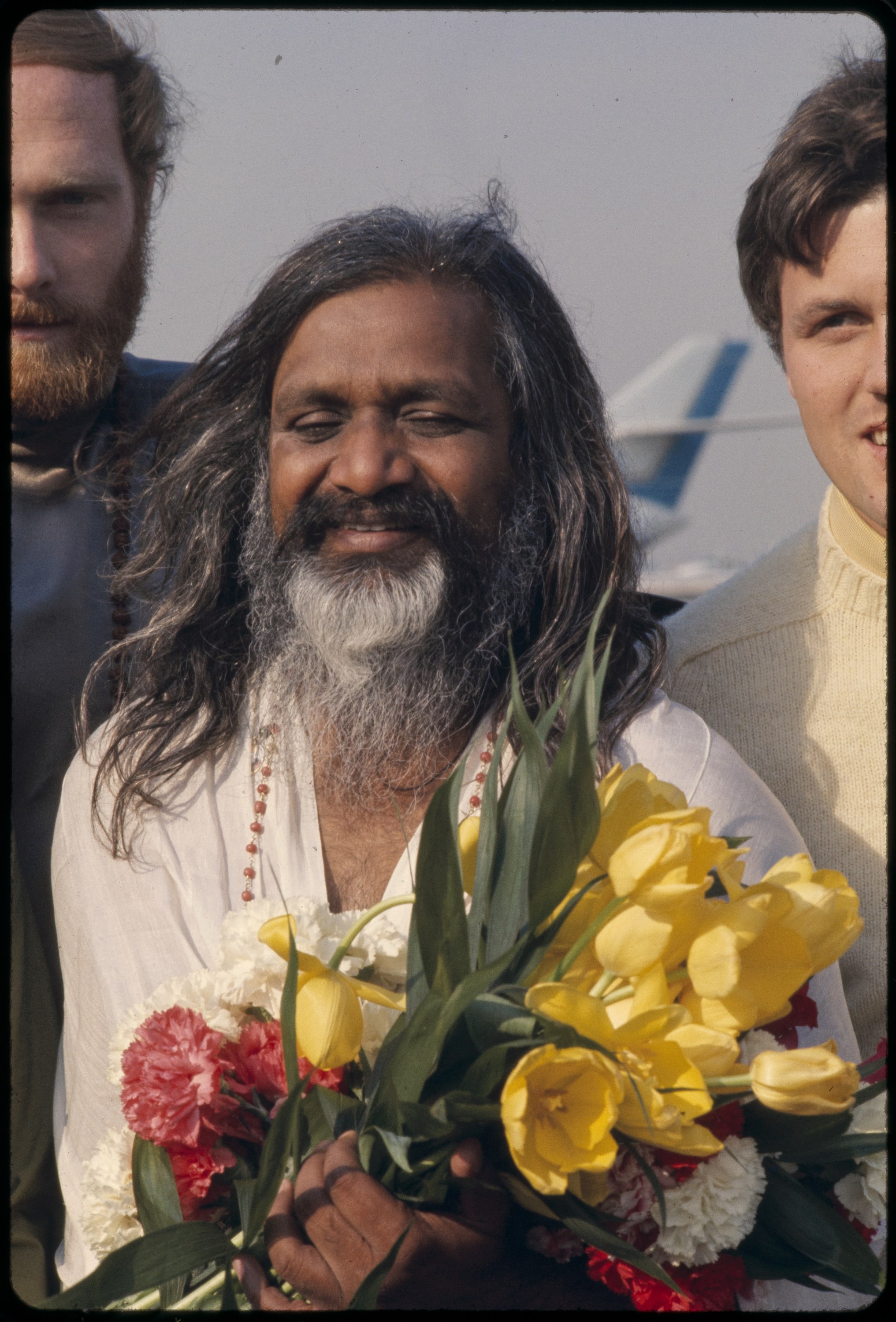
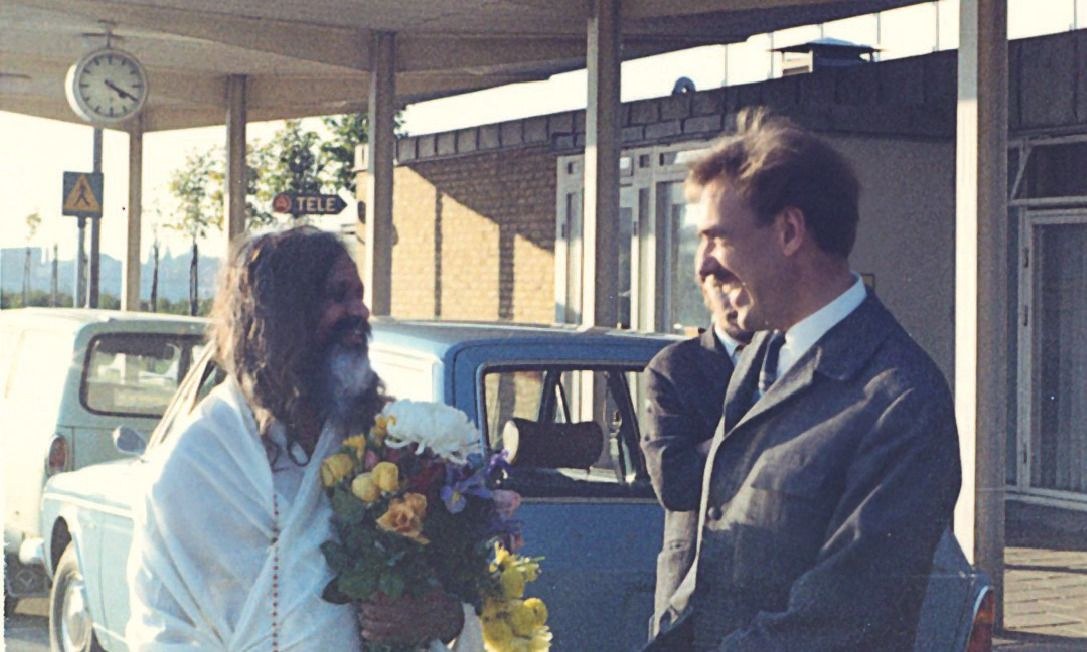
What the sources do show is a consistent core and a changing surface. The core is visible in 1955 and still visible in 2004: one master to whom everything is credited, a technique for householders, a Vedic system into which modern science is fitted. The surface changed with the audience and the decade. In 1958 he arrived in Honolulu with, a local paper said, no money and few possessions (Mason, PP-C03-¶026, p. 37). By the mid-1970s he was sending his staff home to raise money for a six-month course in supernormal powers (Shumsky, MM-C12-¶106–¶107). In 1981 he announced residential courses for a thousand men and a thousand women in a "24-hours bliss program," whose members, Shumsky says, were forbidden contact with almost anyone outside (MM-C23-¶006, ¶011). The early promise that twenty minutes twice a day was enough remained the public offer. The private demand grew.
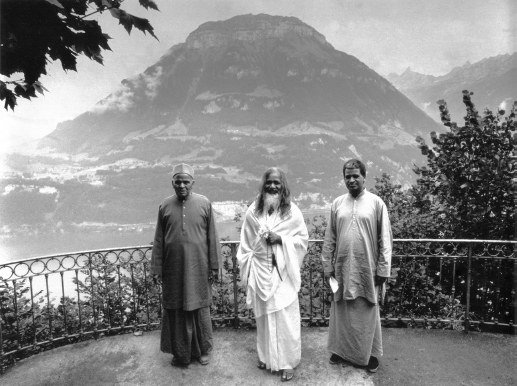
Up close, too, the man seems to have changed. Bourque's Maharishi in 1970 asked a twenty-two-year-old's opinion on whether he should enter politics, and was, by her account, inexperienced and guilty in private (Bourque, RS-S28-¶004; RS-S41-¶010; RS-S49-¶026). Shumsky's Maharishi in the mid-1970s was a demanding employer who scolded in public and could be tender in private (Shumsky, MM-C12-¶017; MM-C14-¶077). Chopra's Maharishi in the early 1990s was harder still. Chopra wrote that in 1993 the old man told him, "People are telling me that you are competing with me," and then, "You are my son, you will inherit all that I have created." Chopra described him as "playing the part of an irascible, jealous old man whose pride had been hurt" (Chopra, "The Maharishi Years," Beliefnet, Feb. 13, 2008). When Chopra finally left in 1994, Maharishi is reported to have said, "I will love you, but I will also be indifferent to you from now on" (as quoted in Shumsky, MM-C22-¶133, drawing on Chopra). Bourque suggests that he made his peace with breaking his vow, and that his clandestine relations with women grew more frequent through the 1970s. That is her reading of reports from his attendants, not something she saw (RS-S41-¶011, pp. 190–191).
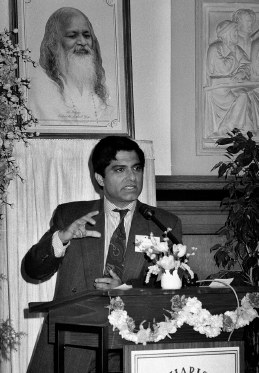
His health shaped the last stage. In 1991, Chopra says, he fell gravely ill and his nephews insisted that "no one in the movement should find out that Maharishi was grievously ill" (Chopra, Beliefnet, Feb. 13, 2008). Shumsky, drawing on Chopra, says that he was treated in London, that followers were told he was "in silence," and that after recovering he settled at Vlodrop in the Netherlands, where he stayed until his death (MM-C22-¶124). From then on he spoke to the world mainly by video. His public statements grew more political and more absolute, as the next section shows.
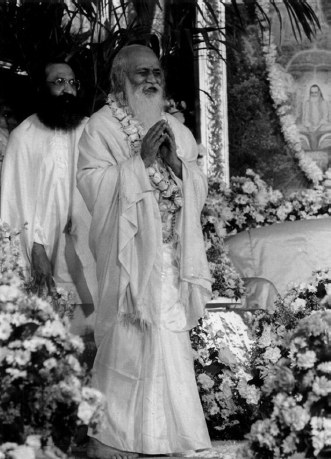
Rajneesh's arc was steeper and less steady. In the 1960s he was a professor and public controversialist. From 1970 he was a guru with a few Western disciples in a Bombay apartment. From 1974 he presided over Poona, the busiest growth center in the world. In 1981 he went to America and fell silent for more than three years. In 1984 he began speaking again, and in 1985 he denounced Sheela, fled, was arrested and pleaded guilty. A six-month world tour followed, with entry refused or deportation in more than twenty countries. In 1987 he returned to Poona, and he died there in January 1990, at fifty-eight (King, RP-C43-¶030).
The signs of personal change are troubling. Deeksha met him twice a day at the New Jersey castle where he stayed in 1981 (Gordon, GG-C08-¶028). King writes that what she saw there, "his Valium-fueled delusions," jolted her into leaving (King, RP-C06-¶022, ¶039). Sheela denies that she saw him abusing Valium (RP-C06-¶022). Nandan, who had held a position of authority at the ranch, told Gordon that by April 1984 she knew he was taking large doses of Valium and inhaling nitrous oxide, sometimes twice a day, and that she asked herself, "How could someone who used drugs to get high be enlightened?" (Gordon, GG-C08-¶047–¶049). Mahadeva, a long-time disciple and a therapist, gave Gordon a clinical reading: "Bhagwan went into a depression after he left India," and dealt with it "in symptomatic ways, like drugs and nitrous oxide," and the Rolls-Royces (GG-C12-¶157). That is a disciple's diagnosis at a distance, not a medical finding.
Set side by side, the two arcs differ in a way that matches their beginnings. Maharishi changed by accretion. The system grew larger and more costly, his manner harder, his claims more sweeping, but these sources show no case of his repudiating what he had taught. Rajneesh changed by rupture. He took up and dropped whole identities: professor, acharya, Bhagwan, silent sage, the friend who had never been a religious leader, and finally Osho. The disciple trained in obedience kept adding to a structure he had received. The man who had declared himself enlightened on his own authority kept tearing down what he had built.
XIII
Politics and sovereignty
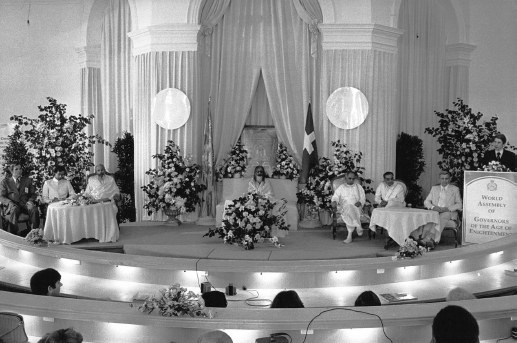
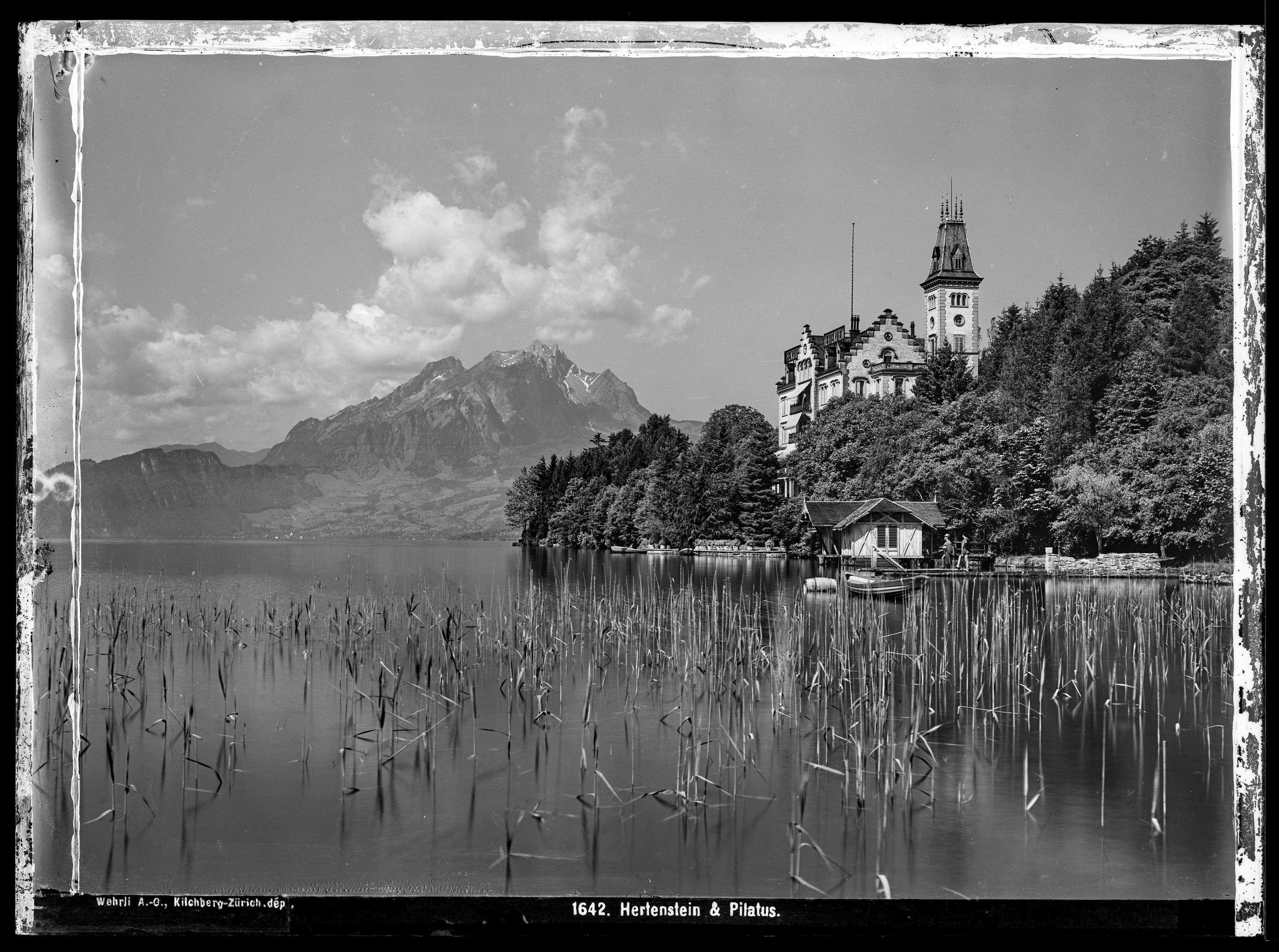
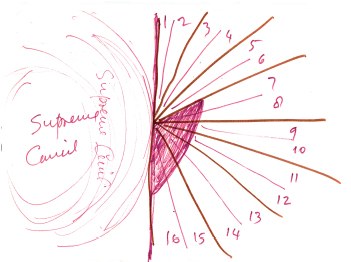
It is often said that Maharishi kept an apolitical face while Rajneesh, for all his anti-political talk, ran an armed city-state. Both halves need adjusting, and the Maharishi half most. Maharishi's interest in political power was there early and grew with age. Bourque says that one night in 1970 he asked her whether he should become Prime Minister of India (Bourque, RS-S28-¶004, p. 96). In January 1976, emerging from eight days of silence at Hertenstein in Switzerland, he declared, "Now we will inaugurate the World Government for the Age of Enlightenment" (Shumsky, MM-C15-¶013–¶014). Shumsky drew a poster to his design, showing its supreme council with sixteen ministries, and designed a currency note called a "Maha" that later became the movement's "Raam" (MM-S23-¶048; MM-C12-¶114). His teachers were given titles such as "Executive Governors of the Age of Enlightenment" (MM-C19-¶072). In 1979, by Shumsky's account, he told an assembly that Mother Divine was ready to destroy the earth for its crime and war, that he had begged her for one more chance, and that two thousand people must gather at once to meditate together permanently to save it (MM-C20-¶038–¶042). In 1993 his Natural Law Party ran the magician Doug Henning for office in Canada (MM-C22-¶109). By the movement's own record, in October 2000 it inaugurated a "Global Country of World Peace" and crowned a physician and scientist, Tony Nader, as its first ruler (Maharishi Vedic Science thesaurus, Maharishi University of Management).
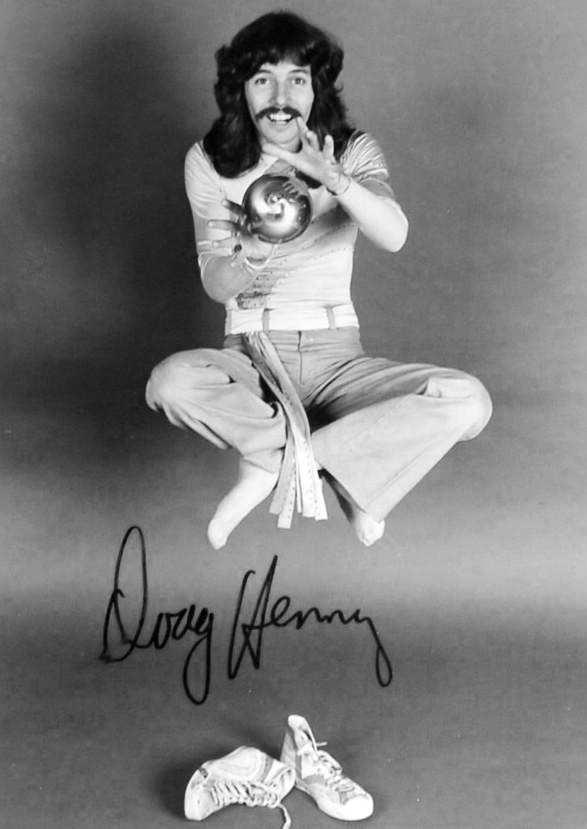
In 2002, in his first television interview in many years, Maharishi spelled out his politics to Larry King. "I want to create a global government," he said, and he named its head: "Dr. Nader Raja Raam." Elections were "a fraudulent thing," because "administration is a matter of expert intelligence." He added, "I used to say 'damn the democracy,' because it's not a stable government." His government would rest on "the constitution of the universe," which he explained this way: "Natural law, we say from the field of science. Will of God, we say from the field of religion. It's the same thing" (Larry King Weekend, CNN, May 12, 2002). In 2005, angered by Britain's support for the Iraq war, he stopped advanced TM teaching there, saying it "should not be given to a dangerous country that is constantly busy destroying the world" (The Guardian, Aug. 15, 2005).
So "apolitical" may fit the image he presented to new meditators in the 1960s. It does not fit the man. From at least 1970 he thought about political power, and from 1976 he claimed to be founding a government. But it was a sovereignty of ceremony, persuasion, money and titles. Nothing in these sources shows it commanding police or soldiers.
Rajneesh's politics were anti-political in words. Leaked minutes record him saying that "we are not politicians so we don't need to please people for their votes" (FitzGerald, CH-C04-¶270, p. 341). Privately he could speak on a larger scale. Deeksha remembered him at the New Jersey castle in 1981, after, she said, he had taken a large dose of Valium, saying he would become "the power behind the president of the United States" and would one day rule the world (King, RP-C06-¶006). In practice his commune incorporated a city, took over the government of neighboring Antelope, built a Peace Force and an arsenal, and in the fall of 1984 bused in about thirty-seven hundred homeless people in a move widely seen as an attempt to sway the county elections (Gordon, GG-C06-¶028, ¶082; GG-C07-¶010; FitzGerald, CH-C04-¶277, pp. 344–345).
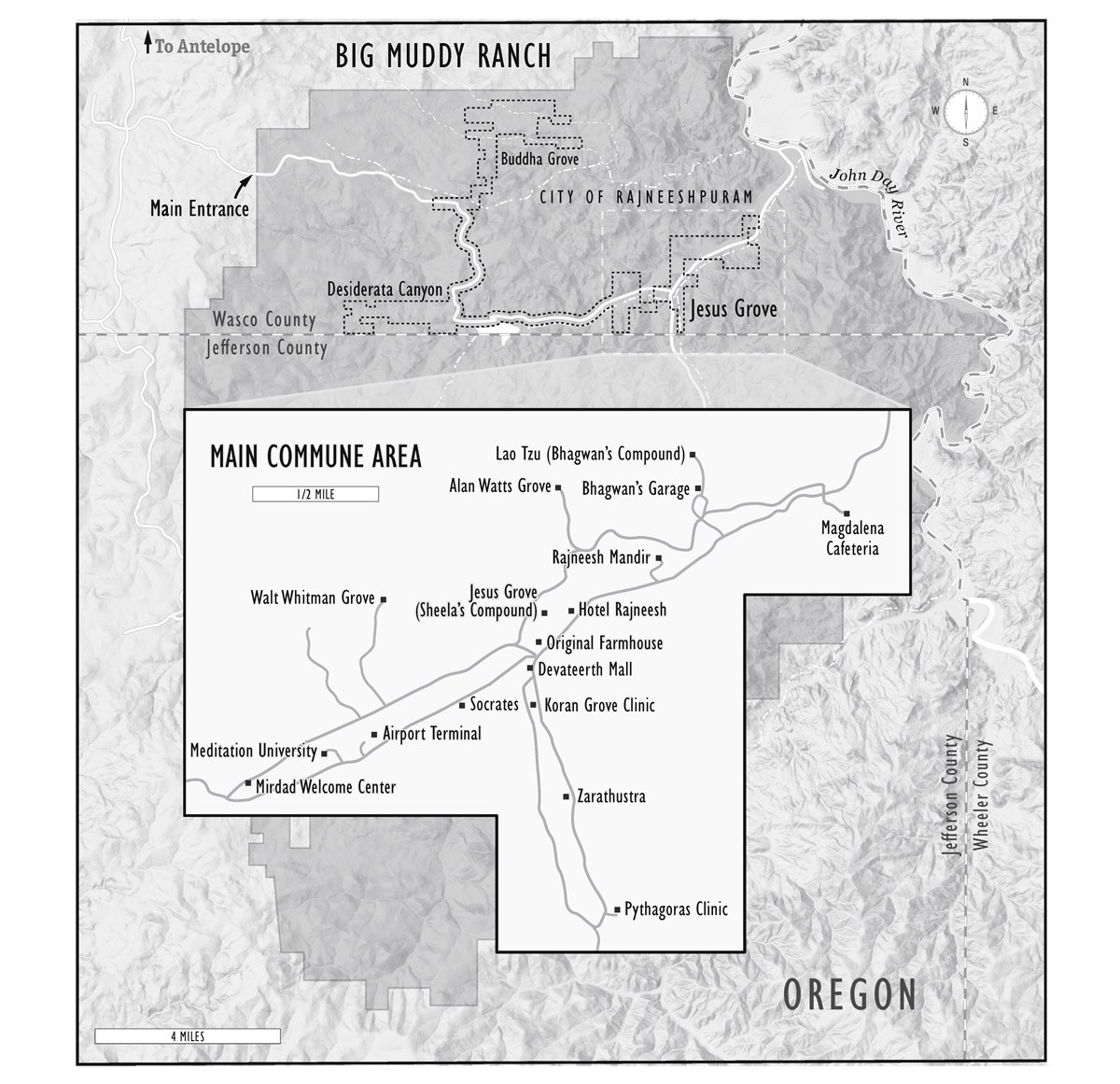
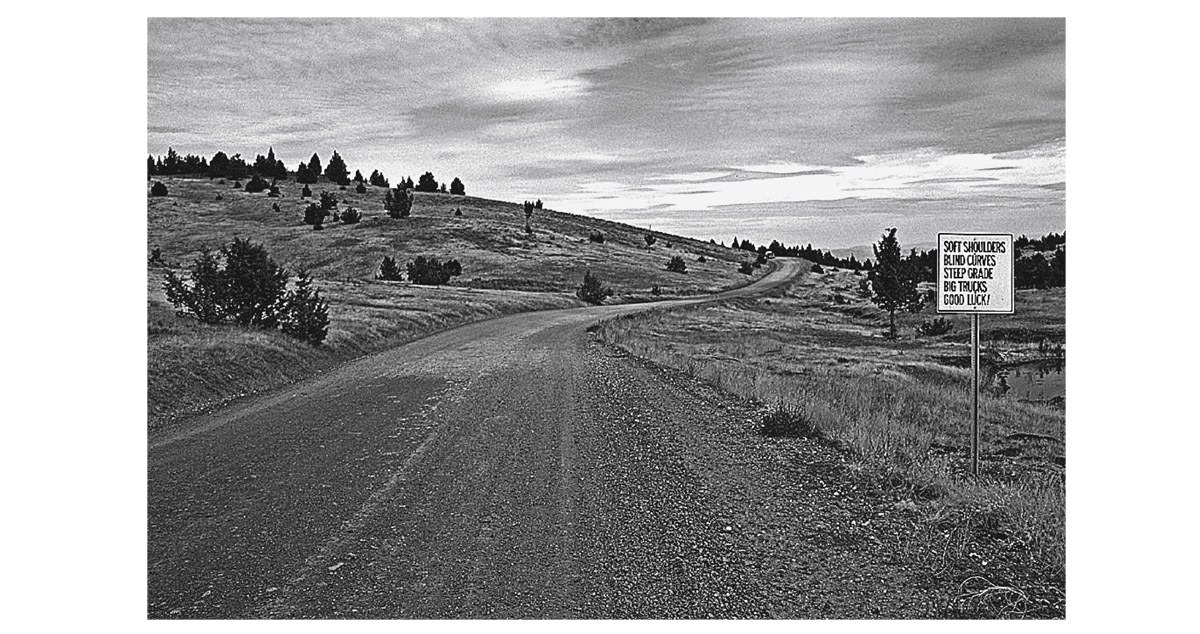

How much of this was his design falls again into tiers. The city and the religion were announced in his name, and the minutes and Gordon's sources tie him to the confrontational strategy. The sources attribute the arsenal and the election scheme mainly to Sheela's circle. On December 10, 1985, a federal judge voided the city's incorporation as an unconstitutional merger of church and state (King, RP-C42-¶013).
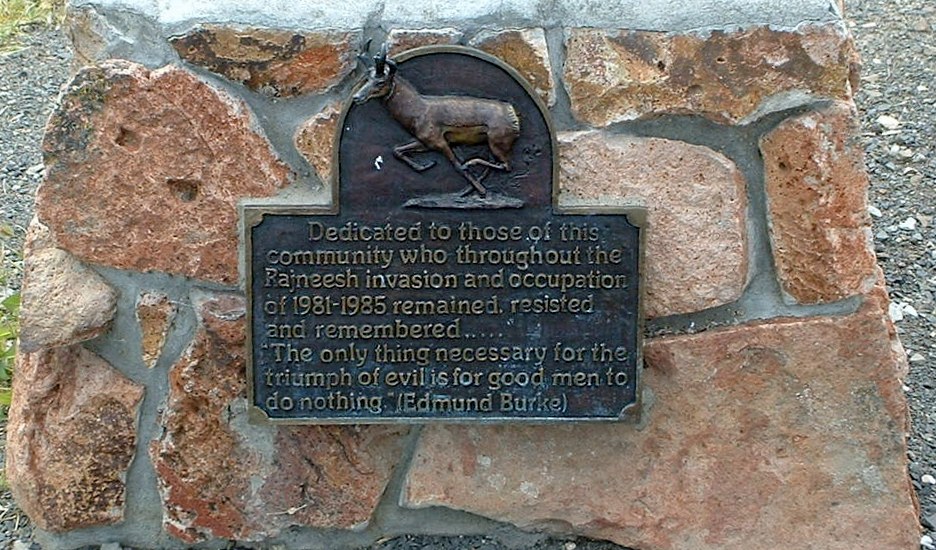
The asymmetry is decisive. Both men despised elected government, and both spoke of ruling the world. Maharishi's movement crowned a ruler and printed currency. Rajneesh's commune exercised real police power over real neighbors. Only one movement armed itself. Part of the reason is circumstance: Maharishi never held a single territory facing a hostile county. Part of it is temperament. Compare Rajneesh's "we should not compromise" with a line Maharishi gave the Associated Press in 2006: "Don't fight darkness. Bring the light, and darkness will disappear" (AP obituary, Feb. 6, 2008).
XIV
Under pressure
It is often said that Maharishi avoided conflict and never answered his critics. The record is more varied than that. What it shows is a split: outsiders were deflected, and insiders were disciplined.
When Lennon and Harrison left Rishikesh in April 1968, the two Beatles' own accounts, as Shumsky assembles them, have Maharishi asking "Why?" and then, "I don't know why. You must tell me." Lennon answered, "Well, you're supposed to be the mystic. You should know" (Shumsky, MM-C18-¶044–¶051). There was no public attack afterward. When he died, the Associated Press noted that he had "insisted he had done nothing wrong" over the rumors from Rishikesh (AP obituary, Feb. 6, 2008). In 1991, as the Washington Post reported and Shumsky quotes, he told his meditators in Washington to "save yourself from the criminal atmosphere," and they sold their homes and moved to Iowa (MM-C23-¶021). In 2004, after a student at his university in Fairfield was stabbed to death by another student, his only reported comment, relayed by a university official, was that it was "an aspect of the violence we see throughout society, including the violence that our country is perpetrating in other countries" (Antony Barnett, The Observer, May 2, 2004). Each time, the trouble was placed outside: in the Beatles' circle, in a city's atmosphere, in a nation's wars.
The courts were a different kind of pressure, and the movement met them as a defendant. In the New Jersey schools case it lost in 1977 and again on appeal in 1979 (Malnak v. Yogi). A former teacher, Robert Kropinski, won a jury award of $137,890 for fraud and negligence. In 1988 the federal appeals court in Washington reversed part of the judgment, ruled that expert testimony on "thought reform" should not have been admitted, and sent the fraud claim back for a new trial (Kropinski v. World Plan Executive Council, 853 F.2d 948, D.C. Cir. 1988). A later settlement is reported but was not confirmed here. The sources consulted show no case in which Maharishi personally directed a suit against a critic.
Toward insiders he was not evasive at all. Bourque's letter of doubt in 1971 was answered with a diagnosis of "persisting sickness" (Bourque, RS-S34-¶019–¶020, pp. 144–145). Women who said they had been his lovers were, Shumsky says, branded "psychotic" (MM-C23-¶070). In 1993 he confronted Chopra over reports that Chopra was "competing" with him (Chopra, "The Maharishi Years," Beliefnet, Feb. 13, 2008). The insider who doubted was treated as ill, or disloyal, or both.
Rajneesh under pressure did the opposite of deflecting. Two days after Sheela left the ranch in September 1985, he became her chief public accuser. He said she had turned his commune into a "fascist concentration camp" and told the press, "Adolf Hitler has died again" (Gordon, GG-C10-¶002, p. 182; King, RP-C37-¶017, p. 266). His accusations drew in six law-enforcement agencies. But he spoke to officers only in front of cameras, and commune officials gave what FitzGerald calls "rather limited cooperation" (FitzGerald, CH-C04-¶316, ¶320, pp. 361–363). In those weeks he added allegations that Gordon judged he "probably knows to be untrue," and mocked Sheela as "a waitress in a hotel" (GG-C10-¶028–¶029, p. 185; RP-C40-¶023, p. 287). At one press conference he asked the audience to raise their hands if they believed him, a tactic Gordon called "coercive," and after a question about a possible government raid he warned that "people can also hijack American planes" (GG-C10-¶034, p. 186).
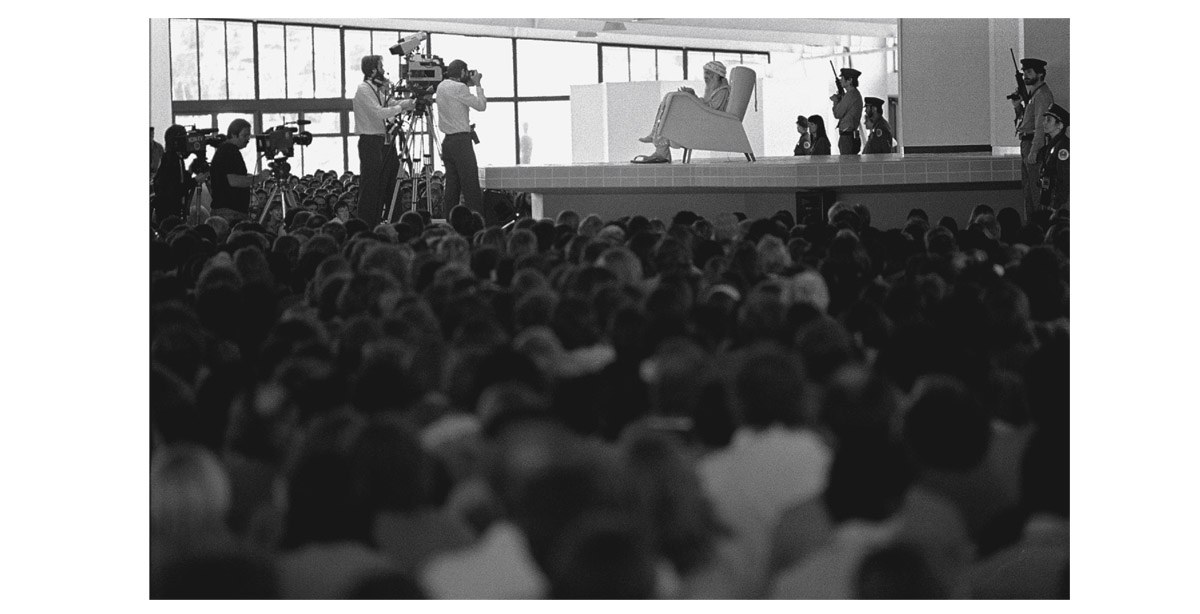
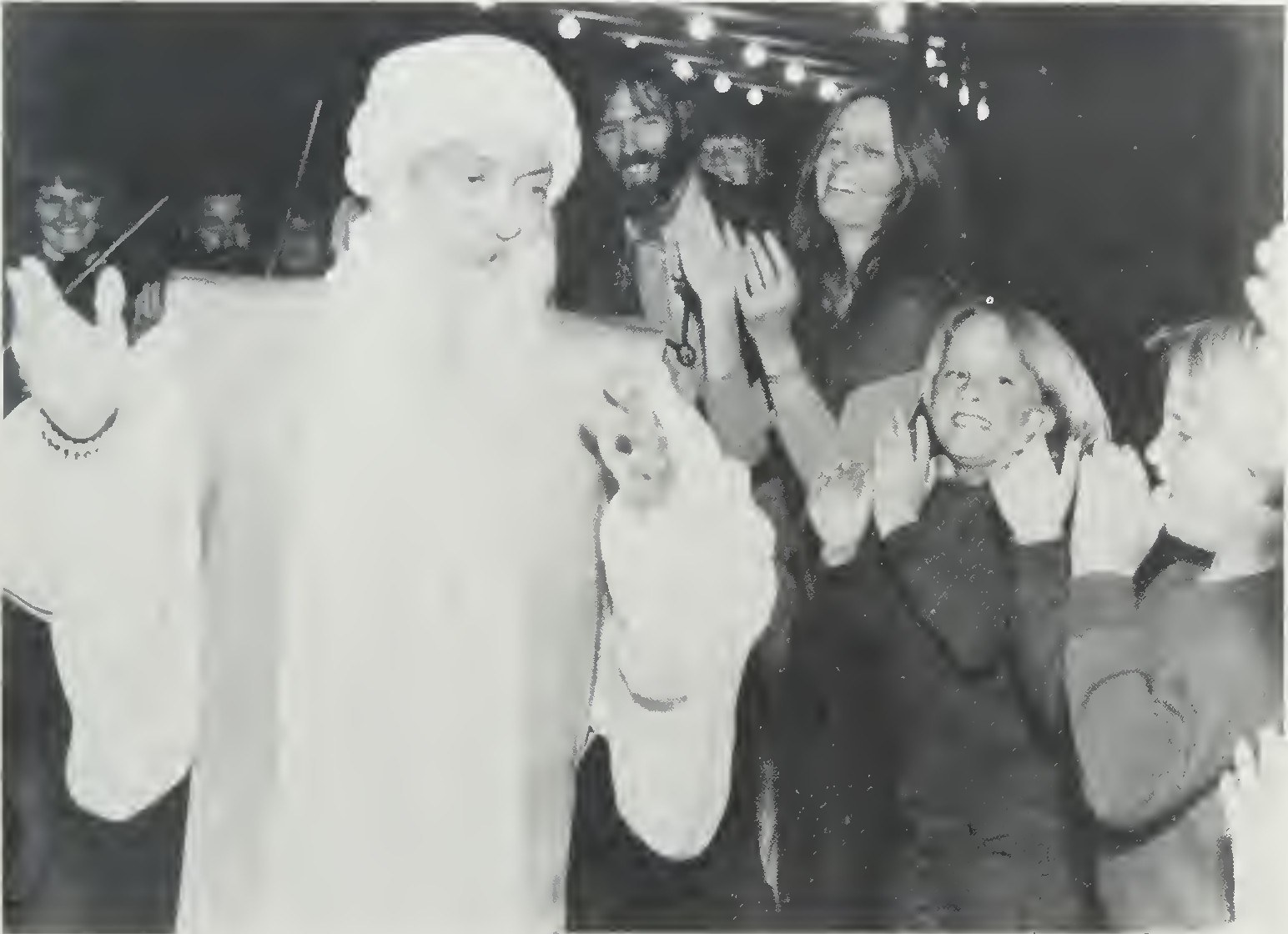
Then came the flight east and the arrest in Charlotte. Under an Alford plea he admitted that the evidence was enough to convict him while keeping his innocence. He received a ten-year suspended sentence, paid $400,000 in fines and costs, and agreed to leave the country within five days (GG-C11-¶069–¶070, p. 201; King, RP-C42-¶005). He was born on December 11, 1931, so he was fifty-three when he left (GG-C01-¶031, p. 21). He left under a plea agreement, not a deportation order.
Gordon offers an unsettling reading of why he turned so fast on Sheela. In a discourse Rajneesh said he feared she would get immunity and accuse "innocent sannyasins." Gordon later realized that no prosecutor would give immunity to the principal offender to testify against her subordinates. "The only 'innocent' one," he wrote, "who would have been threatened by a grant of immunity . . . was . . . Rajneesh." On this reading, he exposed "Sheela's crimes" first so that she could not trade the tapes of their conversations for immunity (GG-EPI-¶059–¶060, pp. 242–243). That is interpretation, not proof. But it fits the documented sequence, and it fits the report that he wanted Ava to clear him in her testimony.
So under pressure Maharishi conserved and Rajneesh spent. Maharishi protected the institution by withholding comment, access and finally, from Britain, the advanced teaching itself. He placed blame on the world's atmosphere, and he treated doubt within as sickness. Rajneesh protected himself by attacking, accusing and changing roles faster than anyone could follow. "I'm a risky person and it is a game and I know the right timings," he told Gordon. "I'm just . . . a referee" (GG-C11-¶039, p. 196). Both responses kept the leader out of reach. Maharishi's preserved an organization. Rajneesh's kept his following but lost the commune.
XV
What followers received
Acomparison built only on the leaders' faults would miss why people came and stayed. Both men gave many followers something real, and the sources say so, often in the words of the same people who later left.
For TM's ordinary meditators, the benefit was modest and often lasting. Lennon, a month after leaving Rishikesh, still said, "Meditation is good and does what they say. It's like exercise or cleaning your teeth, you know. It works" (as quoted in Shumsky, MM-C04-¶047). Shumsky says of her own first years that "TM did work. It ended a good deal of pain" (MM-C03-¶026). Bourque left Maharishi's circle heartbroken (RS-S36-¶002), but she still believes "the meditation technique itself is good enough to stand on its own" (Bourque, RS-S43-¶009, p. 203). She has gone on teaching meditation much as he taught her (RS-S44-¶013). McCutchan, who broke with Maharishi over the broken vow, still called his years near him "three of the most eventful and joyful years of my life" (McCutchan, in Bourque, RS-AFT-¶015, p. 223). Not everyone found even that much. Siegel meditated for four hours a day for more than a year and says, "I did not experience anything Maharishi promised. Nor, from what I could tell, did anyone else" (Siegel, TD-C01-¶041). The inner ring paid in other ways. Shumsky lived for years on $25 a month (MM-C09-¶039). She describes meditators at Fairfield who "struggled in subpoverty," and yet "reveled in the unmistakable spiritual atmosphere of two thousand like-minded seekers meditating together" (MM-C23-¶023). And she saw what Maharishi called "heavy unstressers," people with spasms and involuntary movements on long courses, placed in a separate room to keep meditating (MM-C09-¶089). The movement's word for such distress, "unstressing," named it as progress.
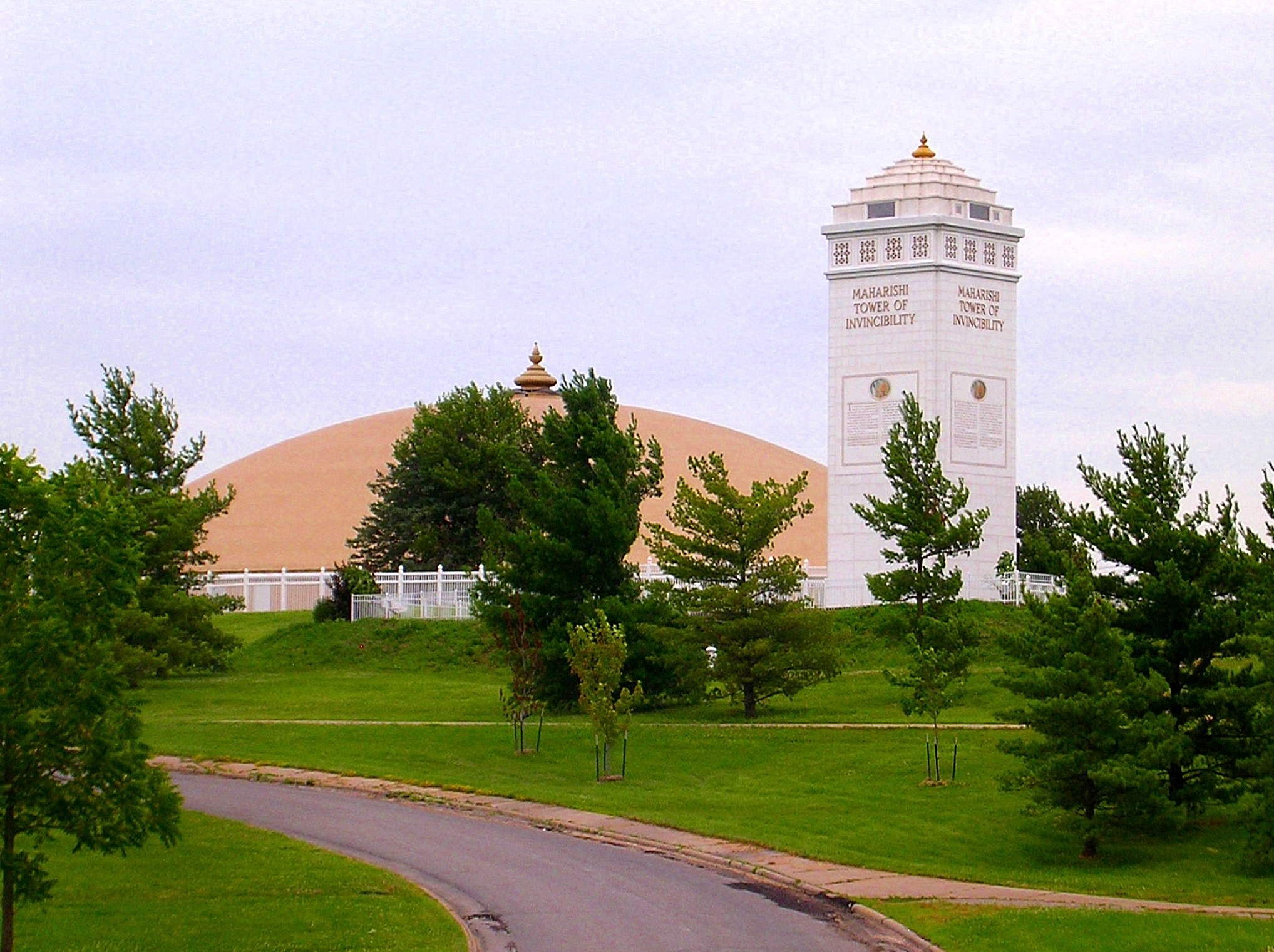
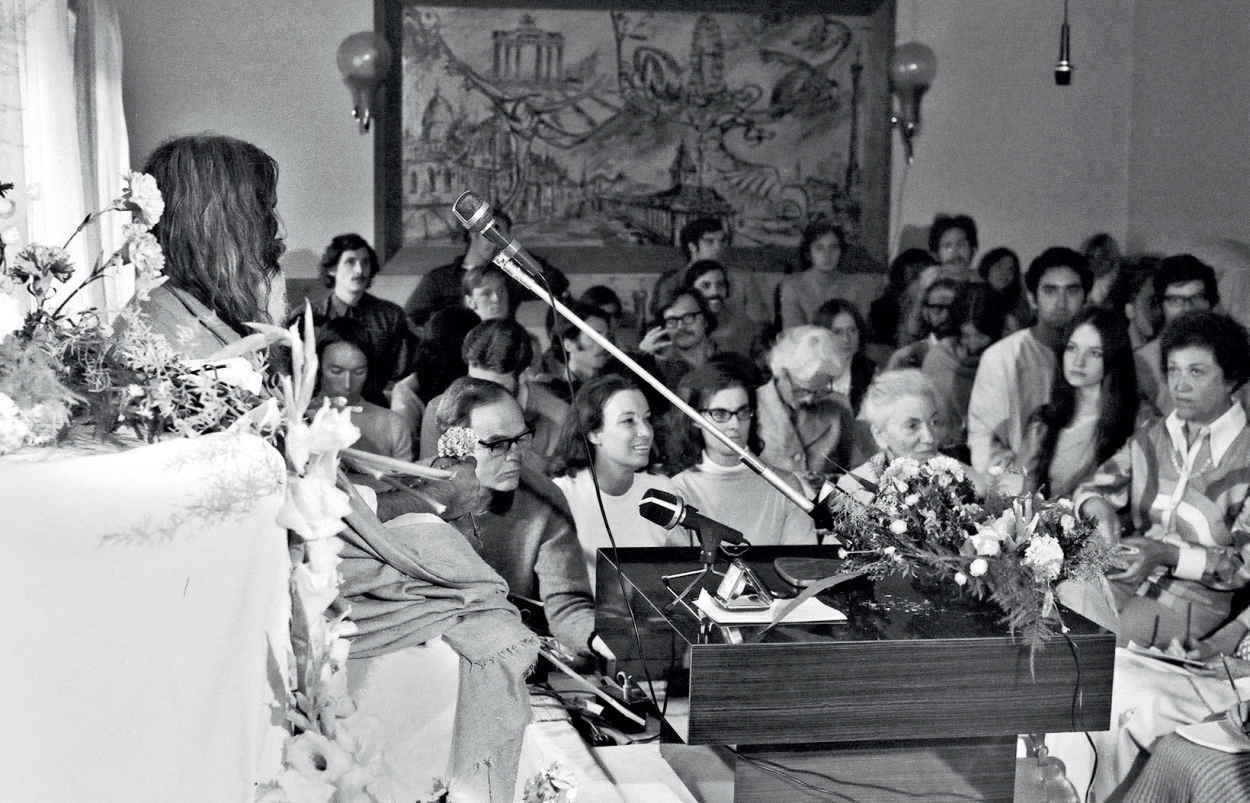
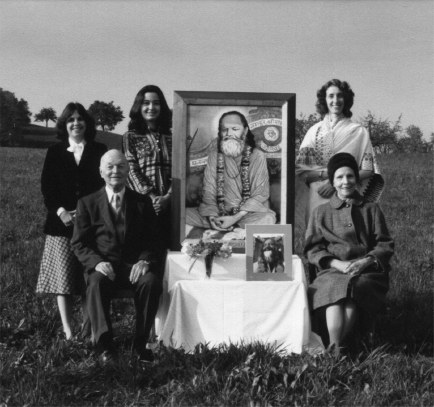
For Rajneesh's sannyasins, the gifts and the costs were both larger. A former disciple who had followed him for ten years told Gordon, "I got a lot out of being a sannyasin. I became more intelligent, more aware. He helped me to see things from the positive and to be more relaxed and trusting and at ease. I needed it." In the same conversation came the line, "He doesn't warrant my trust" (Gordon, GG-C12-¶163–¶165, p. 228). Moses, who stayed to wind up the ranch's affairs, mourned "a community where we were doing miracles, reclaiming the land, living a rich, satisfying life, spiritually, emotionally, economically" (GG-C12-¶012). Satya Bharti wrote that the first time Dynamic Meditation really worked for her, she felt as if she were walking for the first time (FitzGerald, CH-C04-¶125).
The costs reached the body and the family. At Rajneesh's direction, Gordon writes, the Poona ashram began a program of sterilization. It was not a condition of staying, and most sannyasins did not have the operation, but "a climate developed" in which it was seen as a sign of "commitment to Bhagwan" (GG-C03-¶130, pp. 82–83). Anna Forbes, the former Nandan, told Gordon that for a time she was so angry about her own sterilization that she "really would have murdered him if he came in my house." Later she called it a choice she had made: "I bought it lock, stock, and barrel." She was grateful too. "He gave me permission to be angry, to be total in my work, to experiment and get involved deeply with meditation" (GG-C12-¶166–¶167). Then there were the children left behind, and the injuries in the encounter groups, described earlier.
Two things stand out. First, in both movements the people who left still credited the practice. Bourque and McCutchan kept meditating. Forbes went on to Vipassana and to Zen and Benedictine retreats, and met friends weekly to sit in silence (GG-C12-¶168). The technique outlived the teacher's authority in both cases. Second, the scale of what was asked differed. Most TM meditators were asked for a fee and forty minutes a day. Most of Rajneesh's committed sannyasins were asked for a new name, their clothes, their working lives and sometimes their fertility. The gifts they describe are larger too: community, freedom, permission. That is the bargain the threshold set up. Rajneesh offered more and took more. Maharishi offered less to most people and took less from them, while taking a great deal from the few who came close.
XVI
Each on the other
The two men fished in the same waters, and the sources show it. Before he took sannyas, a young American teacher named Raines, later Swami Anand Bodhisattva, looked over the spiritual groups on offer in California, from the Hare Krishnas to Muktananda and Maharishi Mahesh Yogi, and read their books before choosing Rajneesh (Gordon, GG-C02-¶091). FitzGerald places both movements on one spectrum of new religions, "from Scientology to TM and the Maharishi Mahesh Yogi" (FitzGerald, CH-C05-¶053).
Rajneesh's view of Maharishi is on record. In a press interview at the end of September 1985, when Gordon suggested that other leaders also wanted to bring meditation and science together, Rajneesh replied that what Maharishi Mahesh Yogi offers is "not meditation" but "autohypnosis that leads you to sleep." His own method, he said, "leads you into more awareness" (GG-C11-¶017, p. 194). It was an interview answer, not a sermon, given in the weeks when his commune was collapsing. It was also typical. In the same breath he dismissed Reverend Moon as "only a Christian." Rajneesh defined himself against other teachers by name.
Maharishi's view of Rajneesh is much harder to establish. No statement by Maharishi or by any TM spokesman about Rajneesh was found in the sources consulted. The only account is Shumsky's. She says that in 1969, at Pahalgam in Kashmir, the two men met before their students to debate their methods, and her book reproduces a photograph captioned as that meeting (Shumsky, MM-C20-¶068–¶069; MM-S23-¶025). On her account, Maharishi warned his own students beforehand that Rajneesh was a college professor with a keen mind, and that they should be careful how they responded. He then described TM as a technique that takes the mind from the surface to subtler levels, into pure consciousness, the absolute that is everywhere present. Shumsky does not say she was there, gives no source for the story, and nothing else in these sources confirms it. It is secondhand and uncorroborated, and should not be treated as documented.
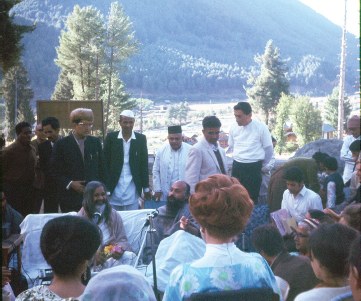
If the story is roughly right, it shows Maharishi taking a sharp opponent seriously and preparing his people for him. Shumsky also says the exchange grew heated, with each man disparaging the other's method, so it does not show him above the fray (MM-C20-¶071). Otherwise, so far as these sources show, he defined himself against society's ills in general rather than against a named rival. Rajneesh named names. The silence on Maharishi's side is an absence in the record, not proof that he never spoke of Rajneesh. But a man who avoided naming rivals in public would leave exactly this kind of silence.
XVII
Last acts and afterlives
Both men ended in seclusion, and both had used seclusion as a method long before the end. Rajneesh withdrew in stages. He stopped speaking to his Poona audiences in 1981, shortly before the move to America, and kept a public silence in Oregon for more than three years (King, RP-C04-¶015; RP-C09-¶021). After the world tour he returned to Poona in 1987. Dropping the title Bhagwan, he told a news conference, "Enough is enough. The joke is over" (Carter, CR-PREF-¶007). Carter adds that the Poona center carried on, with Rajneesh presiding under the title "Osho Rajneesh" (CR-C03-¶027). Just before his death he took the name Osho. He died in January 1990 at fifty-eight. He was cremated within an hour of the announcement. Some sannyasins suspect that his doctor helped him die, or that lieutenants "eager to seize control of his valuable empire" killed him (RP-C43-¶030– ¶032, pp. 308–309). Those are suspicions reported by King, not findings. His epitaph, which he dictated, reads: "Never Born. Never Died. Only Visited this Planet Earth between Dec 11, 1931–Jan 19, 1990" (RP-C43-¶033–¶036).
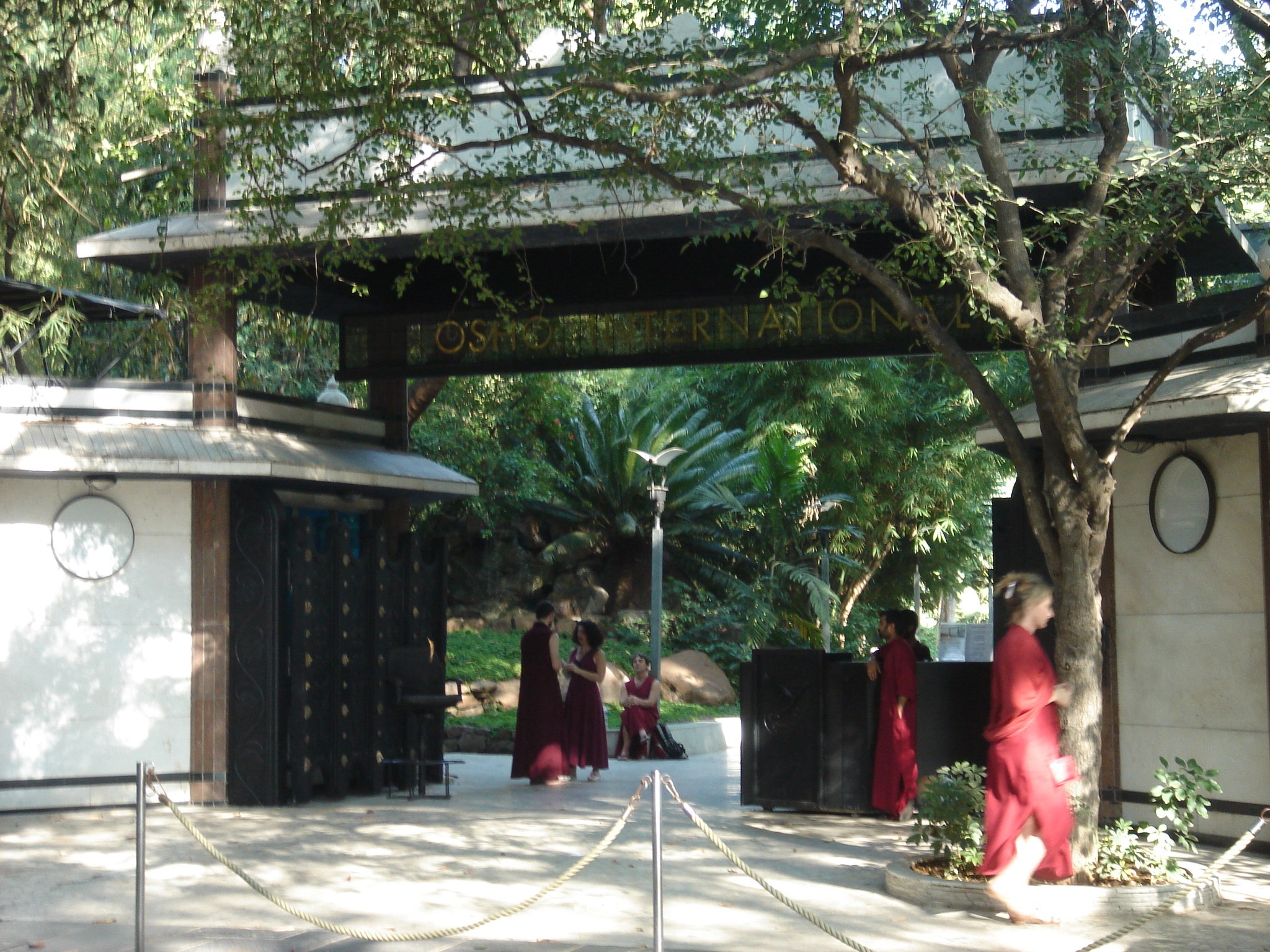
Maharishi's last stage was longer and quieter. After his illness in 1991 he lived at Vlodrop in the Netherlands, dealing with the movement mostly by video (Shumsky, MM-C22-¶124; AP obituary, Feb. 6, 2008). In January 2008 the movement announced that he was giving up control of it. A week before his death the physicist John Hagelin, a senior figure in the movement, said, "There is no one designated successor but many people have been trained for years to carry on the Maharishi's various tasks" (AP, Jan. 29, 2008). He died at Vlodrop on February 5, 2008, at about seven in the evening (AP, Feb. 5–6, 2008). His age was uncertain to the end. Mason gives his uncle's date of 12 January 1917 and lists three others that have been suggested (Mason, PP-C01-¶030, p. 10).
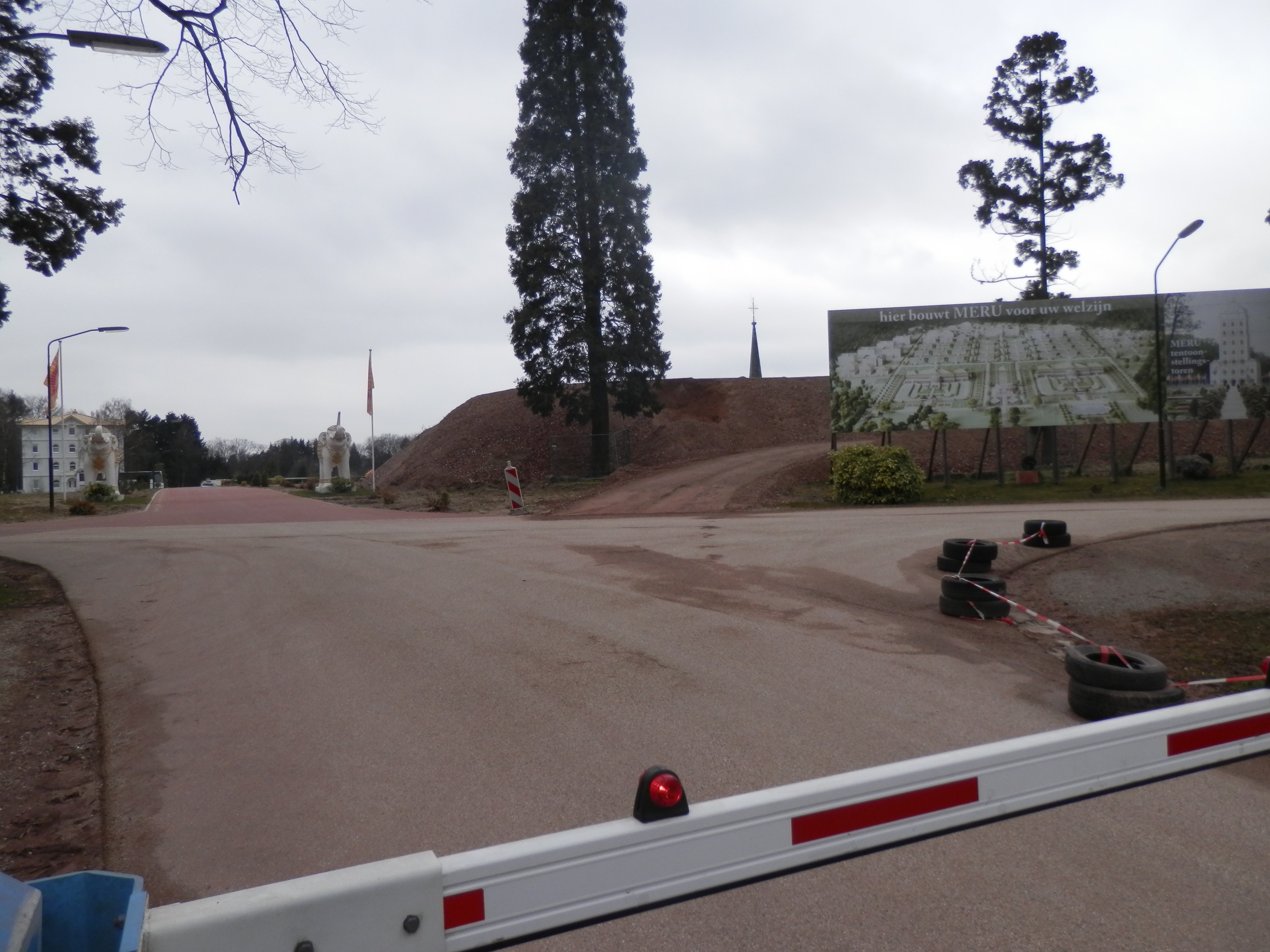
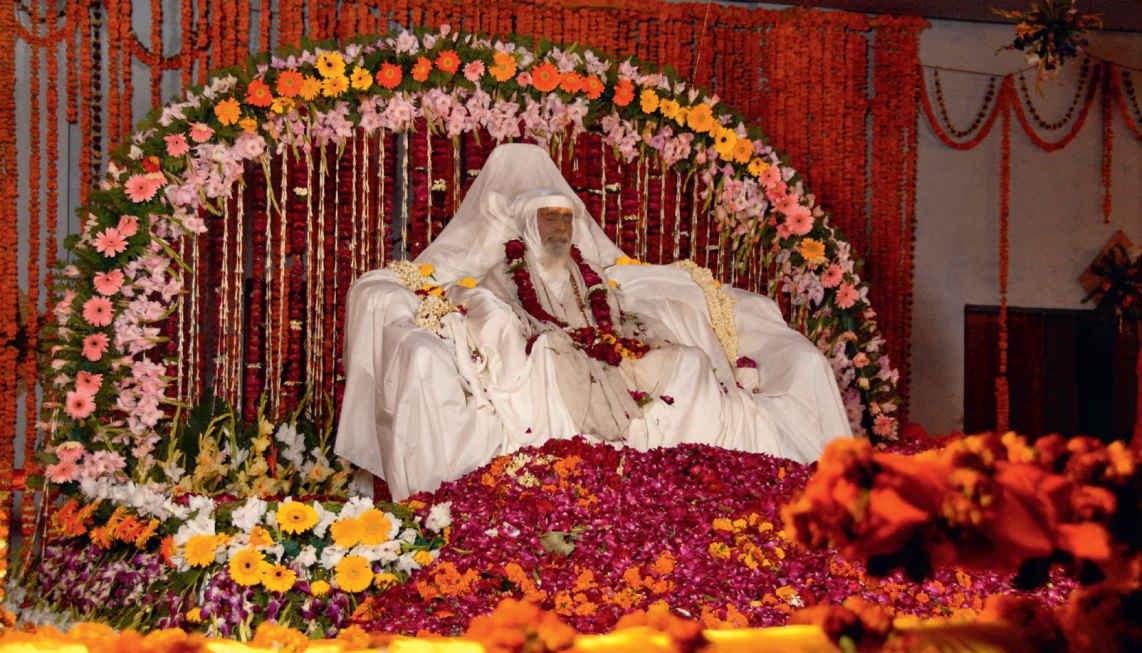
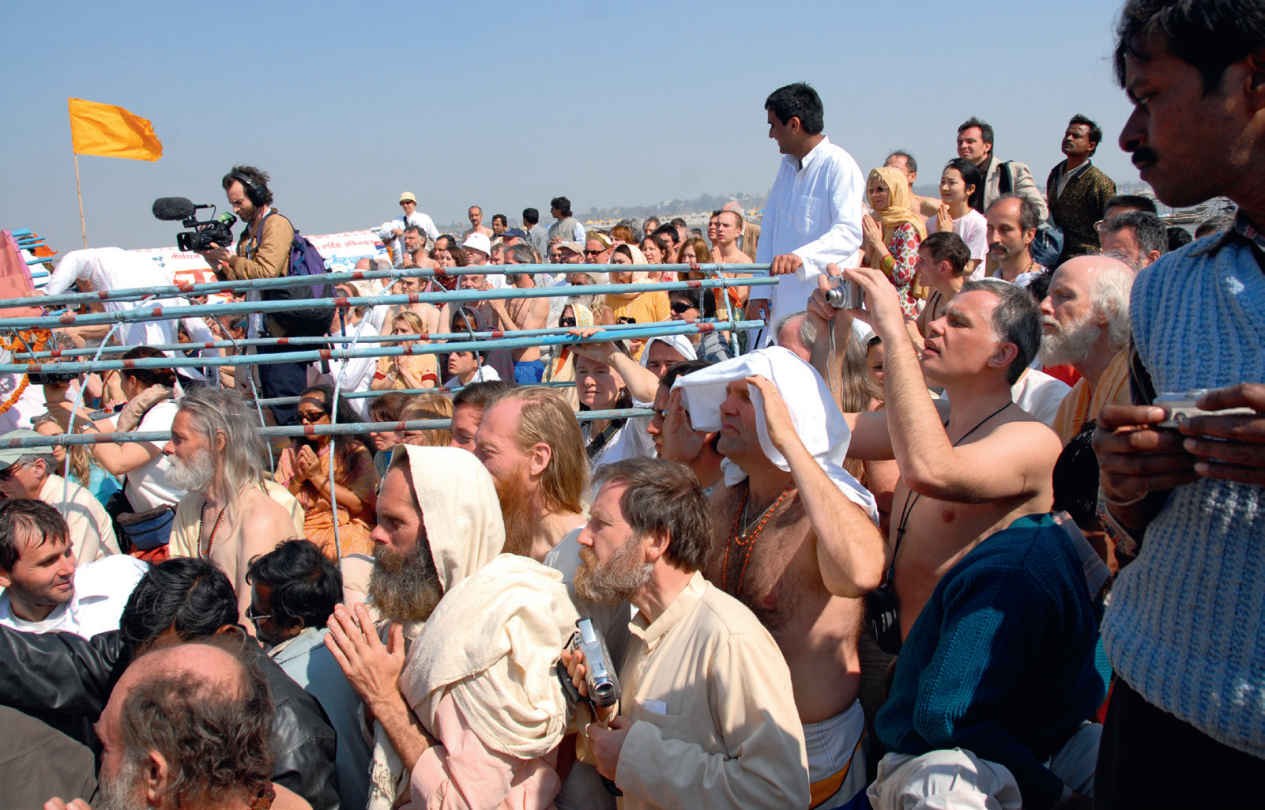
What survived each man fits what each had built. Maharishi left a structure designed to run without him: a crowned ruler of his "Global Country," a system of titles, a university, research institutes and family control of the Indian organization. It was not free of conflict. Bourque guessed after his death that there was "plenty of chaos at the top of the TM pyramid" (Bourque, RS-S43-¶009). Some of its property went to others. In 2011 part of the movement's North Carolina campus was auctioned to Sri Sri Ravi Shankar, who had once served on Maharishi's staff as a Vedic chanter (Shumsky, MM-C27-¶020). In May 2026 India's Supreme Court ordered a special investigation into alleged unauthorized sales of land belonging to the Spiritual Regeneration Movement Foundation of India, made through forged documents and "unauthorised claims to management control" after the founder's death (LiveLaw, May 13, 2026). And the seat he could never inherit, Guru Dev's throne at Jyotir Math, remained in dispute among rival claimants for decades after 1953. In 2017 the Allahabad High Court upheld Guru Dev's will naming Shantanand, held that neither current claimant had a valid title, and ordered a fresh selection. The case was then appealed to India's Supreme Court (Swami Vasudevanand Saraswati v. Swami Swaroopanand Saraswati, Allahabad High Court, Sept. 22, 2017).
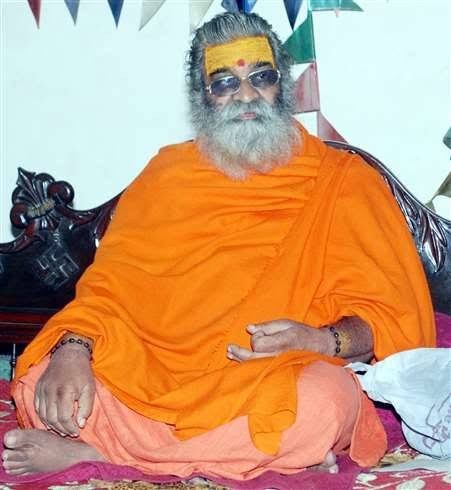
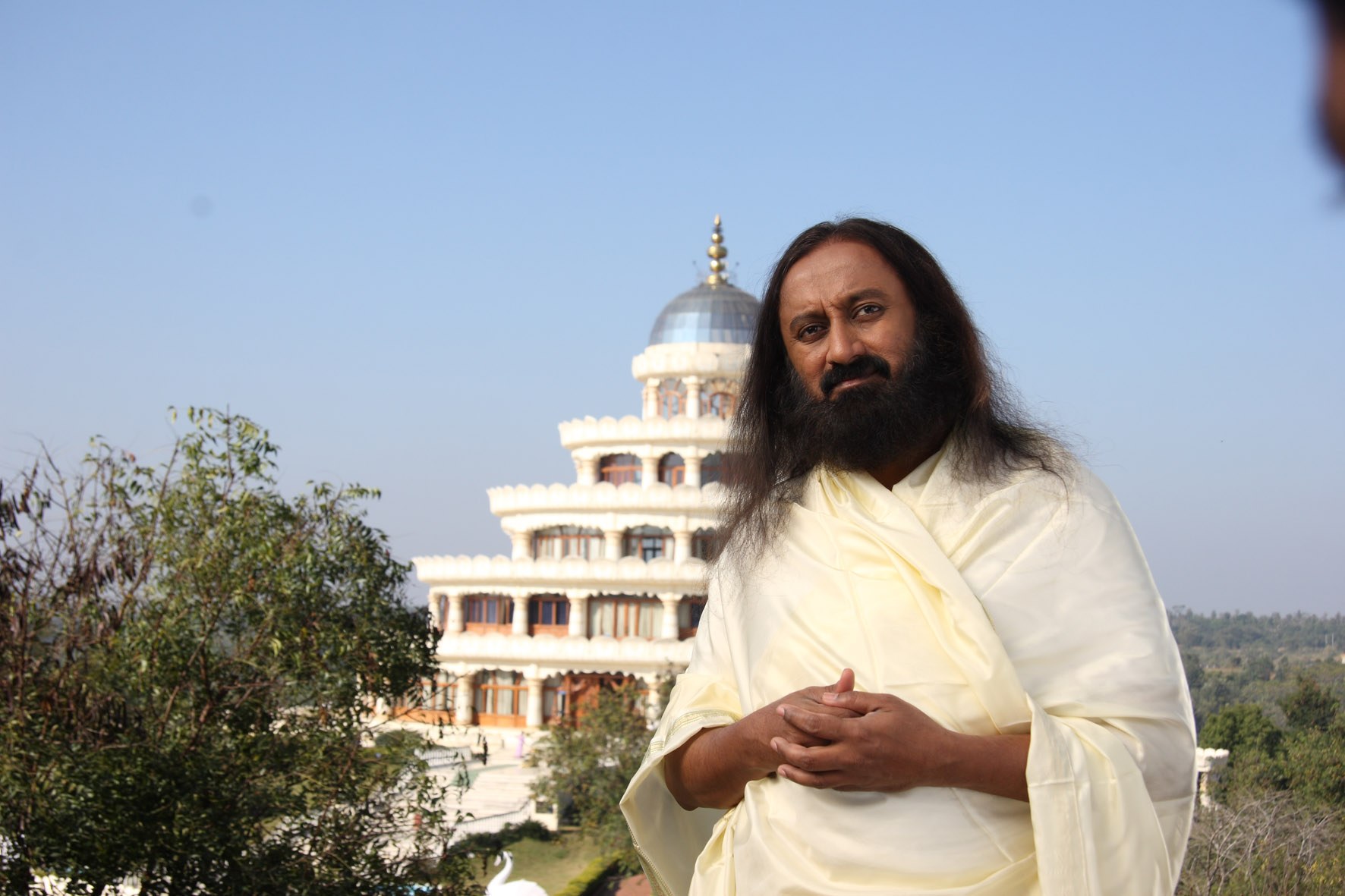
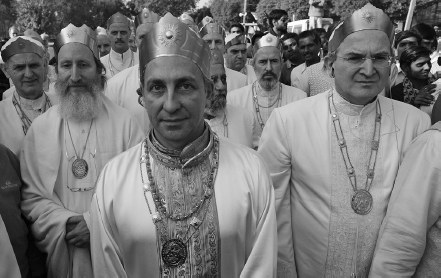
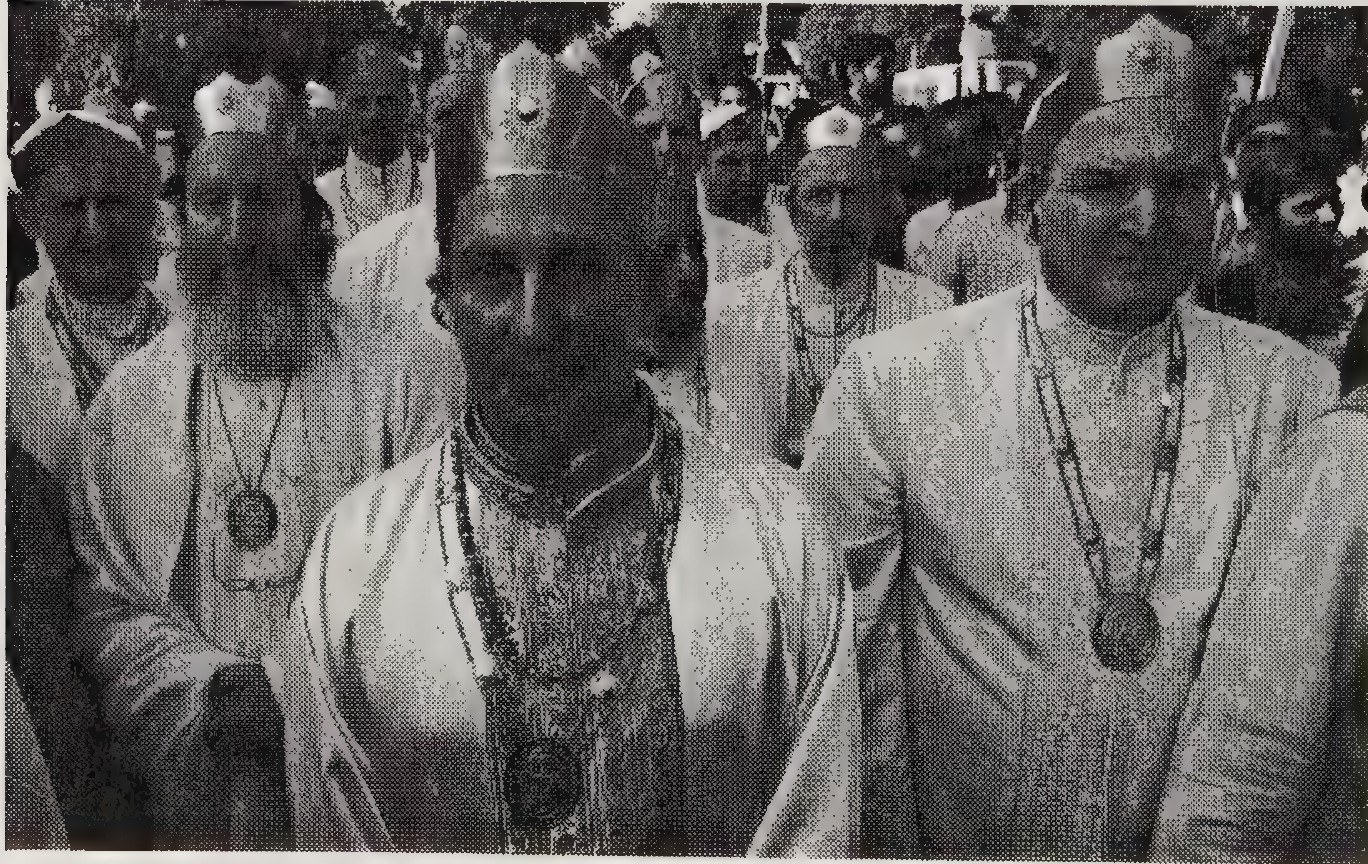
Rajneesh left a name, a body of talks, a center in Poona held by an inner circle, and a city whose incorporation a federal court had voided. He had repeatedly dismantled what his followers built: Rajneeshism, the commune, the therapists' standing. He made himself the only fixed point. His followers had seen this coming. "If you find a reason, he takes it away the next day," his press officer Isabel told Gordon, laughing (Gordon, GG-C10-¶035, p. 186).

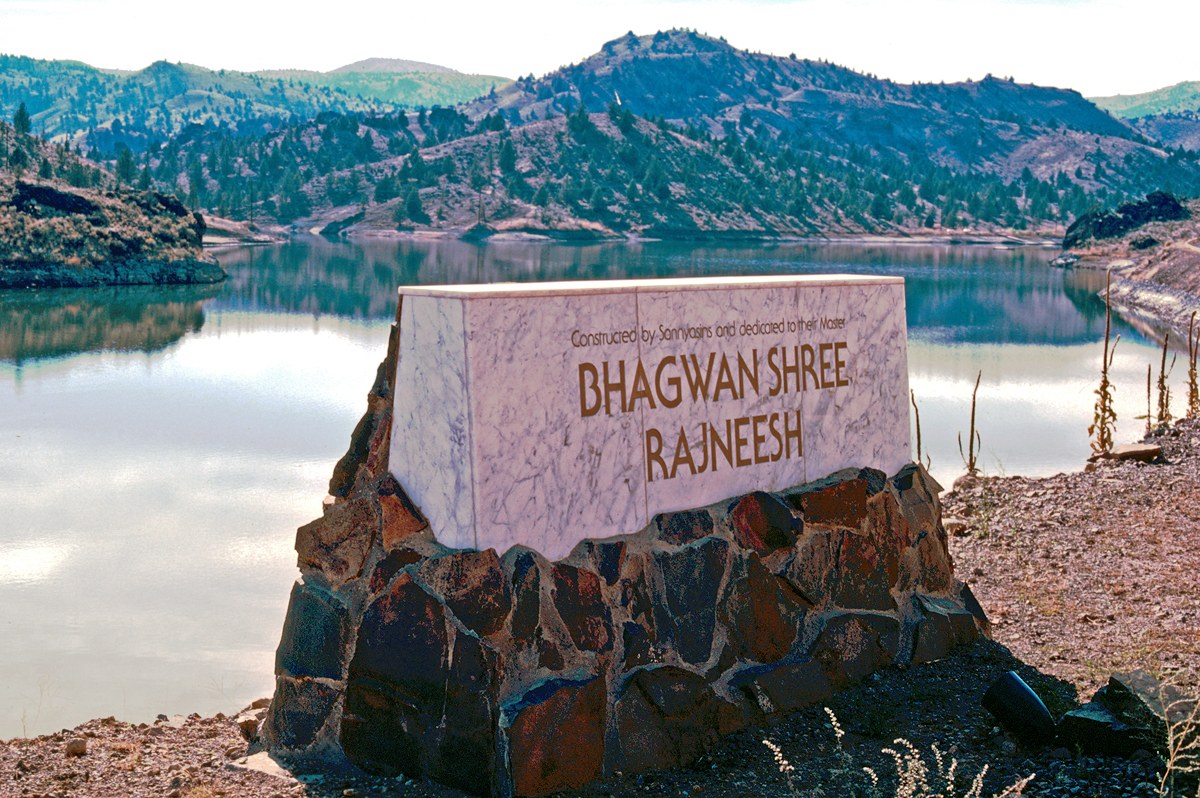
Succession shows the apprenticeships one last time. The disciple who had served a master and could not succeed him built something meant to outlast him, and left it to a crowned ruler and many trained administrators, though to no designated heir. The man who had no master and accepted no successor left his followers a joke, an epitaph, and a new name.
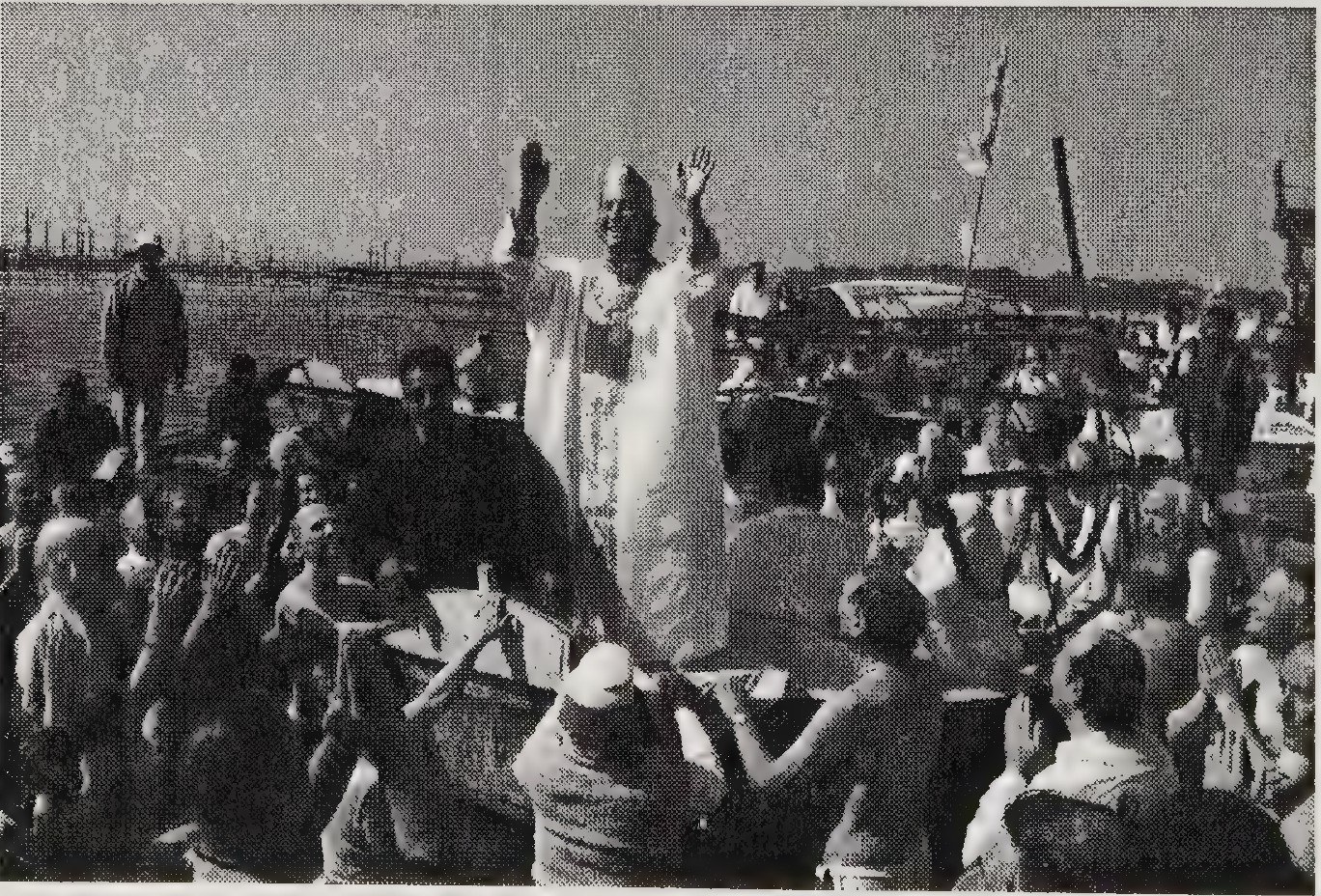
XVIII
What the comparison shows
The opening contrast, assimilation against rupture, survives, but in a narrower form. It is best at describing what each man offered the ordinary follower and how each performed in public. It is weakest at describing how authority worked. And the newer evidence on Maharishi adds a layer beneath both: what each man had learned before he ever had a follower.
Some differences look like temperament. They show up across decades, settings and audiences, and witnesses hostile to each man report them. Maharishi's humor defused tension and Rajneesh's attacked, in New York and Rishikesh in 1968 as in Poona in 1979 and Oregon in 1985. Maharishi was modest in his own consumption and vast in his institutional ambition. Rajneesh was sensuous, acquisitive and theatrical about his possessions. Maharishi treated consistency as a duty. Rajneesh rejected it as a doctrine. Rajneesh sought public provocation, as he had since his lecture tours of the 1960s. Maharishi, so far as the record shows, avoided naming rival teachers, though not, on Shumsky's account, avoiding a heated argument when one came.
Other differences grew from apprenticeship. Maharishi spent about twelve years as a servant whose rule was obedience, and then built his life's work in his dead master's name, on a seat he could never hold. Rajneesh had no master and said he had chosen aloneness as a child. The first became a custodian. He received a complete system, fitted every new thing into it, from electrons to elections, and treated doubt as a symptom. The second became an author. He took up texts and identities, changed them at will, and treated consistency as a cage. This difference, more than temperament, explains why one man's movement could repeat his formula after him while the other's depended on his moods.
Still other differences came from circumstance and strategy. The light threshold and the dramatic one were chosen to fit different publics, and each movement had an inner ring its wider public rarely saw. The kind of prestige each recruited followed from what each was selling. The armed city in Oregon owed much to having one territory and hostile neighbors, which Maharishi never faced, though Rajneesh's own refusal to compromise was a cause and not just a backdrop.
Several apparent opposites hid the same mechanism. Each man's disavowal of power made that power harder to question: the loudspeaker and the post office. Each relied on devoted intermediaries and controlled access to himself, and each was screened from bad news by people whose standing depended on him. Maharishi in his last years dealt with the world by video, and Rajneesh in Oregon through one secretary. Each treated close disciples who grew independent as threats: for Maharishi, Chopra and, on Shumsky's hearsay, Jerry Jarvis; for Rajneesh, Laxmi, Teertha and the therapists. And each kept the money and the man formally apart while the man decided how it was spent.
The private men were not simple reversals of the public ones. Each showed both registers. Shumsky, whose book records many public scoldings, still calls Maharishi "the happiest person I ever encountered" (Shumsky, MM-C14-¶010). Bourque describes a man who was guilty and awkward in private. Chopra describes both a father who called him "my son" and "an irascible, jealous old man" (Chopra, Beliefnet, Feb. 13, 2008). Gordon felt Rajneesh's gracious pull, as if he were "speaking only to me," and later that evening found him "now loving and compassionate, clear-sighted and straightforward, now self-absorbed, angry, petty, jealous, deceitful, willful, contemptuous" (Gordon, GG-C11-¶005, ¶052, pp. 193, 198). Gordon also saw Rajneesh's love of experiment degenerate, in isolation, "into the indifferent coldness of the experimenter" (GG-EPI-¶030, p. 238). Each public face was a selection from a mixed private repertoire. Maharishi selected calm. Rajneesh selected provocation.
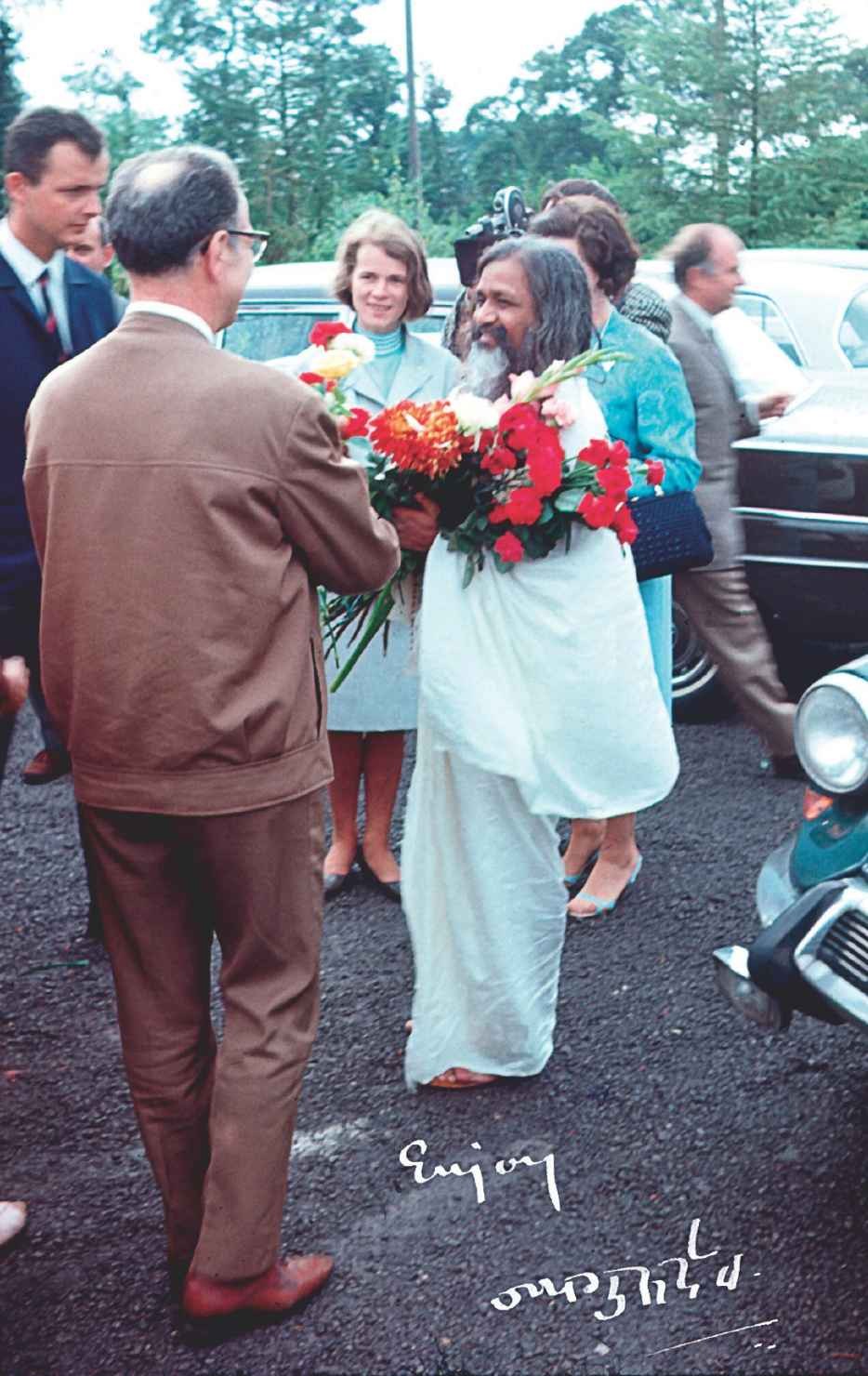
Both men also seem to have believed much of what they taught. Maharishi's science was not only a costume: he was mapping physics onto the Veda in 1955, years before any Western audience, and on one secondhand account he admitted plainly that his peace formula was untested. Many who left him kept his technique. Rajneesh's former disciples, even the angry ones, credited him with real gifts: awareness, permission, community. Sincerity did not prevent harm in either case. But it should be counted, along with the benefits, in any fair account of character.
The levels of evidence matter to every judgment here. What these sources document is not the same as what witnesses allege, and what witnesses allege is not the same as what interpreters conclude. On Rajneesh, the documents show a man who praised Sheela's aggression, let her act, and said his silence mattered more than the commune. The darker tapes rest on testimony. Gordon's view that he created the climate for the crimes, and may have ordered them, is an informed judgment. On Maharishi, the court records show religion taught as science. The memoirs of Bourque, McCutchan and Shumsky show a broken vow and a disciplined staff. Shumsky's story of Pahalgam, and much of her Beatles material, rests on sources she does not name or did not witness. None of the sexual allegations against either man was tested in court.
Where the comparison has to stop being symmetrical is in harm. The TM movement's documented harms are real but bounded. Two federal courts found that it had taught a religious rite in public schools as secular science. It made health and social claims that independent review did not support. Former insiders give credible accounts of the founder's broken celibacy, kept secret from a movement that called him a life celibate. Its inner ring asked a great deal of a few people, and it treated doubt as illness. The documented harms at Rajneeshpuram are of another order. The salmonella attack in The Dalles sickened hundreds of people, at least 586 in its second wave alone (King, RP-C23-¶011). There were poisonings inside the commune, an attempted murder of Rajneesh's own physician, and plans against public officials. All were carried out by the secretary Rajneesh chose and the circle around her. Whether he ordered those acts is not established. That he made them possible, and then moved to escape responsibility for them, is as well established as these sources allow.
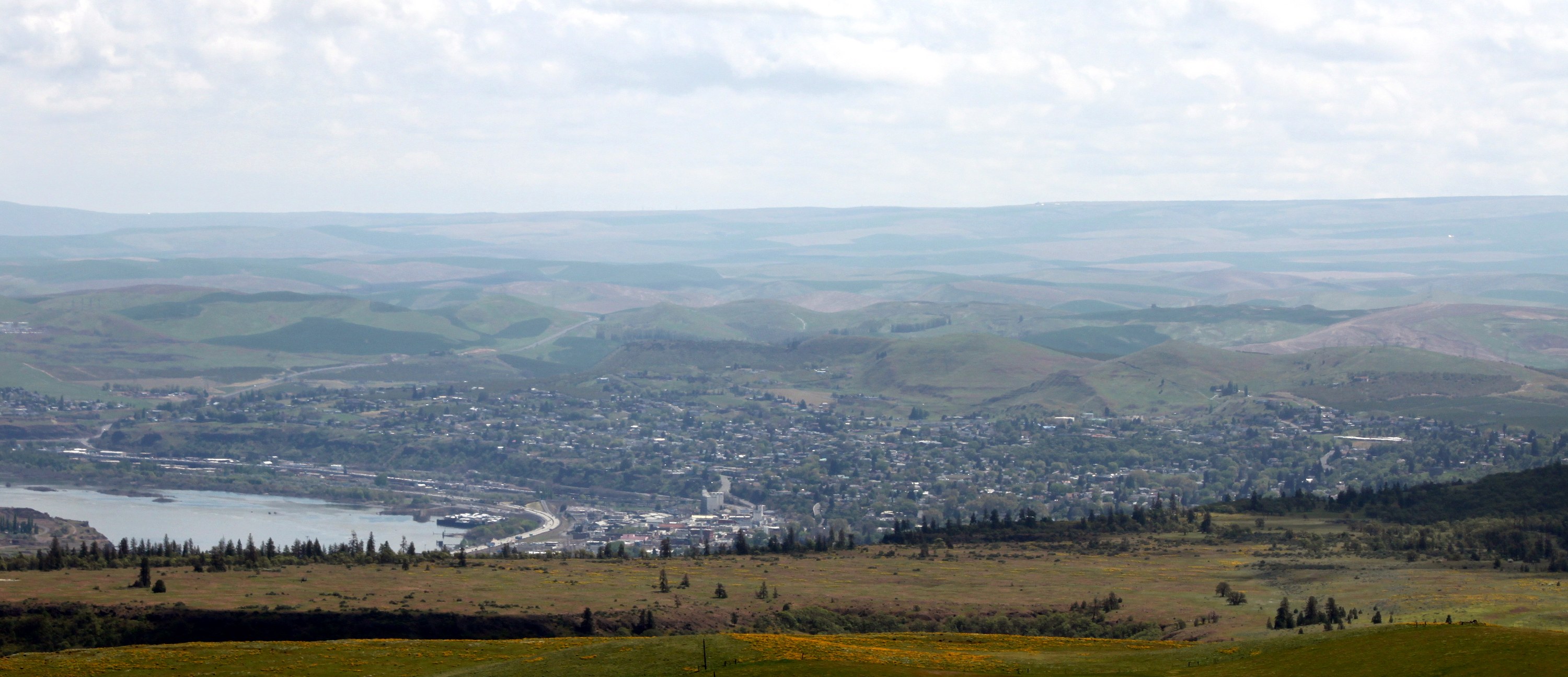
It is tempting to call these two strategies for the same problem. That holds only for the mechanics of authority. Both men did solve the problem of how a man who claims no authority can hold all of it. But they did not face the same problem. Maharishi's was how a servant who could not inherit his master's seat could carry his master's teaching to the world. He solved it by building an institution and calling himself its servant, and his failures were the failures of an organization: misrepresentation, overreach, secrecy and the quiet discipline of dissent. Rajneesh's problem was how a self-made master could stay free of every structure, including the ones he built. He solved it by becoming a moving target, and his failures were those of a court whose king would not rule in public or be ruled in private. Maharishi's giggle kept hard questions at a distance and left the structure standing. Rajneesh's joke dissolved every structure, including, in the end, his own commune. When he dropped the title Bhagwan, he told the press, "Enough is enough. The joke is over" (Carter, CR-PREF-¶007). For the people of The Dalles, it had never been a joke.
A note on sources
Citations in the form GG-C03-¶112 point to numbered paragraphs in searchable full-text editions of the books listed below. The letters name the book, the middle part names the chapter or section, and the number names the paragraph. Page numbers, where given, are those of the printed edition.
For Rajneesh, every fact comes from four books, and no outside research was used. James S. Gordon's The Golden Guru (Stephen Greene Press, 1987), cited as GG, is the work of a psychiatrist who spent long periods in Poona and Oregon and interviewed Rajneesh in 1985. It is the closest outside witness, and his interpretations are marked as his. Frances FitzGerald's Cities on a Hill (Simon and Schuster, 1986), cited as CH, includes a long reported chapter on Rajneeshpuram, with leaked commune documents. Lewis F. Carter's Charisma and Control in Rajneeshpuram (Cambridge University Press, 1990), cited as CR, is a sociologist's study of the commune. Russell King's Rajneeshpuram (Chicago Review Press, 2021), cited as RP, draws on later interviews and investigative records. Where these four disagree, as on the jewelry carried on the flight to Charlotte, the essay gives each figure.

For Maharishi, four books are the main evidence, and each has limits. Paul Mason's The Maharishi (Element, 1994), cited as PP for its chapters and PH for its notes, is the only outside biography. Only its first three chapters, printed pages 3 to 37, and parts of its front and back matter were available. It ends in 1959. Mason often reconstructs scenes with "would have" or "it is said," and such passages are reported as his. Susan Shumsky's Maharishi & Me (Skyhorse, 2018), cited as MM, is the memoir of a woman who spent many years on his staff. She warns that some names and quoted statements are altered or composited, so her quotations are treated as recollection. Her chapter on Maharishi's early life and her chapters on the Beatles rely on published sources and are not independent witness. Judith Bourque's Robes of Silk, Feet of Clay (third edition, Waterside Press, 2018; first released 2010), cited as RS, is the memoir of a woman who says she was his lover from 1970. The events she describes are treated as her testimony. Her interpretations, including those drawn from dreams and from ideas of karma, are treated as hers. Her book includes an afterword by Robert McCutchan, one of Maharishi's attendants, which is the only second-hand corroboration of her account in these sources. Aryeh Siegel's Transcendental Deception (2018), cited as TD, is a former TM teacher's critique. It is used only for the documents it reproduces, for his own experience between 1971 and 1981, and for Maharishi's own words. His arguments are reported as his, and where his claims could be tested against Mason, as with Maharishi's titles and his supposedly different messages for Eastern and Western audiences, the test is shown.
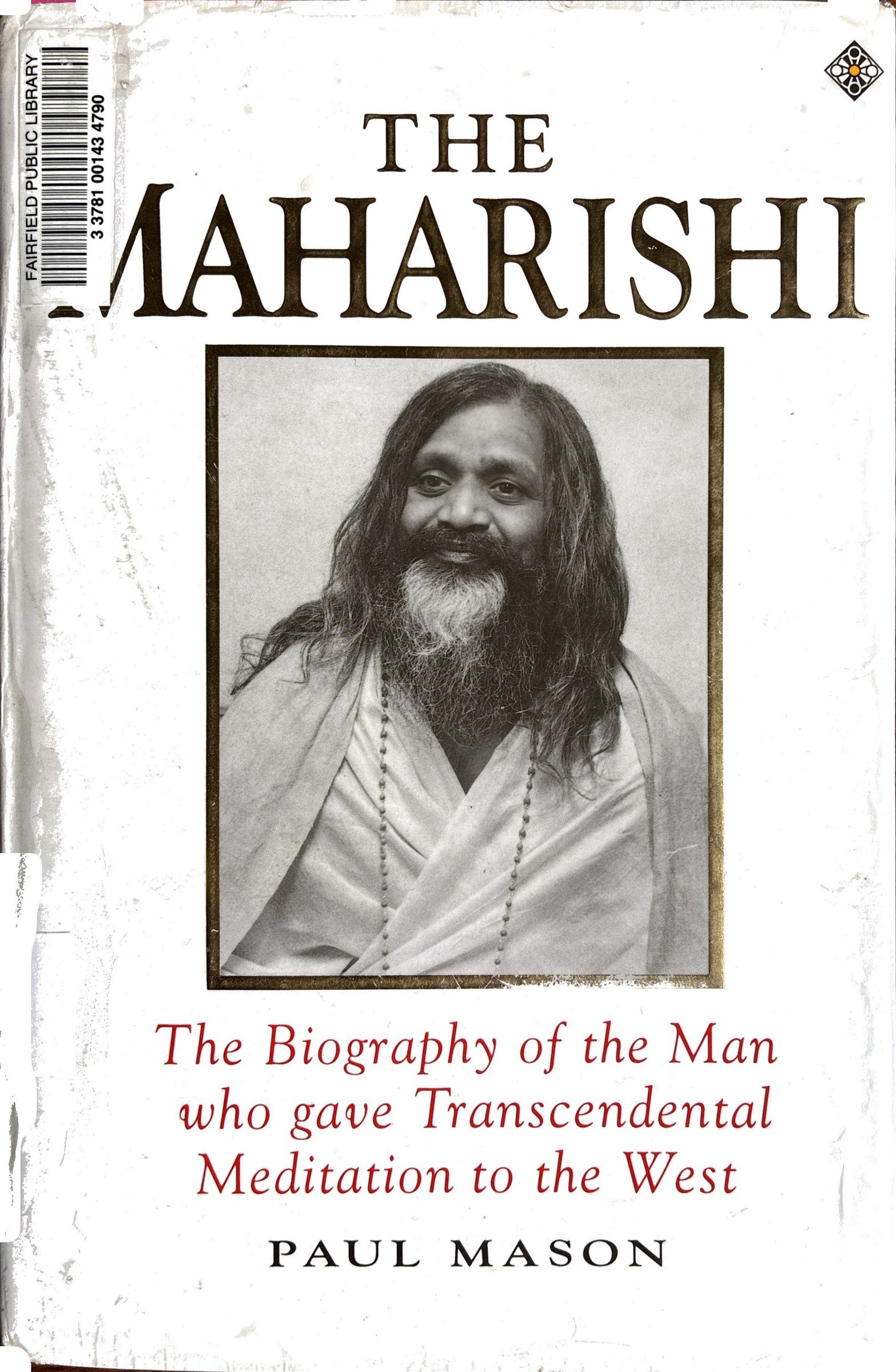
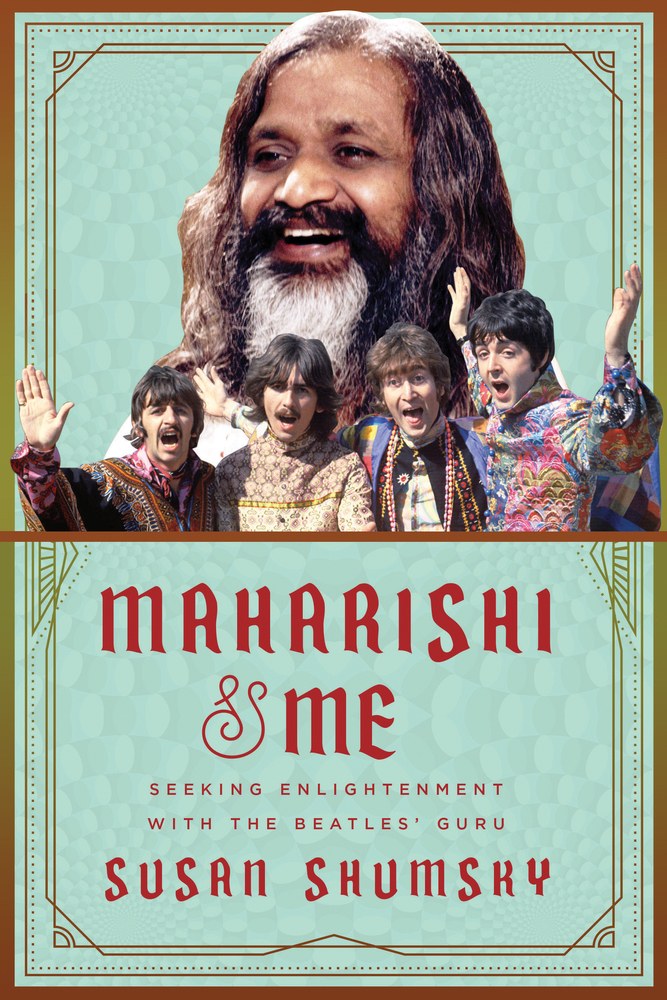
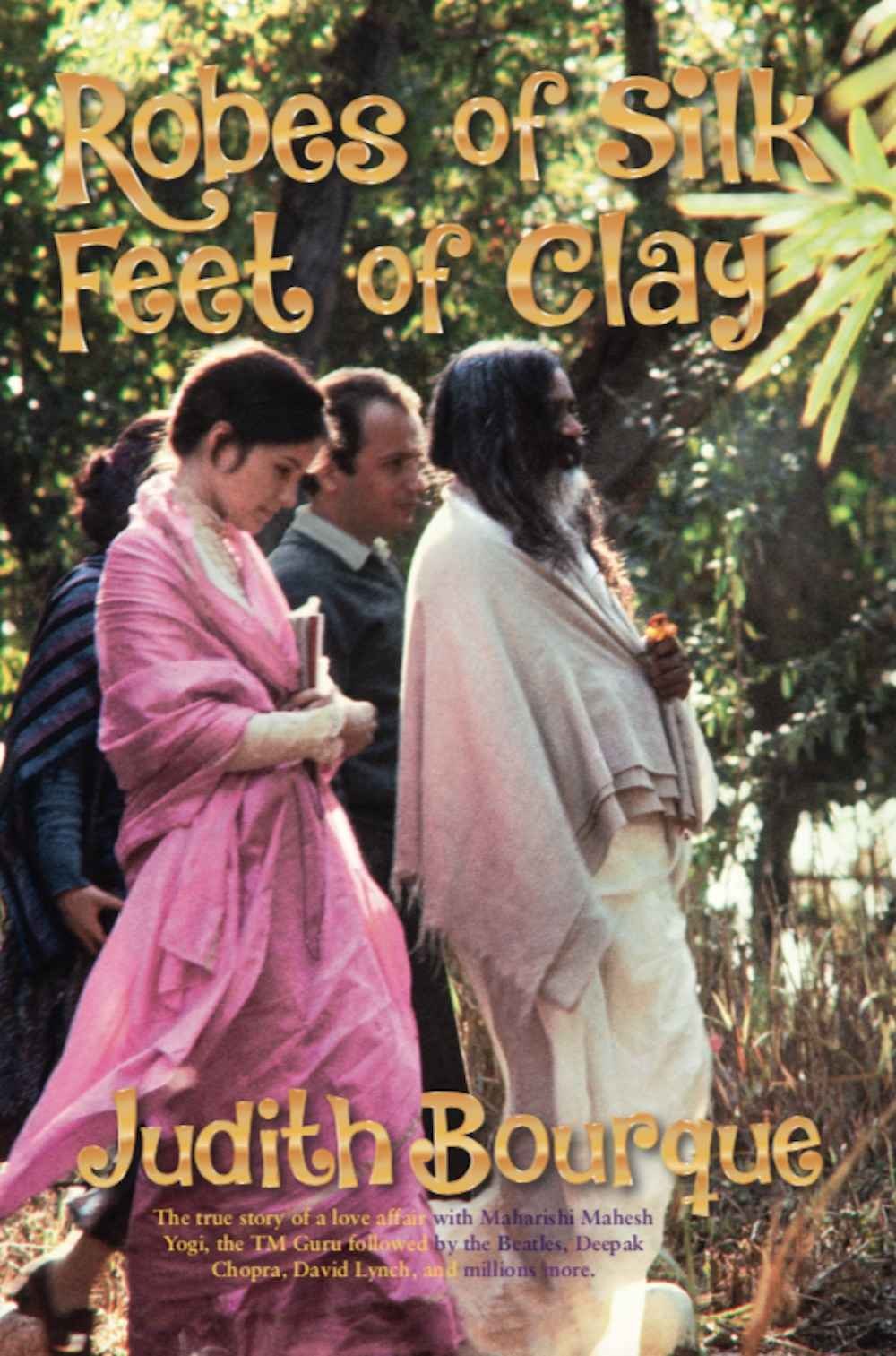

These books are not fully independent of each other. Shumsky draws on Mason. Siegel draws on Bourque and Mason, and Bourque read his manuscript. Bourque in turn draws on Mason's work on Guru Dev. Where a claim appears in more than one of them, it may rest on one source.
Outside the books, online sources were used only to check facts about Maharishi and to reach primary records. These include the court opinions in Malnak v. Yogi (D.N.J. 1977; 3d Cir. 1979), Kropinski v. World Plan Executive Council (D.C. Cir. 1988) and Hendel v. World Plan Executive Council (D.C. 1997), and the Allahabad High Court's 2017 judgment on the succession to Jyotir Math. They include the CNN transcript of Larry King Weekend for May 12, 2002; the Associated Press reports of January and February 2008; The Guardian of August 15, 2005; The Observer of May 2, 2004; and LiveLaw's report of May 13, 2026. Lewis Lapham's two-part report in the Saturday Evening Post (May 4 and May 18, 1968) could be read only in a transcription on a Beatles archive site, which says it reproduces the magazine's own online copy. The page images were not checked, so his quotations carry that caveat. Richard Goldstein's 1968 Village Voice article was read in the paper's later excerpt. Deepak Chopra's 2008 recollections were read on Beliefnet. The independent reviews of TM research were checked against the publishers' pages or the authors' institutions. Two items could not be confirmed at their source: the Washington Post report of December 16, 1991, which is cited only as Shumsky quotes it, and a reported settlement of the Kropinski case in 1991. Apart from the Lapham transcription, no encyclopedia articles, fan sites or blogs were used as evidence.
More from the Sublime Object of Ideology Desk
- Sex without sex, scholarship without scholars 11 November 2026
- Greater Israel as Surplus-Enjoyment 9 June 2026
- The Specter of Disillusionment: A Psychoanalytic and Ideological Analysis of Paul Thomas Anderson's One Battle After Another 16 March 2026
- Analysis of One Battle After Another 16 March 2026