
The Unclosed Door · RFK series
Networks of Power – Who Benefited from RFK’s Death?
Part VI of The Unclosed Door
1. Introduction: Cui Bono?
The Roman legal axiom cui bono?—“who benefits?”—remains the most enduring guide through political murder. To ask it is not to assert conspiracy, but to define interest. Robert F. Kennedy’s assassination was not an isolated event. It was a resolution to a structural crisis: the emergence of a political figure who threatened to reorient American domestic and foreign policy at a moment of imperial unraveling.
RFK was a threat not only because of what he planned to do—withdraw from Vietnam, regulate the intelligence community, reopen the investigation into JFK’s death—but because of what he symbolized: the potential to merge mass civil dissent with elite legitimacy.
He had to be neutralized not simply to silence him, but to foreclose a future.
2. The Institutional Triad: CIA, FBI, and Military-Industrial Complex
The three dominant pillars of postwar American power—intelligence, internal security, and military production—stood in direct conflict with RFK’s 1968 campaign.
2.1 The CIA: The Disobedient Tool
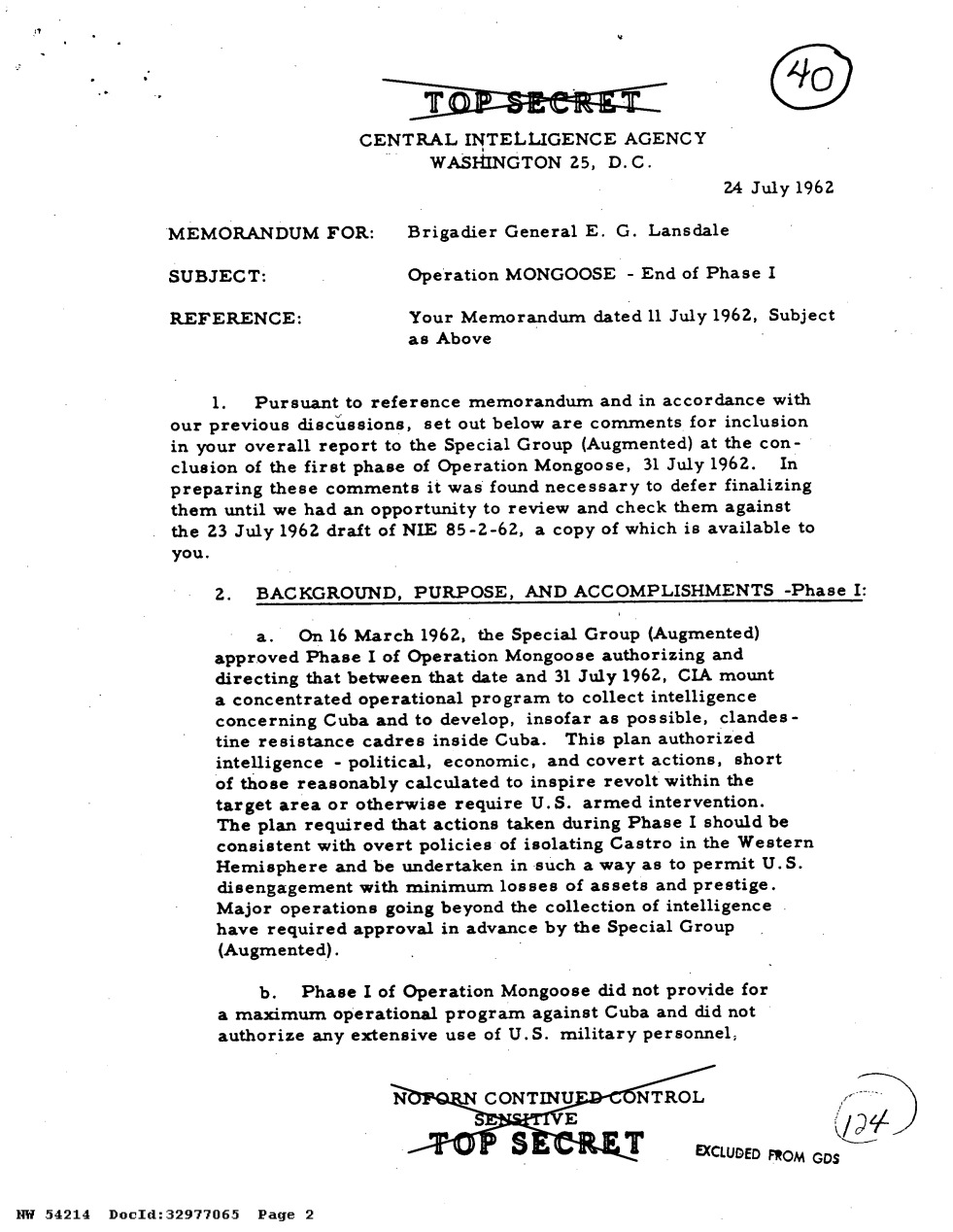
RFK had a long and troubled relationship with the CIA. As Attorney General, he had overseen Operation Mongoose—the failed covert campaign against Fidel Castro. He knew the Agency’s capacity for lawless violence, its addiction to plausible deniability, its dependence on front organizations and cut-outs. After JFK’s death, RFK was privately convinced the CIA had played a role.
By 1968, he was publicly vague but privately furious about the intelligence community’s excesses in Southeast Asia, Latin America, and its possible obstruction of justice in his brother’s assassination.
His campaign platform included:
- Reining in covert operations
- Cutting CIA funding
- Increasing Congressional oversight
This made him a pre-emptive threat to the Agency’s autonomy.
The CIA, in the language of the state, does not need to “order” assassinations. It simply creates the environment in which certain outcomes become likely—and untraceable. As with JFK, as with Lumumba, as with Allende, RFK had crossed the boundary where reform becomes existential danger.
2.2 The FBI: Hoover’s Vendetta
J. Edgar Hoover had a personal and professional animus toward RFK. As Attorney General, RFK had attempted—unsuccessfully—to bring Hoover under control. The FBI, under Hoover, had:
- Placed bugs on RFK’s phone
- Infiltrated his Senate office
- Monitored his campaign via informants
Hoover’s COINTELPRO program viewed RFK’s coalition of civil rights leaders, students, and working-class whites as a domestic insurgency. Moreover, Hoover feared that RFK, if elected, would fire him—and re-expose FBI involvement in suppressing JFK assassination evidence.
In the week following RFK’s murder, Hoover moved swiftly to close off leads suggesting conspiracy, ensured Sirhan was declared sole perpetrator, and coordinated with the LAPD to suppress reports of a second gunman.
This was not passive compliance. It was active narrative enforcement.
2.3 The Military-Industrial Complex: War Profiteers and Policy Fixers
RFK planned to withdraw from Vietnam. Period. He had made that clear by March 1968, breaking decisively from Johnson’s policy of escalation.
This placed him in direct opposition to:
- Defense contractors (Lockheed, Raytheon, General Dynamics)
- Oil companies with stakes in Southeast Asia
- Wall Street banks underwriting military production
- The National Security Council’s covert war planners
In the year of RFK’s campaign:
- Military spending exceeded $75 billion.
- Over 1,000 corporations depended on Vietnam-related contracts.
- 500,000 U.S. troops were deployed in Indochina.
RFK’s election would have severed that artery.
He represented not just a political risk—but a financial crisis for war capitalism. His death was not just removal—it was continuity ensured.
3. Geopolitical Players: The Israeli Deep State and Its American Proxies
The least explored—yet most explosively consequential—beneficiary of RFK’s assassination is the Israeli government and its associated transnational lobbying apparatus.
3.1 The Dimona Doctrine: Nuclear Autonomy
In 1963, President John F. Kennedy demanded that Israel open its nuclear facility at Dimona for U.S. inspection. Israel refused.
JFK’s position:
- Nuclear weapons in the Middle East would destabilize the region.
- U.S. policy must ensure non-proliferation.
RFK, as Attorney General, enforced his brother’s demands, supporting diplomatic pressure and threatening aid reductions.
After JFK’s death, Lyndon Johnson reversed the position. By 1968, Israel had the bomb—and no oversight.
RFK’s return to the presidency would have:
- Reopened the Dimona question
- Resurrected FARA actions against AIPAC’s predecessor
- Threatened the unspoken Israeli-American nuclear accord
To the emerging Israeli strategic elite—Shimon Peres, Moshe Dayan, Yitzhak Shamir—RFK represented a rollback. His death was geopolitical maintenance.
3.2 AIPAC and the Weaponization of Silence
RFK’s 1962 attempt to register the American Zionist Council as a foreign agent is central here. AIPAC, reborn from AZC, now exerted greater influence through:
- Lobbying Congress to suppress Palestinian visibility
- Securing military aid
- Shaping media narratives through proxies and think tanks
RFK’s presidency threatened to expose these mechanisms. More critically, it threatened to resurrect JFK’s sovereignty doctrine—that no foreign power, ally or not, would dictate U.S. policy.
RFK’s elimination preserved the illusion of American autonomy while deepening Israeli operational latitude.
4. Corporate Media and the Manufacturing of Consent
The U.S. media complex did not investigate RFK’s assassination. It packaged it.
4.1 Complicity Through Framing
Within 48 hours:
- Sirhan was declared the lone shooter.
- The polka-dot dress woman was dismissed as hallucination.
- The second gunman hypothesis was labeled “conspiracy theory.”
Major outlets:
- CBS
- The New York Times
- Time Magazine
…all recycled LAPD press releases without independent corroboration. Journalists who questioned the narrative (e.g., Ted Charach, William Klaber) were marginalized or discredited.
4.2 Narrative Control as Institutional Priority
This was not incompetence. It was directive.
The media’s function—following Chomsky and Herman’s Propaganda Model—was to:
- Protect elite consensus
- Marginalize destabilizing facts
- Reinforce the legitimacy of national security state actors
RFK, had he lived and won, would have reopened both his brother’s murder and the role of the press in suppressing truth.
His death saved the narrative.
5. The Financial Cartel: RFK vs. the Dollar Order
Less frequently noted is RFK’s economic populism. He had begun proposing:
- Breaking up large financial conglomerates
- Repealing tax shelters for oil corporations
- Regulating speculative banking
This placed him in the crosshairs of:
- The Rockefeller bloc
- The Trilateral Commission proto-structure
- The Federal Reserve’s custodians of debt imperialism
RFK’s potential to realign capital toward labor threatened the post-Bretton Woods consensus of managed global exploitation.
As president, he could have:
- Reinforced Glass-Steagall-like reforms
- Decentralized the financial technocracy
- Halted the globalization of neoliberal austerity
His death wasn’t only a geopolitical or security-state concern—it was a strike to prevent economic realignment.
6. Psychological Warfare and Internal Repression
RFK’s assassination functioned not only to remove him—but to paralyze his supporters.
This is the essence of psychological warfare:
- Eliminate the charismatic node.
- Replace hope with terror.
- Ensure the masses internalize helplessness.
The subsequent rise of Nixon, the escalation of the Vietnam War, and the suppression of domestic radicalism all flowed from this wound. The same playbook that crushed the Black Panthers and SDS was initiated here—with the death of a white liberal unifier, ensuring no peaceful conduit for dissent remained.
RFK’s death was the baptism of COINTELPRO 2.0: not merely the surveillance of radicals—but the destruction of hope itself.
7. Dramatic Rendering: Stage Design for Power
- Set: A chessboard, full-scale. Actors are pawns, bishops, kings—figures in suits and fatigues, whispering, moving pieces.
- Projection: Real headlines from 1968 scroll in reverse. Audience reads the headlines backward—as a metaphor for history’s inversion.
- Chorus: Voices of capital, intelligence, Zionism, industry. They do not speak in rage—but in calm, deliberate legalese. It is chilling.
- Final image: RFK’s body disappears not into darkness—but into paperwork.
8. Conclusion: The Conspiratorial System
RFK was not killed by one man. He was erased by a system.
Not a conspiracy of individuals, but a conspiratorial structure—a decentralized consensus among institutional actors that certain outcomes were intolerable.
His death ensured:
- The Vietnam War continued.
- The nuclear balance in the Middle East shifted permanently.
- The financial elite retained control.
- American media remained under narrative discipline.
The question is no longer: “Who killed Bobby Kennedy?”
The question is: What kind of world required his death to survive?
Source anchor appendix (Part VI): beneficiary analysis — framing. RFK's private belief in a plot against JFK and his CIA check → {MD-PRE-2-¶018} · {MD-PRE-2-¶020} · {MD-PRE-2-¶021} · {TA-C02-¶003} · {TA-C02-¶004} · {CB-C17-¶051} · {ST-C26-¶056}; Hoover–RFK hostility → {BK-C07} · {ST-C12}
More from the Chomsky Analytical Desk
- The Unclosed Door — Visual Index 23 November 2026
- The World RFK Inherited 22 November 2026
- Robert Kennedy’s Political Awakening 22 November 2026
- 1962 – RFK, AIPAC, and the Foreign Agent That Never Was 22 November 2026