
The Unclosed Door · RFK series
Zionist Exceptionalism and the New Taboo – Palestine, RFK, and the Weaponization of Memory
Part XII of The Unclosed Door
1. Introduction: Palestine as the Forbidden Referent
In the official story of Robert F. Kennedy’s assassination, one fact is treated as definitive: his killer was a Palestinian. From this one data point, a self-sufficient explanation is offered: Sirhan Sirhan, enraged by RFK’s support for Israel, murdered him in blind nationalist fury.
But what if this explanation is not a conclusion—but a pretext?
What if Sirhan’s identity, instead of explaining the crime, conceals it?
And what if Palestine—the very cause used to frame the assassin—is the real motive behind RFK’s elimination, not in the mind of Sirhan, but in the architecture of power that found RFK’s political evolution intolerable?
This section reads RFK’s death not simply as a murder, but as a ritual enactment of Zionist power—an initiation of a new era in which the U.S. state becomes a proxy sovereign of Israeli geopolitical interests.
2. 1962: The FARA Assault on the Zionist Lobby
In 1962, RFK—then Attorney General—initiated proceedings to register the American Zionist Council (AZC) as a foreign agent under the Foreign Agents Registration Act. This move, grounded in hard evidence of Israeli state funding, threatened to expose:
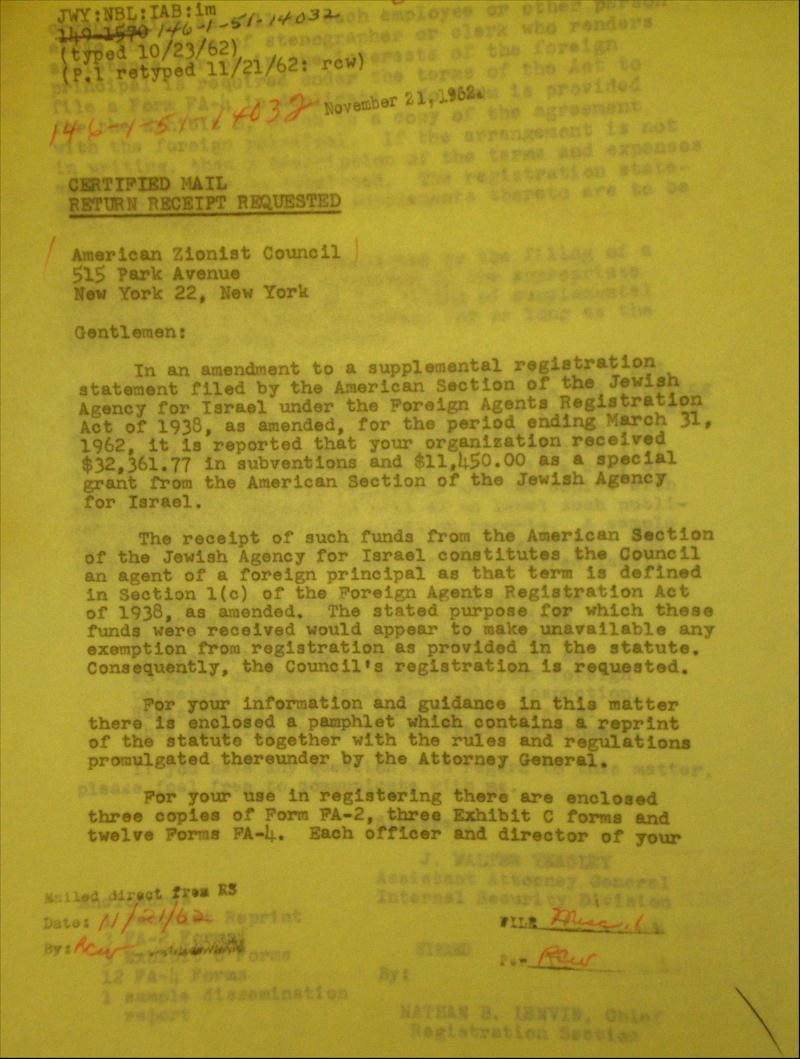
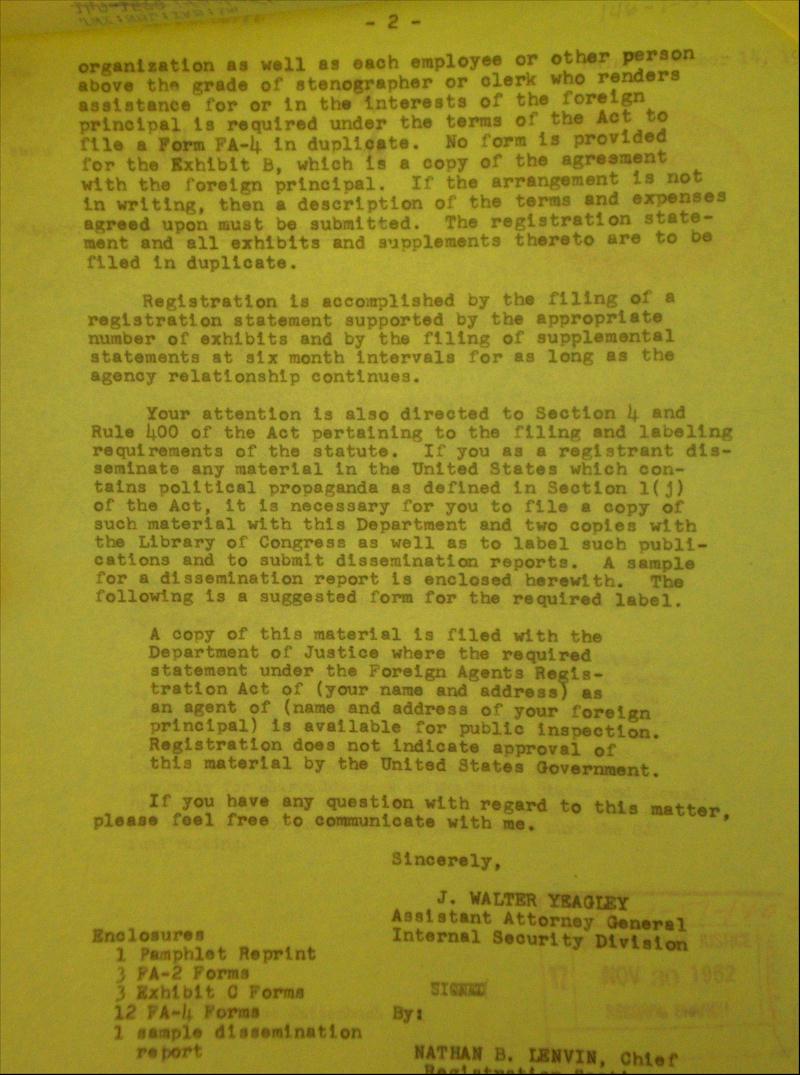
- Direct financial transfers from the Israeli government to American lobbying groups.
- Coordinated propaganda campaigns to manipulate U.S. public opinion.
- Violations of transparency laws by what would soon become AIPAC.
RFK’s action, though legalistic in form, was revolutionary in substance: it marked the first and only time the U.S. executive attempted to define pro-Israeli lobbying as a foreign operation.
The result?
- The AZC dissolved itself and reincarnated as AIPAC, reorganized to evade regulation.
- The FARA case was quietly dropped—likely under political pressure.
- RFK, by 1968, never publicly revisited the episode—but his memory of it, and its implications, remained.
This was not simply about money. It was about sovereignty.
RFK had tried, however briefly, to delimit the boundaries of a foreign state’s influence inside American political life.
He would not be permitted to try again.
3. 1967: The Six-Day War and the Emergence of the Israeli Security Doctrine
The Six-Day War of June 1967 transformed Israel from a regional actor to a global power node:
- It occupied East Jerusalem, the West Bank, Gaza, the Sinai Peninsula, and the Golan Heights.
- It confirmed Israeli military supremacy in the region.
- It redrew the map of Middle Eastern geopolitics—and with it, the strategic calculus of the United States.
After the war:
- American aid to Israel skyrocketed.
- Israel’s nuclear weapons program, once opposed by JFK and quietly resisted by LBJ, became an untouchable reality.
- The U.S. adopted a policy of unconditional support for Israeli regional dominance—framed as a defense of democracy, but executed as a counter-insurgency against Arab nationalism and Soviet-aligned regimes.
RFK, preparing to run for president in 1968, was seen by many in the Israeli establishment as a possible reversal of the Johnson doctrine.
He had:
- A record of caution regarding foreign influence.
- A brother who had attempted to contain Israel’s nuclear ambitions.
- Expressed quiet concern, in private, about the long-term consequences of the occupation.
Even his public support for Israel was not enough.
In power, RFK might do what JFK did—and more.
4. Sirhan Sirhan: Manufactured Palestinian Rage
Sirhan Sirhan’s diaries are full of repetitions: “RFK must die… RFK must die… before June 5.”
The official interpretation: he was incensed that RFK supported Israel and had worn a yarmulke while speaking to a Jewish congregation.
But a deeper look reveals:
- Sirhan was not politically sophisticated; his knowledge of Middle Eastern politics was shallow.
- His writing style and mental state mirrored hypnotically induced automatism.
- He had been in contact with figures tied to CIA front operations and possible psychological manipulation schemes.
If Sirhan was programmed—as extensive psychiatric evidence suggests—then his Palestinian identity was not motive, but costume. A mask placed on a dissociated mind.
The result?
- A ready-made explanation.
- A martyr for Zionist victimhood.
- A permanent deflection.
RFK was not murdered because he supported Israel.
He was murdered to ensure that no future American president would ever oppose it.
5. Zionist Exceptionalism: From Lobby to Leviathan
In the wake of RFK’s death, AIPAC’s rise was meteoric.
By the 1980s:
- It was the most powerful foreign policy lobby in Washington.
- Congressional support for Israel became a litmus test for electability.
- The Pentagon and Israeli Defense Forces engaged in deep integration.
- Joint operations in surveillance, drone warfare, assassination protocols, and proxy wars (e.g., Iran-Contra) became normalized.
Opposition to Israeli policy became:
- Politically suicidal.
- Framed as antisemitism.
- Policed by media, campaign finance networks, and think tanks.
This is Zionist exceptionalism: the transformation of a settler-colonial project into a moral absolute—immune to criticism, cloaked in victimhood, and fused to the identity of the American state.
RFK’s assassination is the missing link in this transformation: the point at which resistance died and silence began.
6. The Weaponization of Memory: RFK, Israel, and the Ghost of Palestine
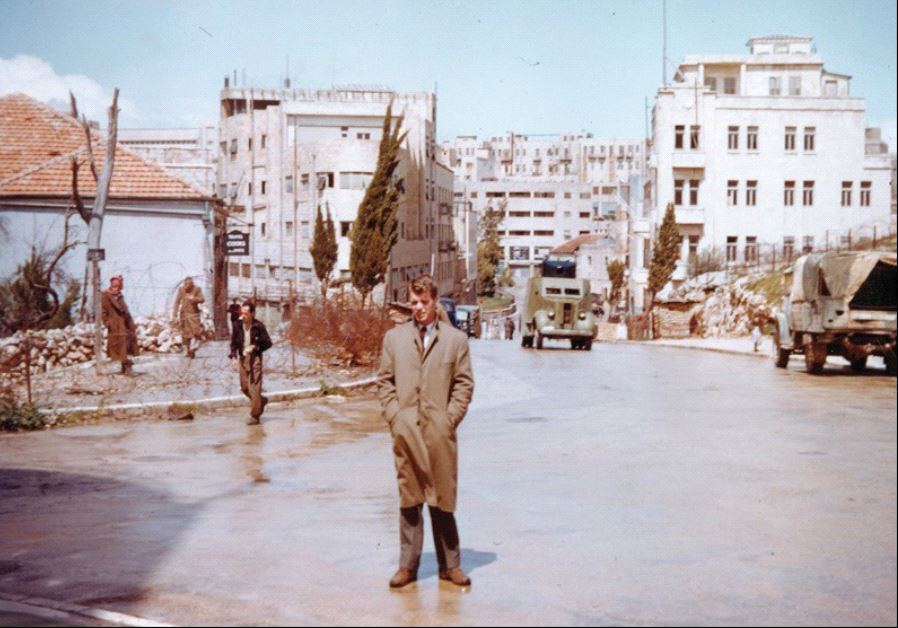
Today, RFK is remembered as a champion of civil rights, a voice for the poor, a martyr for peace.
But one subject is almost never associated with his legacy: Palestine.
Why?
Because to connect RFK’s assassination with Israel is to:
- Question the sacralization of Zionism.
- Uncover the role of the state in shaping acceptable political discourse.
- Acknowledge that American sovereignty was replaced by allegiance.
This is memory as ideological curation.
RFK’s legacy has been scrubbed:
- No mention of the 1962 FARA case in most biographies.
- No serious coverage of the Zionist dimensions of his assassination.
- No political candidate invoking his stance on foreign influence.
Palestine remains the one zone of silence in the RFK story—a void created not by absence, but by deliberate repression.
7. Fanon and the Settler Logic of Zionism
Frantz Fanon never wrote explicitly about Zionism. But his analysis of settler-colonialism applies with surgical precision.
For Fanon:
- The settler sees himself as civilizing the native.
- The native’s resistance is defined as terrorism.
- Violence is inevitable—not because of culture, but because of ontological separation.
Israel is a settler colony:
- Founded through displacement (Nakba, 1948).
- Expanded through occupation (1967 and beyond).
- Maintained through racial hierarchies, legal apartheid, and military force.
The United States, itself a settler empire, finds in Zionism a mirror and a moral partner.
RFK’s evolving awareness of this—however faint—made him unacceptable.
He was not allowed to become president because a president who sees the colonized as human is a threat to the entire system.
8. The Taboo Today: A Map of Suppression
To question Israeli influence remains the third rail of American political life.
- Presidential candidates pledge loyalty to Israel more explicitly than to their own Constitution.
- Academic critics face deplatforming, firing, and surveillance.
- Palestinian resistance is framed exclusively as “terror.”
- Jewish anti-Zionists are marginalized or erased.
This is not cultural sensitivity.
It is imperial censorship, enforced by:
- AIPAC and allied lobbies.
- Billionaire-funded think tanks.
- Algorithms that suppress Palestinian voices.
- Laws criminalizing BDS (Boycott, Divestment, Sanctions) advocacy.
RFK’s death, once explained through the rage of a Palestinian, is now the justification for suppressing all Palestinians.
A perfect reversal.
9. Theatrical Rendering: The Trial of Palestine
Set: A courtroom. The defendant: “Palestine.” The prosecutor: the U.S. state. The judge: a media avatar. The jury: faceless silhouettes.
Scene One: RFK on the stand, recalling his attempt to investigate foreign agents.
Scene Two: Sirhan enters—shackled, dazed. He doesn’t remember anything. The prosecutor insists he does.
Scene Three: A map of Gaza appears—bombed, burning. The chorus chants: “He was killed for peace. He was killed by rage.”
Climax: The judge declares: “Palestine is guilty. Not of the murder. Of existing.”
The lights dim. A voice reads RFK’s last speech:
“What we need in the United States is not hatred… but compassion.”
10. Conclusion: Memory as Resistance
Robert F. Kennedy was not assassinated because he was anti-Israel.
He was assassinated because he could not be owned—by Israel, by the CIA, by the Pentagon, by anyone.
His death marked the ascendance of a new regime:
- Where Zionist power is absolute.
- Where Palestinian suffering is denied.
- Where foreign influence is sanctified if it comes with money, surveillance, and weapons.
To recover RFK’s full legacy is not merely to mourn his loss.
It is to recognize that a different America was possible—and that it was buried not just in a hotel pantry, but beneath a mountain of silence.
We dig now, not for relics, but for blueprints.
Source anchor appendix (Part XII): AZC/FARA + Dimona → [EXTERNAL — needs sourcing]; counterweight coverage in the collected source materials on Zionist donors and RFK's Israel posture → {WJ-C06-¶003} · {WJ-C08-¶001} · {WJ-C08-¶003}; USS Liberty → [EXTERNAL — not in the collected source materials]
More from the Chomsky Analytical Desk
- The Unclosed Door — Visual Index 23 November 2026
- The World RFK Inherited 22 November 2026
- Robert Kennedy’s Political Awakening 22 November 2026
- 1962 – RFK, AIPAC, and the Foreign Agent That Never Was 22 November 2026